CARDSLOOMIA
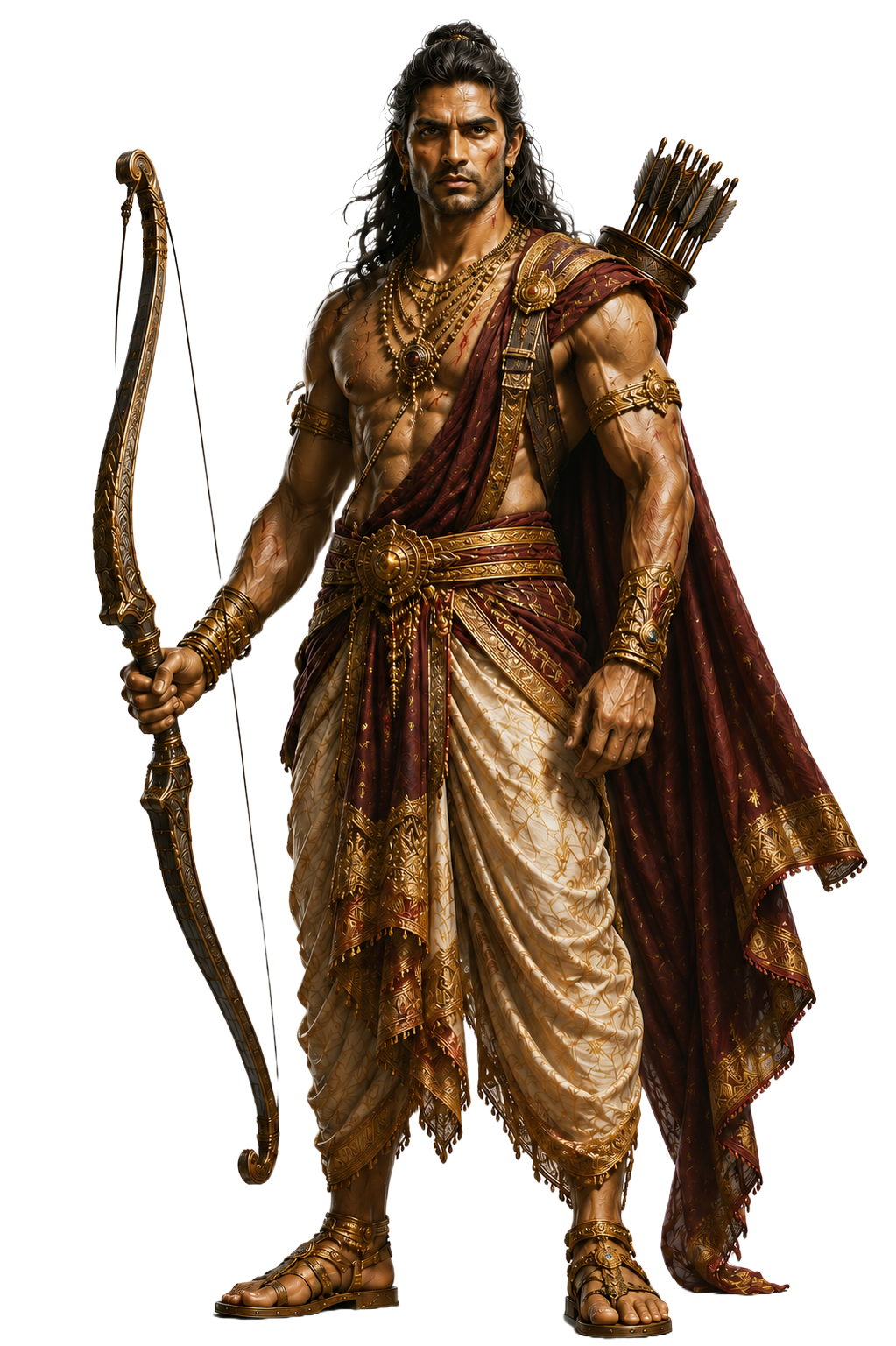
Ashwatthama – Eternal Warrior

The Warrior Condemned to Wander

Ashwatthama – Eternal Warrior

Ashwatthama · Son of Drona · Maharatha · Bearer of the Brahmashiras

Mahabharata SagaFoil Card194.0

Ashwatthama survives the greatest war of his age only to commit its darkest final act. A master of celestial weapons and a warrior of terrifying endurance, he turns grief into vengeance, unleashes the Brahmashiras and receives a punishment measured not in death, but in prolonged wandering.

Biography

The primary source for this record is <b>Rung 1: Vyasa's Mahabharata, following the critical-text tradition</b>. Ashwatthama is the son of Drona and Kripi, born into a Brahmin family but raised in the discipline of weapons. His father becomes the martial teacher of the Kuru princes, and Ashwatthama grows beside warriors destined to divide into opposing armies. He is no ordinary fighter. The epic places formidable weapons in his hands and makes his mastery of celestial warfare central to both his greatness and his danger. Ashwatthama fights for Duryodhana throughout Kurukshetra. His power becomes especially visible after Drona's death. Drona is brought down after Yudhishthira speaks words that lead him to believe Ashwatthama has died, referring to an elephant of that name while leaving the crucial distinction obscured. When Ashwatthama learns how his father was disarmed by grief and then killed by Dhrishtadyumna, rage consumes him. He unleashes the Narayanastra against the Pandava forces. Krishna recognises the weapon and instructs the warriors to abandon resistance and submit before it, neutralising destruction through restraint rather than counterattack. The war ends for the Kauravas, but Ashwatthama does not stop fighting. After finding the mortally wounded Duryodhana, he resolves with Kripa and Kritavarma to strike the surviving Pandava camp. At night he enters the sleeping encampment and kills Dhrishtadyumna, Shikhandin and many others. The five Pandavas themselves are elsewhere and survive, but Draupadi's sons, the Upapandavas, are killed. This is the act that permanently darkens his legacy. Whatever claim vengeance had upon his grief, the night attack crosses the boundaries of righteous battle. Pursued afterward, Ashwatthama faces the Pandavas and releases the Brahmashiras, a catastrophic celestial weapon learned from Drona. Arjuna invokes the same weapon in response. The sages Vyasa and Narada intervene before the collision can devastate the world and demand withdrawal. Arjuna can recall his weapon. Ashwatthama cannot withdraw his own in the required manner, and he directs its force toward the wombs of the Pandava women. The weapon strikes at the unborn heir carried by Uttara. Krishna preserves the child, Parikshit, ensuring the continuation of the Kuru line. Ashwatthama is then stripped of the jewel associated with his head and condemned by Krishna to a prolonged existence marked by suffering, isolation and wandering. This is the Rung 1 foundation behind his later reputation as an eternal wanderer. The critical epic describes a punishment lasting a vast but finite span; the popular claim that he remains physically alive somewhere on earth today belongs to later belief and should not be presented as a directly stated fact of the critical Mahabharata. His story is built on contradiction. He possesses supreme martial knowledge, yet knowledge without restraint becomes catastrophe. He survives where almost everyone around him dies, yet survival becomes punishment. Ashwatthama proves that in the Mahabharata, being impossible to kill is not the same thing as being victorious.

Origin

Ashwatthama is born to Drona and Kripi. The epic connects his name with a cry resembling that of a horse at his birth. He grows up as the son of one of the greatest martial teachers of the age and receives advanced instruction in weapons from his father. Drona entrusts him with knowledge of the Brahmashiras but also warns him about the discipline required for such destructive power. That warning becomes crucial to Ashwatthama's entire arc. He is given access to weapons capable of changing the fate of armies, but his greatest test is never whether he can release them. It is whether rage will allow him to stop.

Personality

Ashwatthama is proud, fiercely loyal, courageous and extraordinarily dangerous when grief overrides judgment. He loves his father deeply, and Drona's death tears away whatever restraint remained between warrior duty and personal vengeance. His contradictions are severe: born a Brahmin, he lives as a warrior; trained in the highest disciplines of weapons, he ultimately uses power without the control those disciplines demand; nearly impossible to destroy in battle, he is defeated morally by what he chooses after battle should have ended. His loyalty and courage are real. So is the night in which vengeance becomes more important to him than the boundaries of dharma.

Stats

Attack100
Defense100
Weapon Mastery100
Strength100
Strategy98
Divine Power100
Leadership97
Dharma35
Mobility98
Overall100

Details

Do You Know
Ashwatthama was one of the few warriors who knew how to invoke the Brahmashira Astra, a weapon considered even more destructive than the Brahmastra. When he released it against Arjuna, Sage Vyasa intervened to prevent catastrophic destruction.

Powers

Brahmashiras

Ashwatthama possesses knowledge of the catastrophic Brahmashiras learned from Drona. He releases it when pursued after the night massacre, creating a crisis so severe that Vyasa and Narada intervene.

Narayanastra

After Drona's death, Ashwatthama unleashes the Narayanastra against the Pandava army. Krishna instructs the warriors to cease resistance and lay down their weapons because forceful opposition only increases the weapon's danger.

Celestial Weapon Mastery

Ashwatthama is trained in extraordinary astras and understands warfare far beyond ordinary weapons. His power places him among the most dangerous surviving combatants of Kurukshetra.

Head Jewel

The epic associates Ashwatthama with a jewel on his head that is taken from him after his final crimes. Its removal becomes part of his humiliation and punishment.

Prolonged Cursed Survival

Krishna condemns Ashwatthama to wander in misery for a vast span after the war. Later traditions expand this into the familiar image of an immortal wanderer, but the critical epic itself should not be used to claim that he is literally still alive today.

Abilities

Master of Astras

Ashwatthama can deploy celestial weapons of extreme destructive potential. His danger comes from combining advanced knowledge with the will to use it under emotional pressure.

Relentless Combatant

He survives the collapse of the Kaurava army and remains capable of carrying out a devastating final campaign after conventional defeat.

Night Assault

Ashwatthama penetrates the Pandava camp at night and destroys key surviving warriors while they are vulnerable. The operation is tactically devastating but morally condemned by the circumstances of the attack.

Rapid Battlefield Action

Ashwatthama operates across conventional battle, pursuit and sudden assault with exceptional speed and aggression. His mobility makes him dangerous even after organised armies have ceased to function.

Relationships

Dronafamily

Ashwatthama's father, teacher and emotional centre. Drona gives him advanced knowledge of celestial weapons, and Drona's death becomes the trigger for Ashwatthama's most destructive acts.

Kripifamily

Ashwatthama's mother and the wife of Drona, connecting him to the Kuru martial world through both family and training.

Duryodhanaally

Ashwatthama fights for Duryodhana throughout Kurukshetra and remains loyal after the Kaurava army collapses. The mortally wounded Duryodhana receives news of Ashwatthama's final retaliatory attack.

Kripaally

Ashwatthama's maternal uncle and one of the surviving Kaurava warriors who accompanies him during the final night operation.

Arjunarival

Both possess knowledge of the Brahmashiras. Their final confrontation becomes a contest not merely of power but of restraint, because Arjuna can withdraw his weapon while Ashwatthama cannot.

Dhrishtadyumnarival

Dhrishtadyumna kills Drona after the teacher lays down his weapons. Ashwatthama later kills Dhrishtadyumna during the night attack on the Pandava camp.

Timeline

  1. Mahabharata Era
    Born to Drona and Kripi

    Ashwatthama is born to Drona and Kripi. The epic connects his naming with a horse-like cry heard at his birth.

  2. Martial Training
    Learns Celestial Warfare

    Ashwatthama receives advanced martial knowledge from Drona, including the Brahmashiras. His father warns him about the restraint demanded by such destructive power.

  3. Kurukshetra
    Fights for the Kauravas

    Ashwatthama becomes one of Duryodhana's formidable warriors and survives deep into the war as leading Kaurava champions fall.

  4. After Drona's Death
    Unleashes the Narayanastra

    Enraged by his father's death, Ashwatthama releases the Narayanastra against the Pandava forces. Krishna counters its logic by ordering the warriors to abandon resistance rather than attack it.

  5. After the Main Battle
    The Night Massacre

    With Kripa and Kritavarma, Ashwatthama attacks the Pandava camp at night. He kills Dhrishtadyumna and other sleeping or vulnerable warriors, while the Upapandavas are also slain in the assault.

  6. Final Pursuit
    Releases the Brahmashiras

    When confronted by the Pandavas, Ashwatthama releases the Brahmashiras and Arjuna responds with the same weapon. Vyasa and Narada intervene to prevent catastrophic destruction.

  7. After Kurukshetra
    The Unborn Heir Is Targeted

    Unable to withdraw his weapon as Arjuna does, Ashwatthama directs its destructive force toward the wombs of the Pandava women. Uttara's unborn child Parikshit is struck, but Krishna preserves the heir.

  8. Punishment
    Jewel Taken, Wanderer Condemned

    Ashwatthama loses the jewel associated with his head and is condemned by Krishna to prolonged wandering in suffering and isolation. This punishment becomes the foundation of his later reputation as the eternal warrior.

Facts

Primary Tradition
Rung 1 · Vyasa's Mahabharata · Critical-text tradition
Parents
Drona and Kripi
Signature Celestial Weapons
Brahmashiras and Narayanastra
Head Jewel
Ashwatthama bears a jewel associated with his head that is surrendered or taken from him after the night massacre and his confrontation with the Pandavas.
The Surviving Heir
The Brahmashiras threatens Uttara's unborn son Parikshit, whom Krishna preserves so the Kuru lineage can continue.
Immortality Clarification
The critical Mahabharata condemns Ashwatthama to prolonged wandering for a vast specified span in the narrative tradition; claims that he physically wanders the earth today belong to later belief and are not stated as present-day fact by the critical epic.
Strengths
Mastery of catastrophic celestial weaponsExceptional physical and martial powerExtreme endurance under battlefield pressureFearless offensive aggressionDeep knowledge inherited from Drona
Weaknesses
Rage overwhelms disciplined judgmentVengeance eclipses the boundaries of dharmaUnable to withdraw the Brahmashiras properlyGrief makes immense power more dangerousSurvival becomes punishment rather than victory
Weapons
BrahmashirasNarayanastra

Cards featuring Ashwatthama – Eternal Warrior

No cards featuring Ashwatthama – Eternal Warrior yet.

Stories about Ashwatthama – Eternal Warrior

No stories about Ashwatthama – Eternal Warrior yet.

Create a character card like Ashwatthama – Eternal Warrior

Turn your own characters into premium collectible cards manufactured by Cards Loomia.

Discussion

Comments are reviewed before appearing.

Loading comments…