The Characters
Meet the Characters
Bhagadatta's son Vajradatta
The courageous son of Bhagadatta and king of Pragjyotisha, Vajradatta sought to avenge his father's death after the Kurukshetra War. A master of elephant warfare and a powerful Maharathi, he challenged Arjuna during Yudhishthira's Ashwamedha campaign, earning lasting fame for his valor.
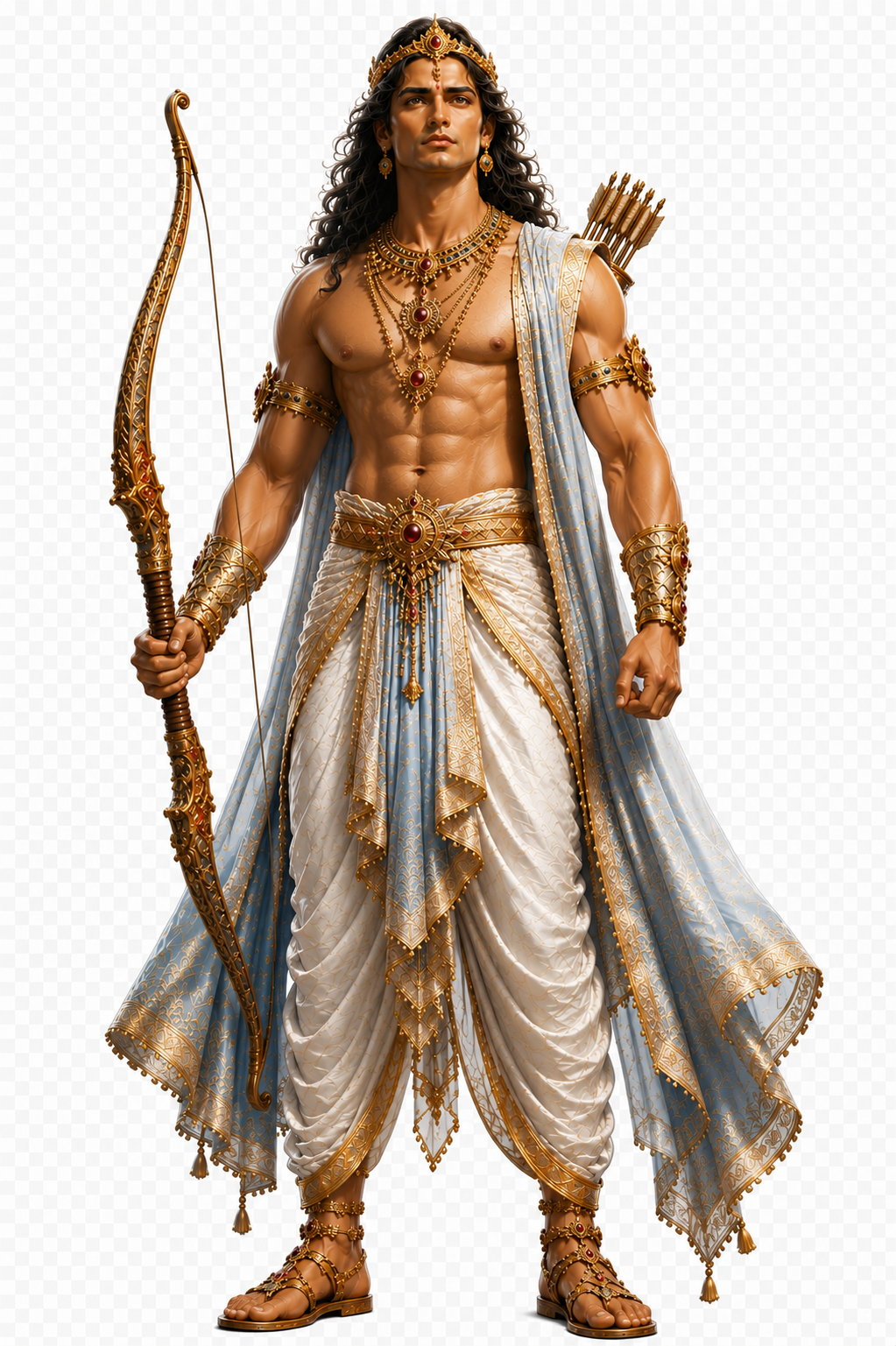
Arjun
Arjun could strike the target others could barely see. At Kurukshetra, his hardest act was lowering Gandiva and asking whether victory could justify the people standing before him.
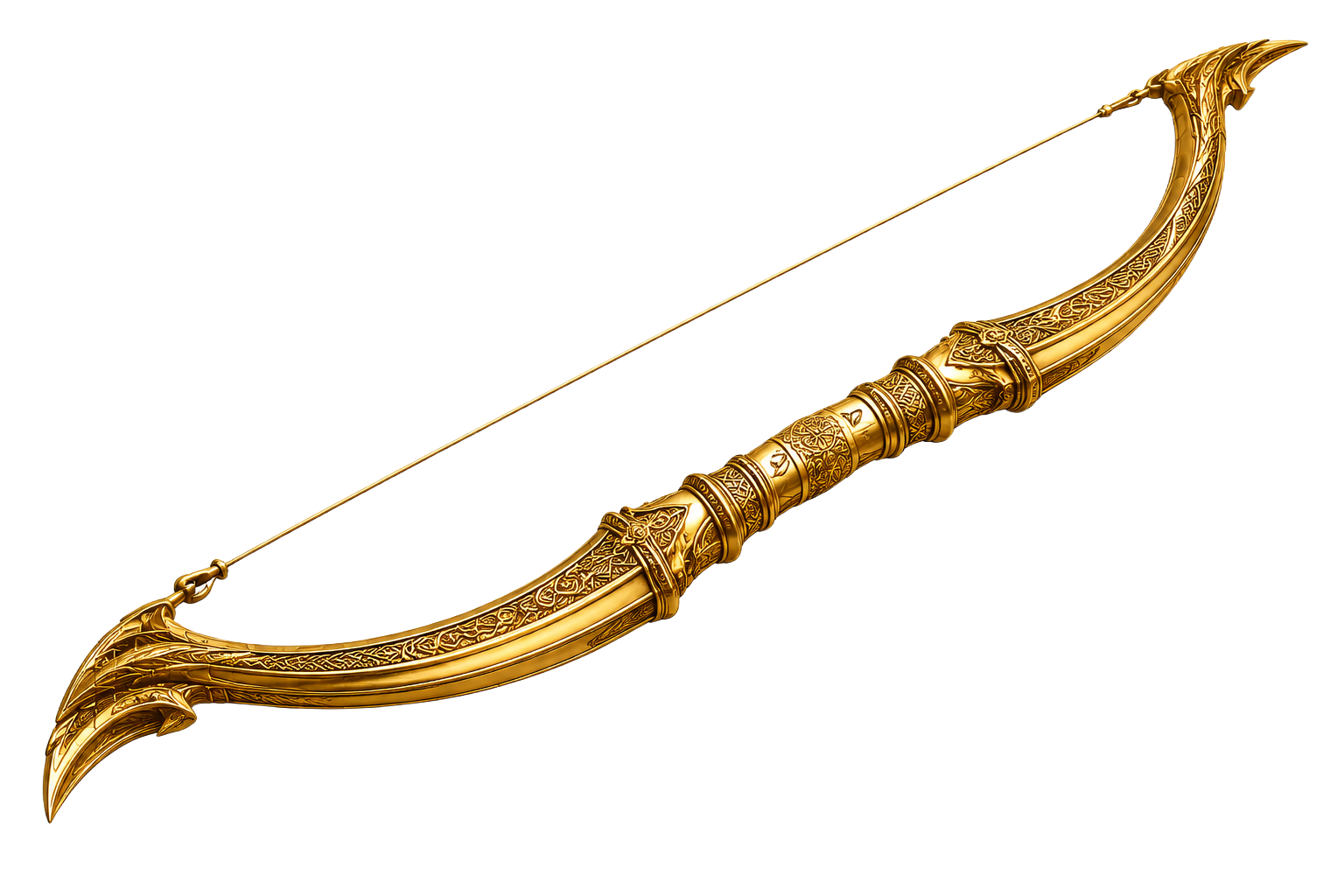
Vijaya Bow
Every arrow possesses tremendous piercing force and is nearly impossible to stop.
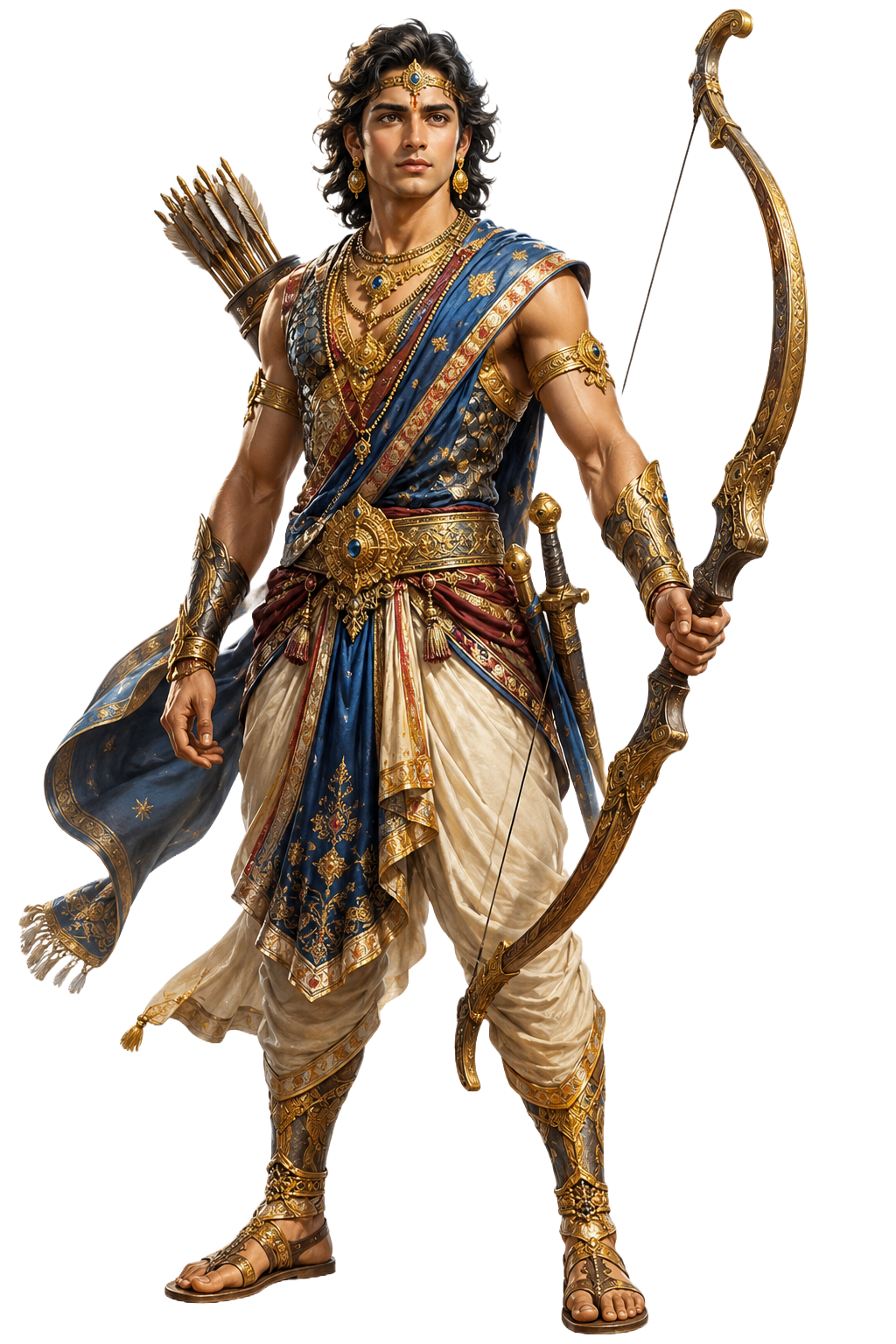
Abhimanyu – Hero of Chakravyuha
Abhimanyu broke into the Chakravyuha when no other Pandava warrior present could open it. Cut off from support, he kept fighting through shattered bows, dead horses and broken weapons until an entire ring of veterans closed around him.
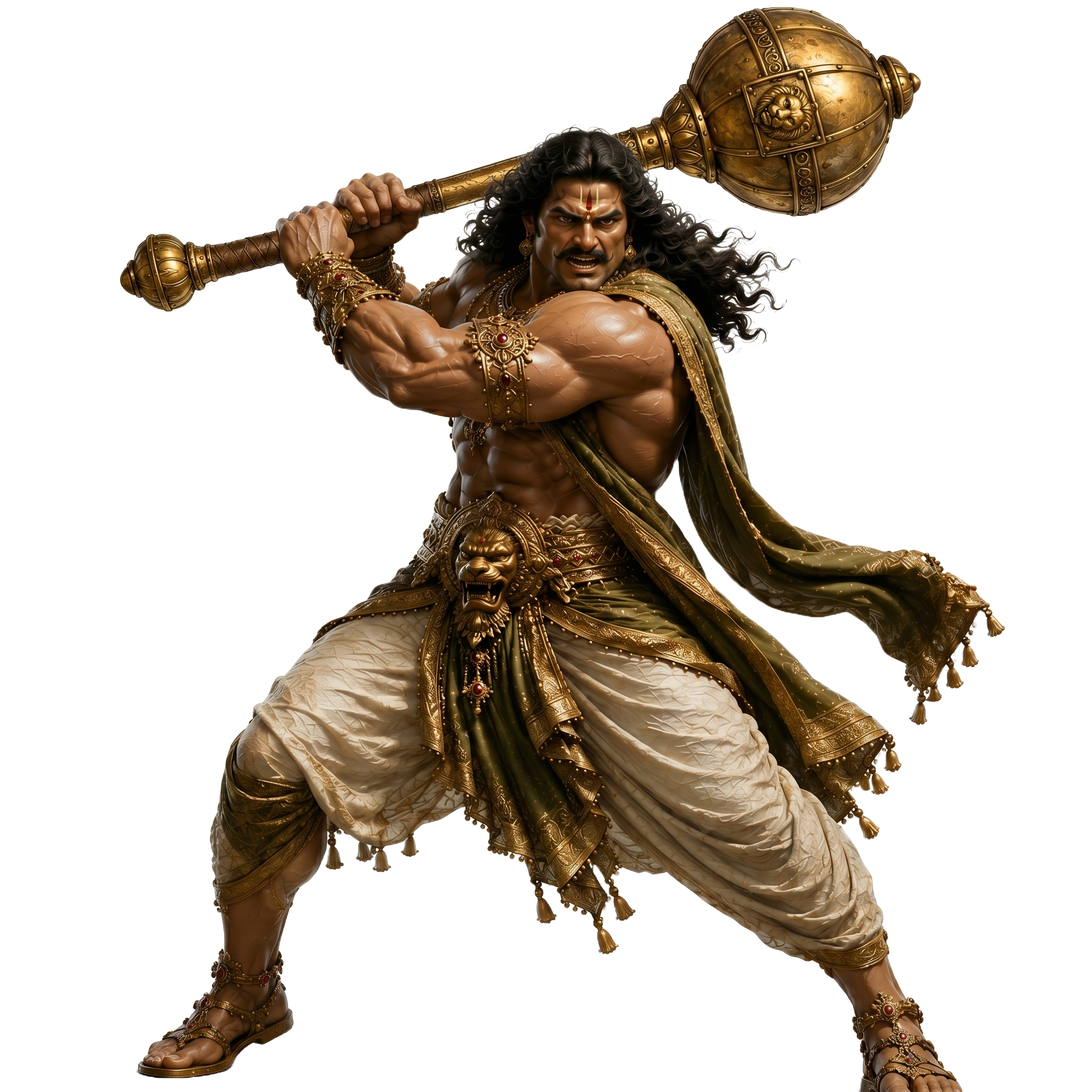
Bhima
The mightiest warrior among the Pandavas and the fearless son of Vayu, the Wind God. Blessed with immeasurable strength, Bhima shattered mountains, slew countless Rakshasas, and fulfilled every vow he made on the battlefield. Wielding his colossal mace with unmatched power, he became the unstoppable force of Dharma, ending the reign of Duryodhana and countless mighty warriors during the Kurukshetra War.
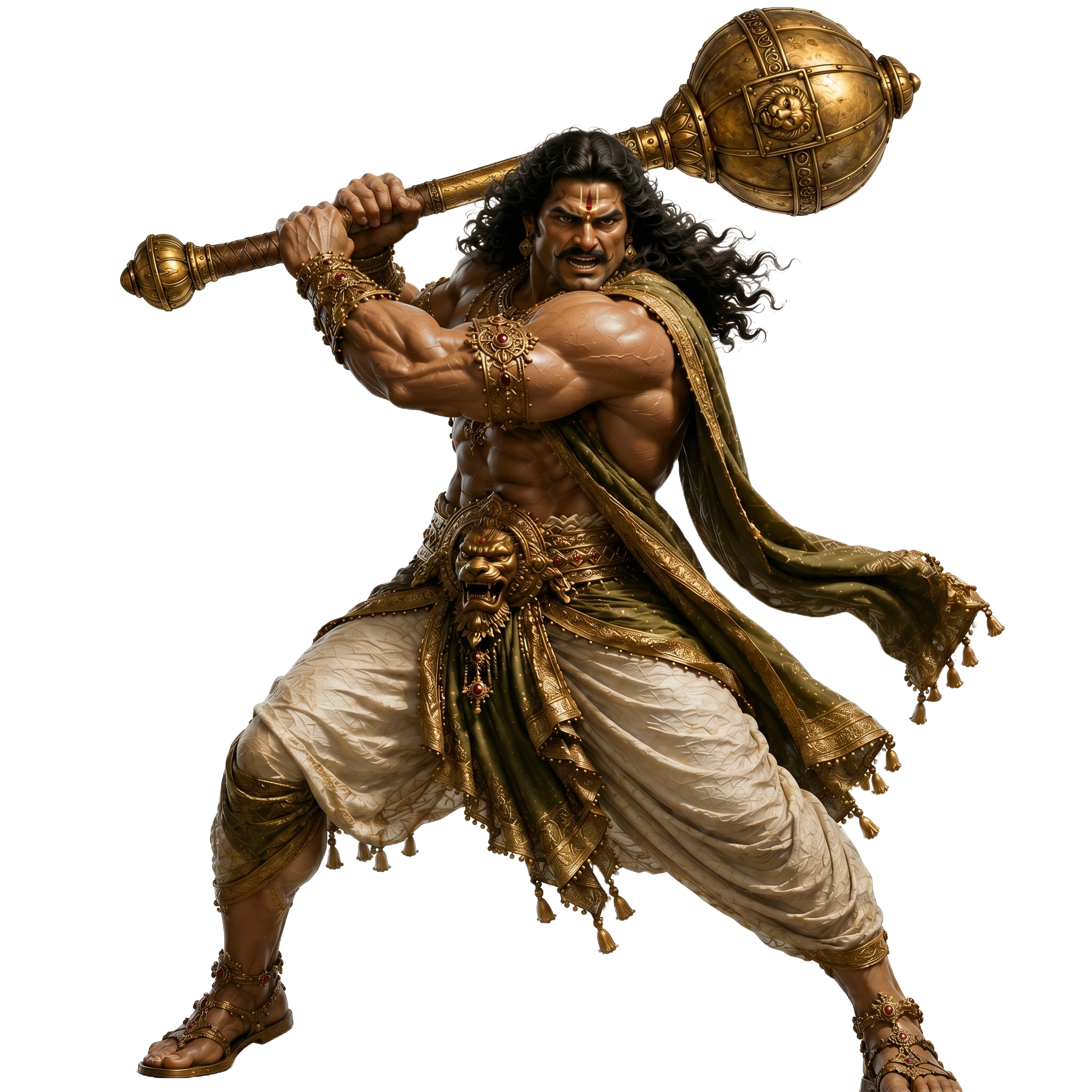
Bhima – Slayer of Duryodhana
Bhima is the Pandavas' raw force made flesh: the brother who breaks monsters, armies and finally Duryodhana himself. Yet his strength serves something larger than rage. Again and again, he becomes the arm that protects his family, keeps terrible vows and turns remembered humiliation into action.
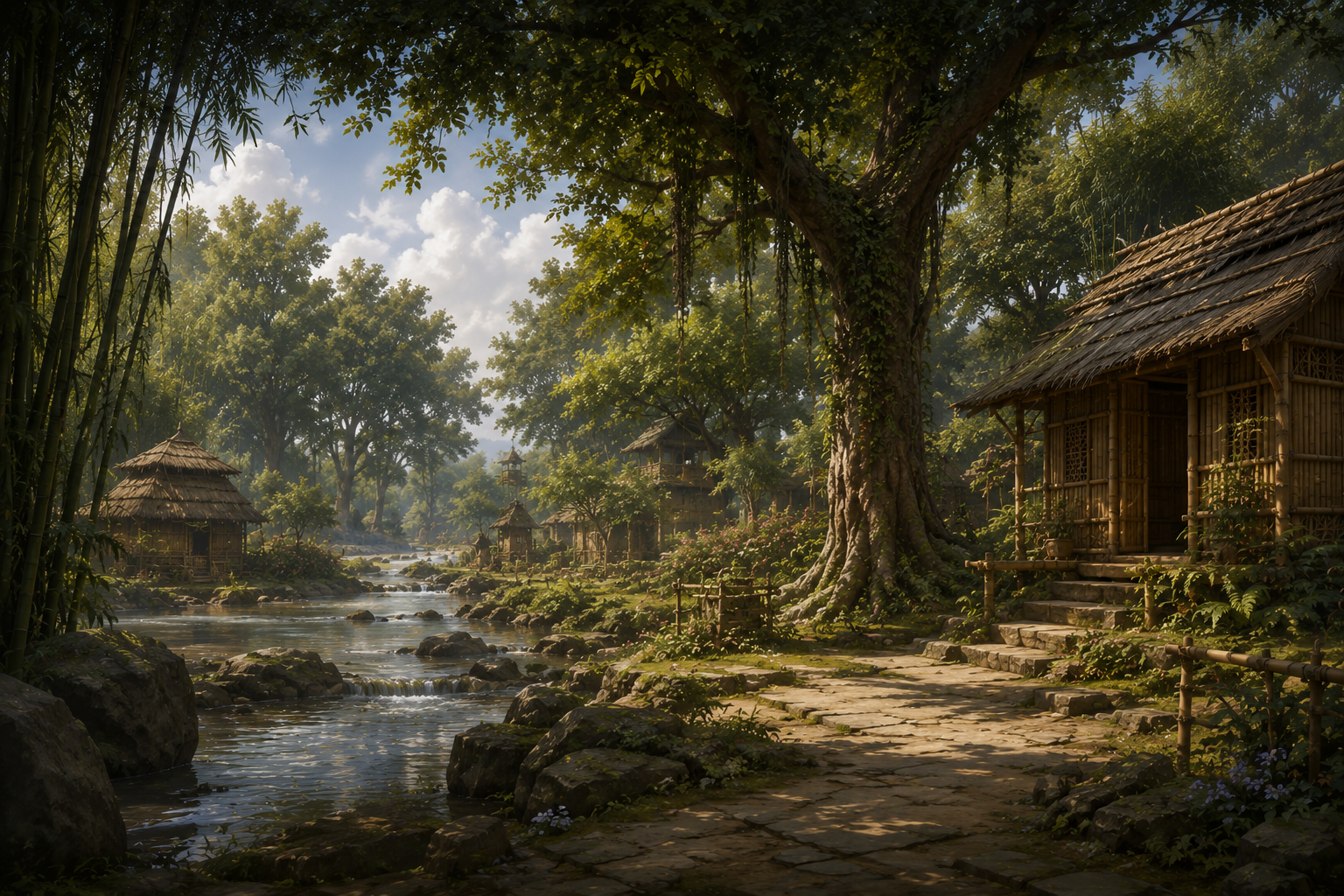
Sutikshna Ashrama
Deep within the Dandaka Forest, Rama found neither battle nor kingdom. He found a sage whose welcome reminded him why the forest still sheltered dharma.
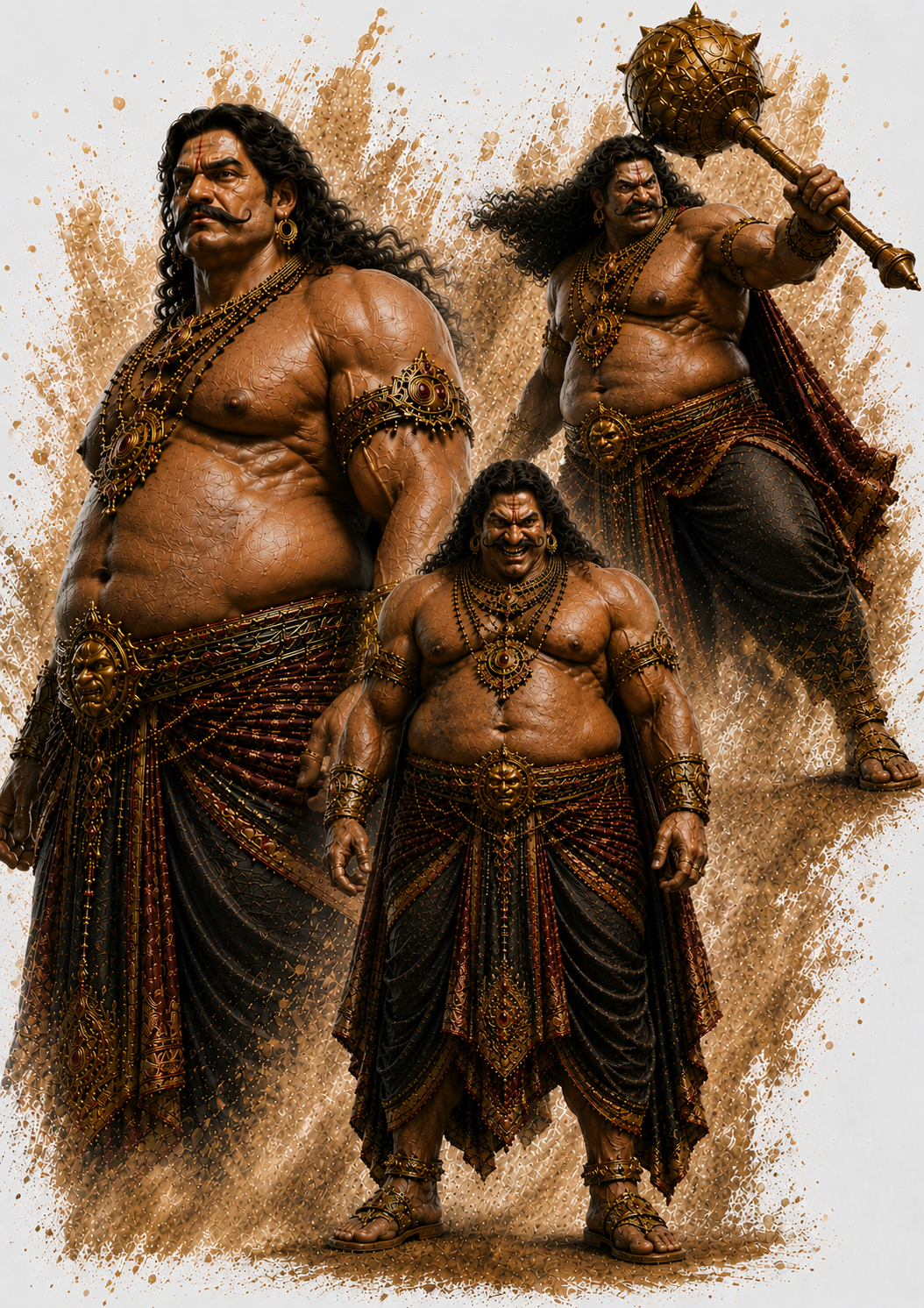
Kumbhakarna
Kumbhakarna is remembered as a giant whose strength shook battlefields and whose final choice carried more weight than his colossal body. He knew his brother was wrong, yet marched into war because he would not abandon his family.
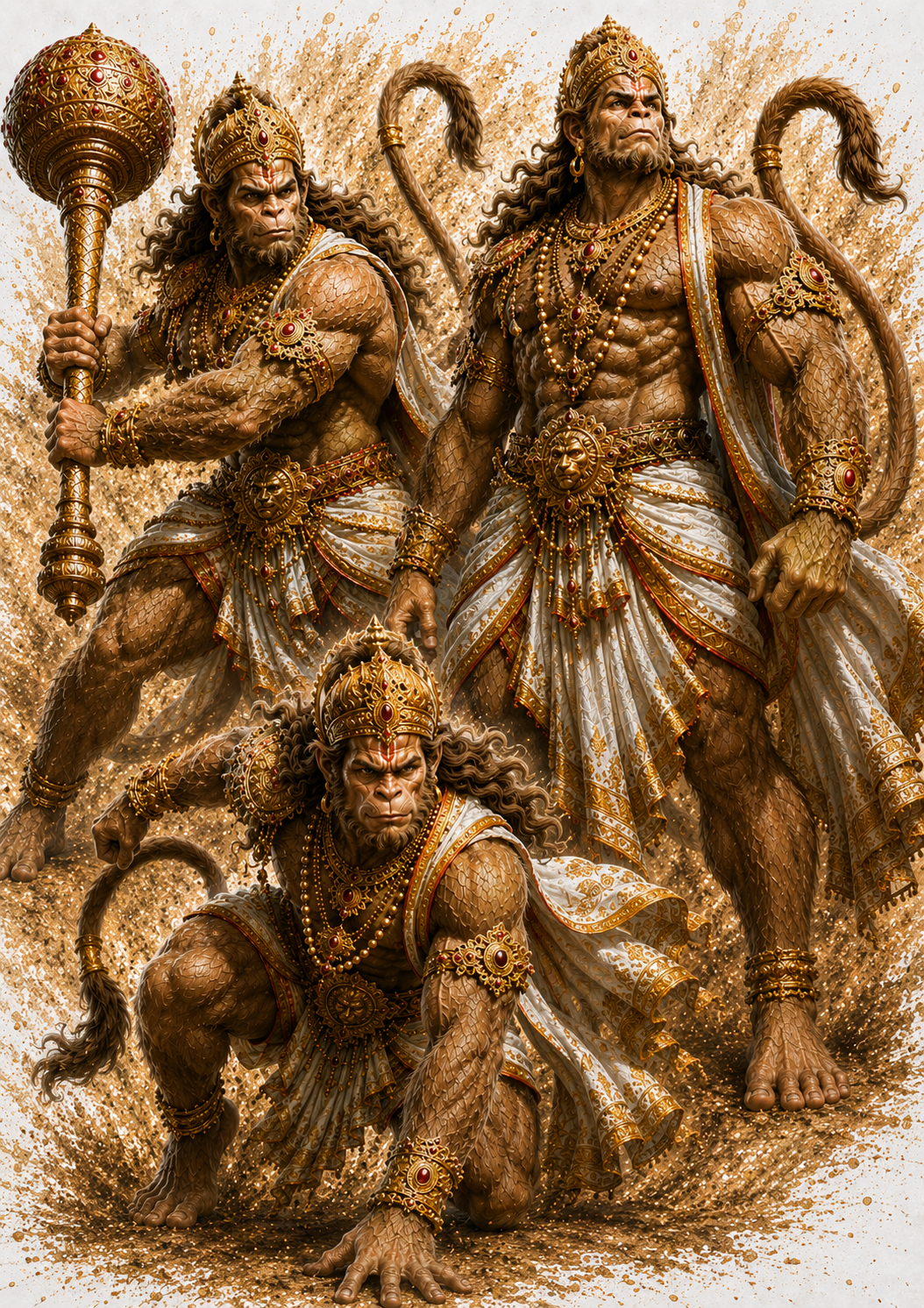
Vali
Vali was the greatest warrior among the vanaras, a king whose strength turned every duel in his favor. His greatest victories made him fearless. His greatest mistake cost him his kingdom and his life.
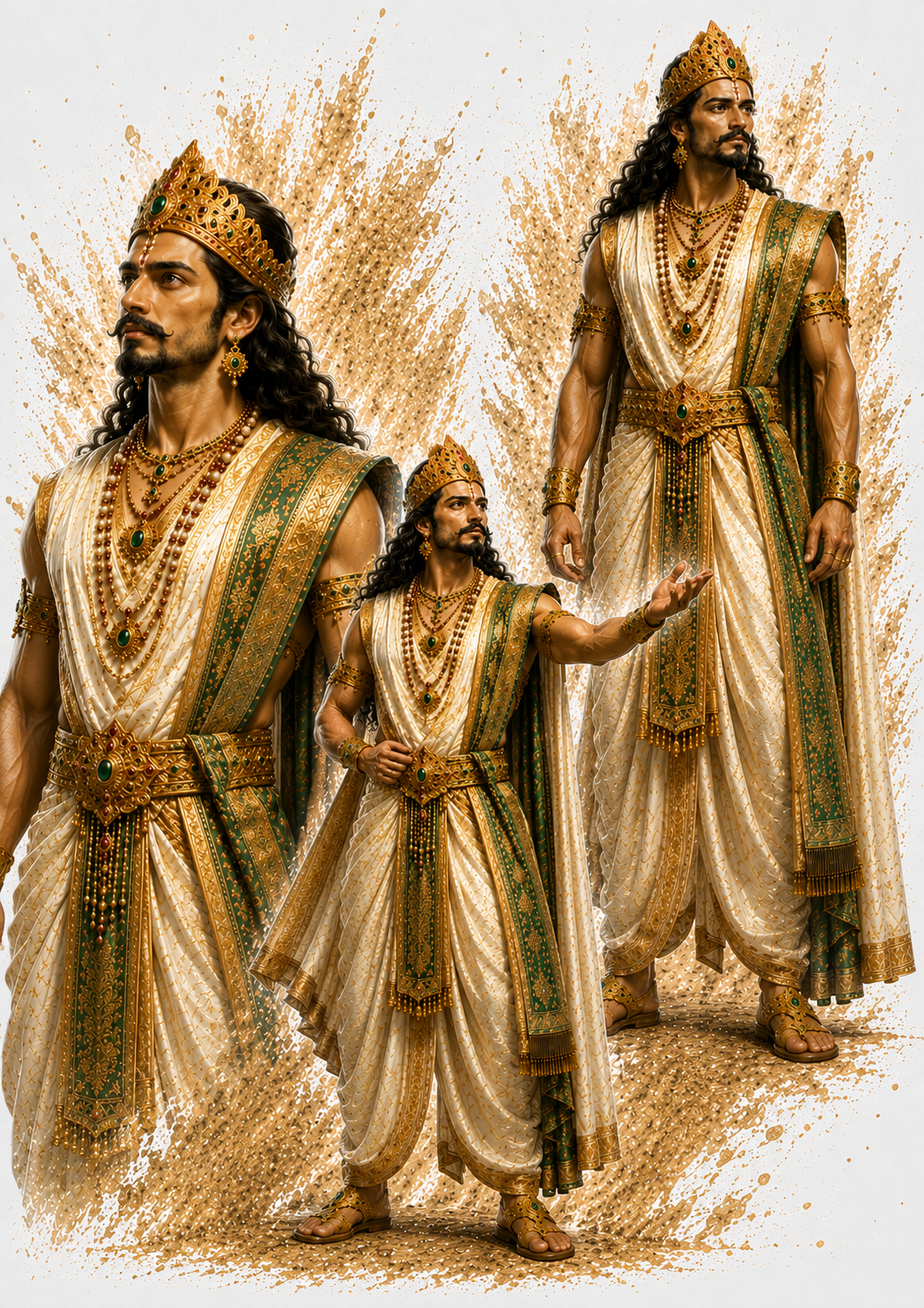
Vibhishana – The Righteous Rakshasa
Vibhishana chose righteousness over blood. In a kingdom that cheered injustice, he stood alone, crossed the battlefield and changed the fate of Lanka forever.
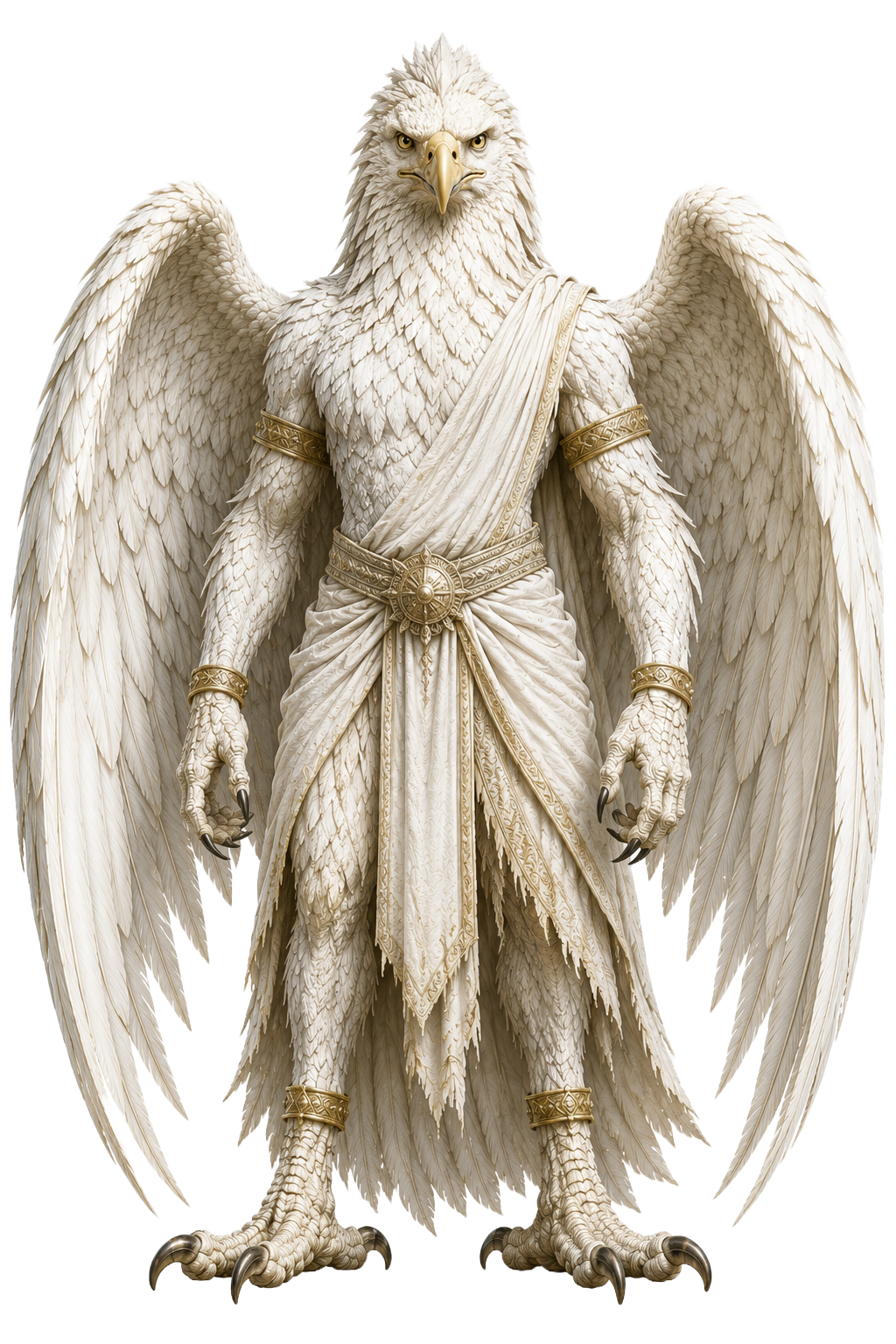
Jatayu – Defender of Sita
Old in years but unbroken in spirit, Jatayu rose alone against Ravana to protect Sita. He could not win the battle, but his sacrifice became one of the purest acts of courage in the Ramayana.
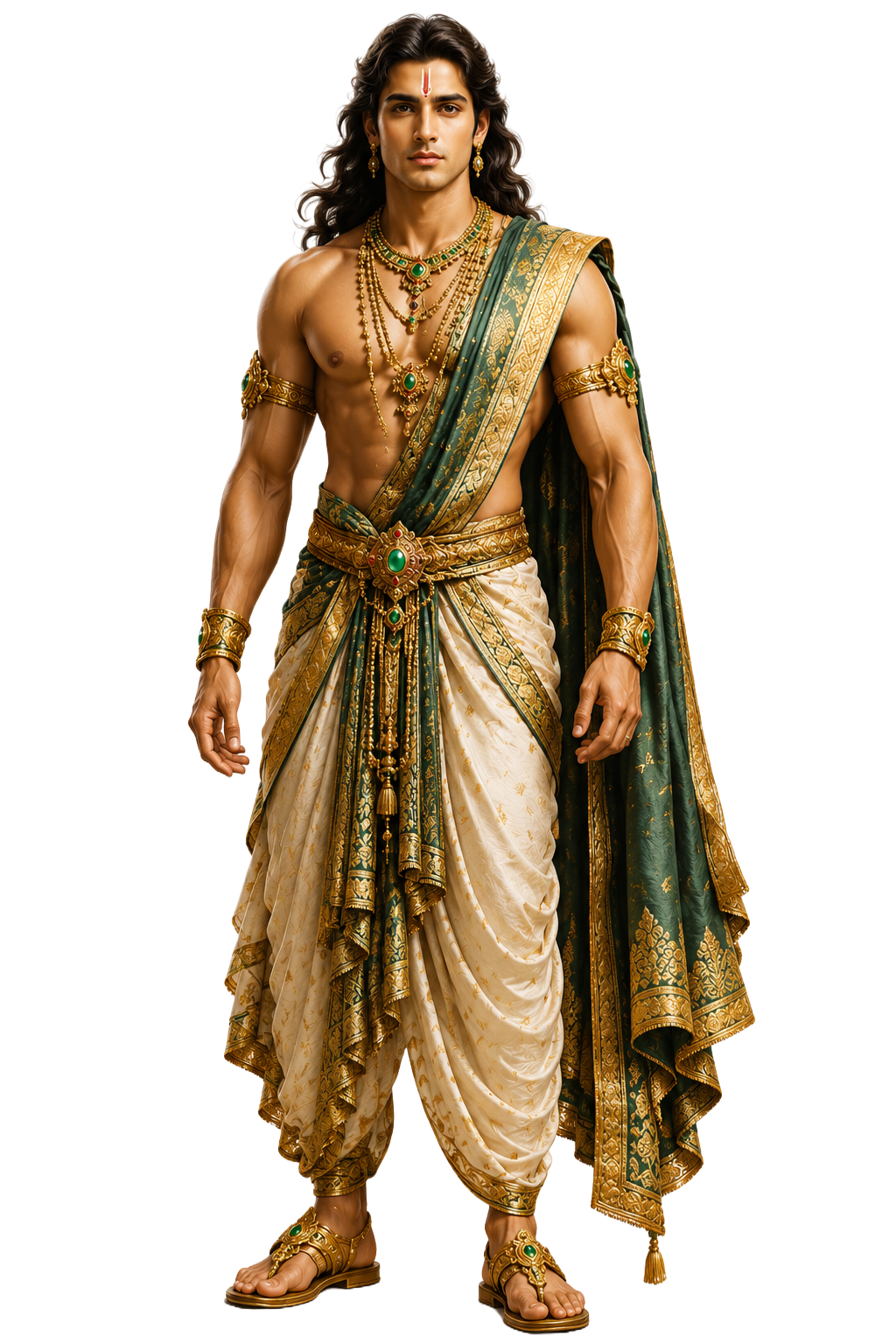
Bharata – Guardian of Dharma
Bharata could have ruled an empire without challenge. Instead, he placed Rama's sandals upon the throne and spent years governing as a guardian rather than a king.
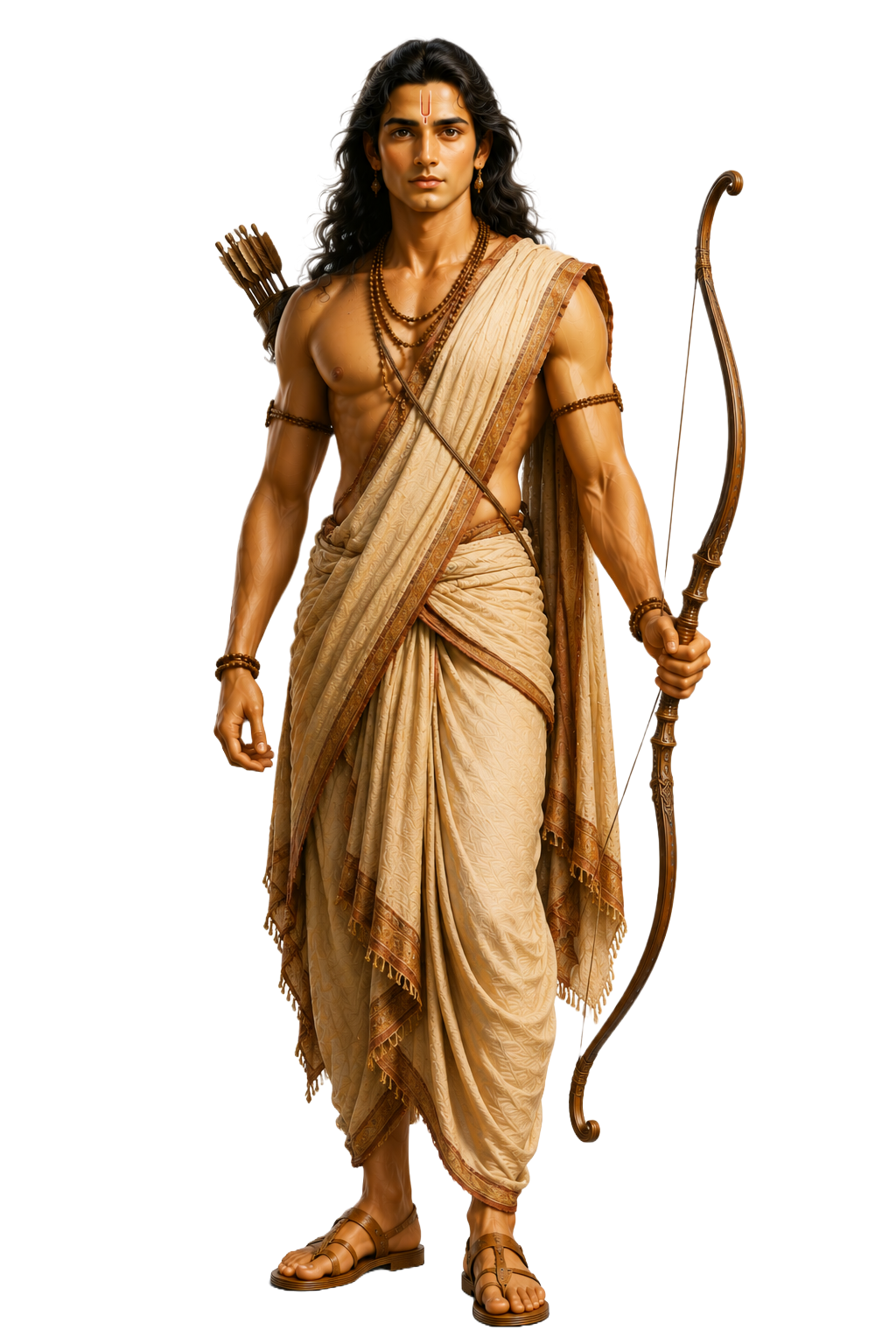
Lakshmana – The Devoted Brother
Lakshmana never sought a throne or glory. He chose a harder path. Every step of Rama's exile, every battle of Lanka and every sacrifice became his own.
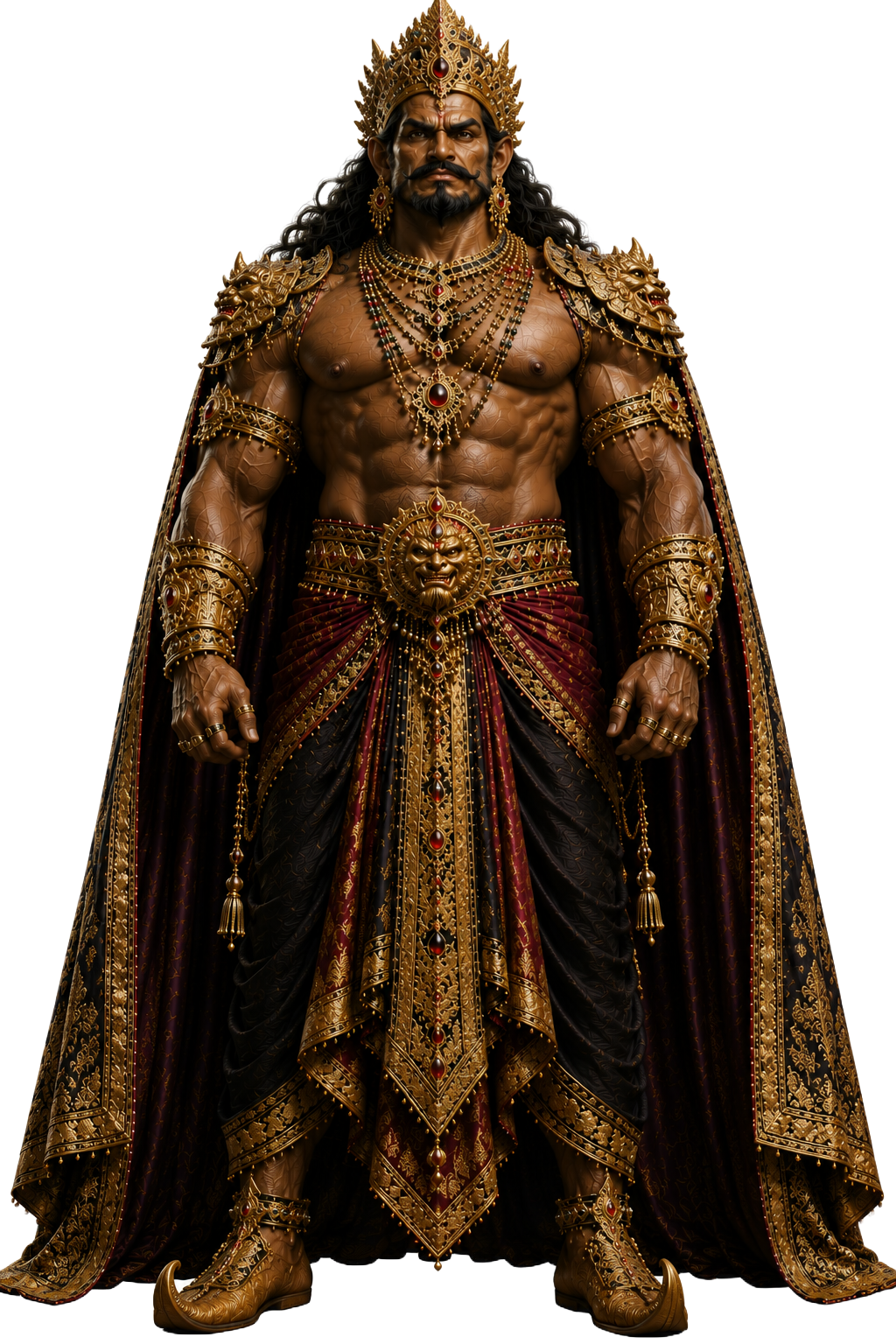
Ravana – Lord of Lanka
Ravana mastered the Vedas, conquered mighty kings and won terrifying boons through relentless austerity. His greatness was real. So was the pride that destroyed everything he ruled.
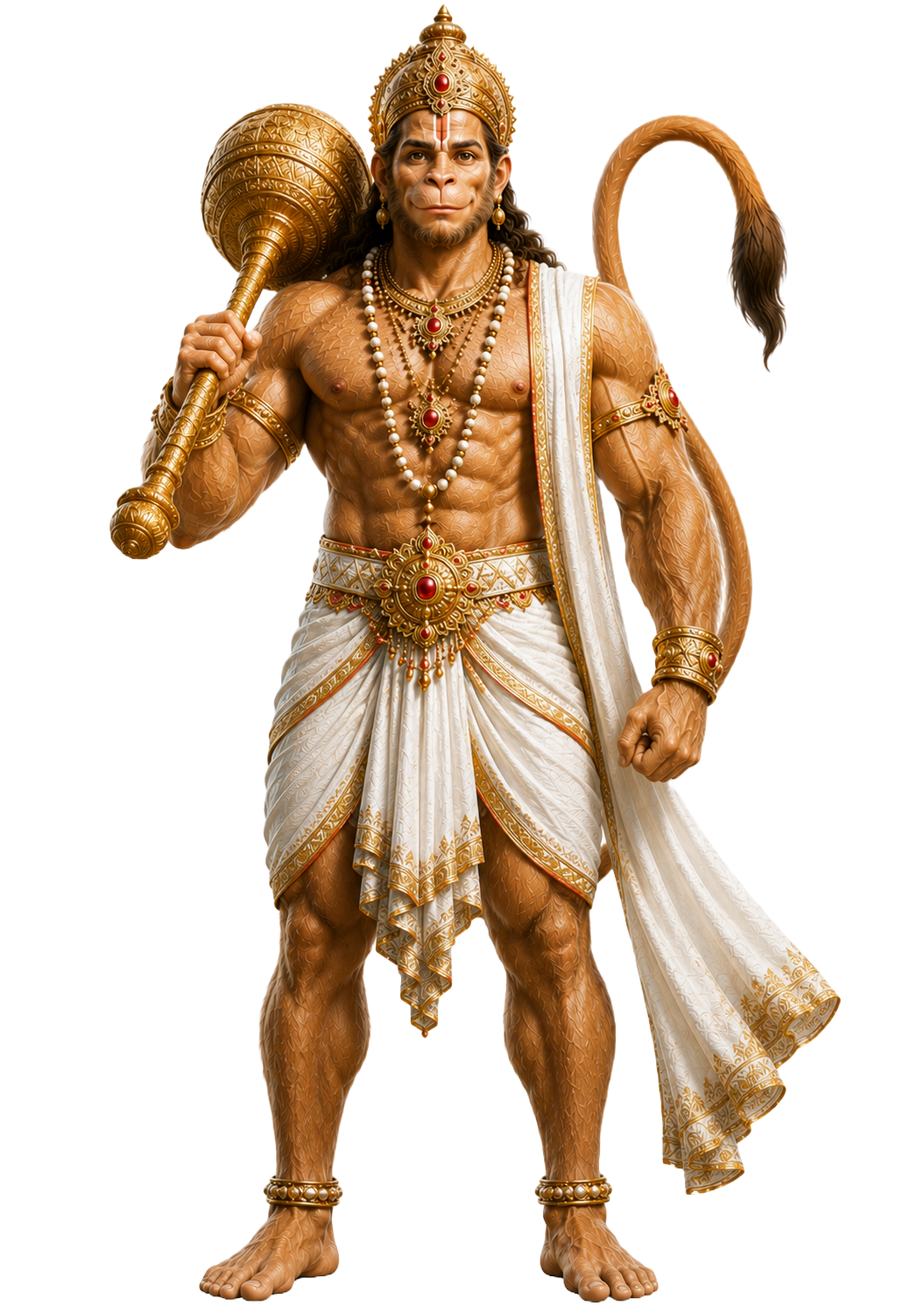
Hanuman – Son of Vayu
Hanuman crossed an ocean with a single leap, found Sita when no one else could and carried hope back to Rama. His greatest strength was never power alone. It was devotion without limit.
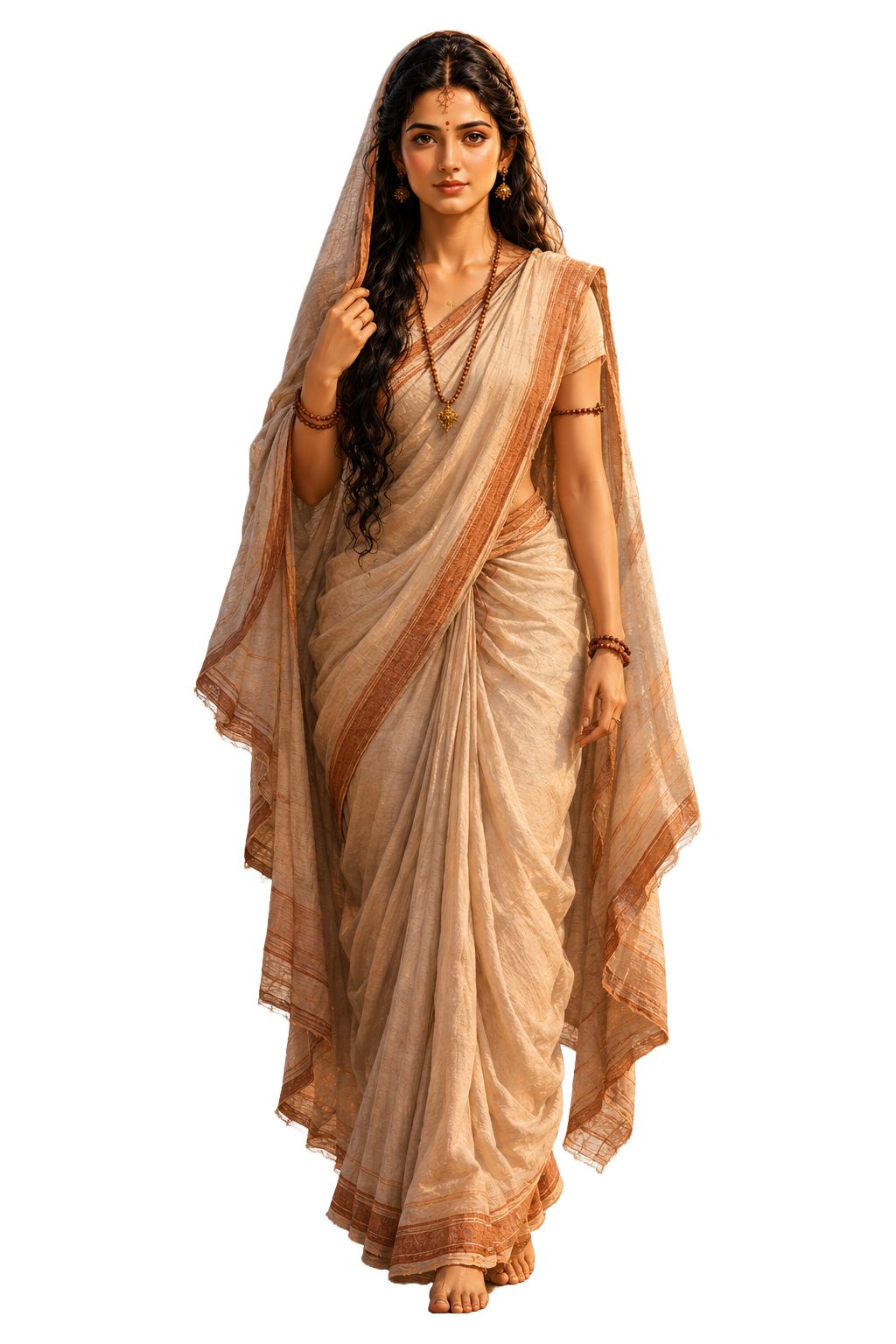
Sita – Daughter of Janaka
Sita walked beside Rama into exile by choice, endured captivity without surrender and returned to the Earth without abandoning her truth. Her strength was quiet, but it changed the fate of kingdoms.
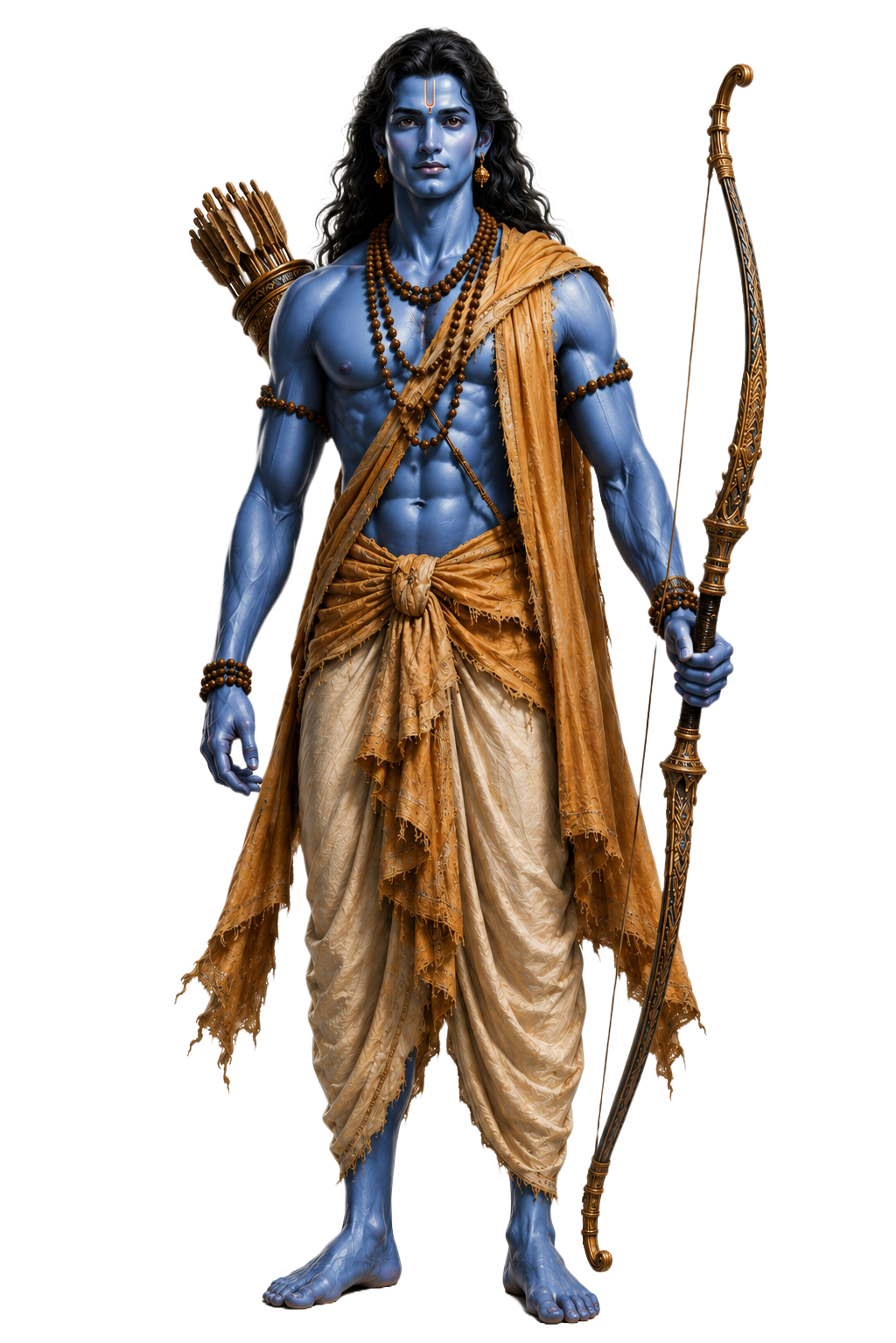
Rama – Scion of Ikshvaku
Rama could have claimed a kingdom by force. Instead, he chose exile to uphold his father's word. Every victory that followed was built upon that first sacrifice.
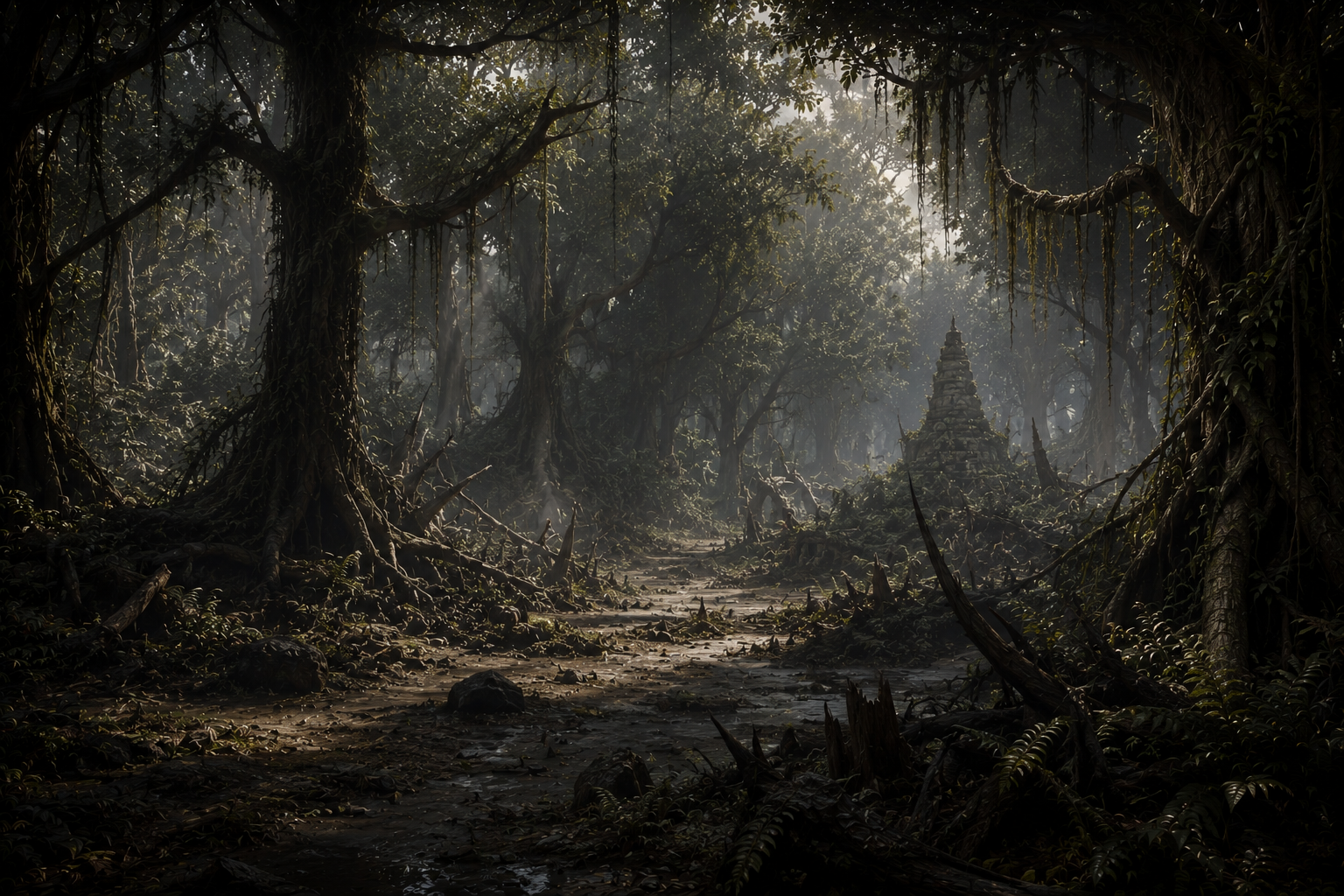
Tataka Forest
Before Lanka. Before Ravana. Rama's first great test began in a forest where fear had silenced every living voice.
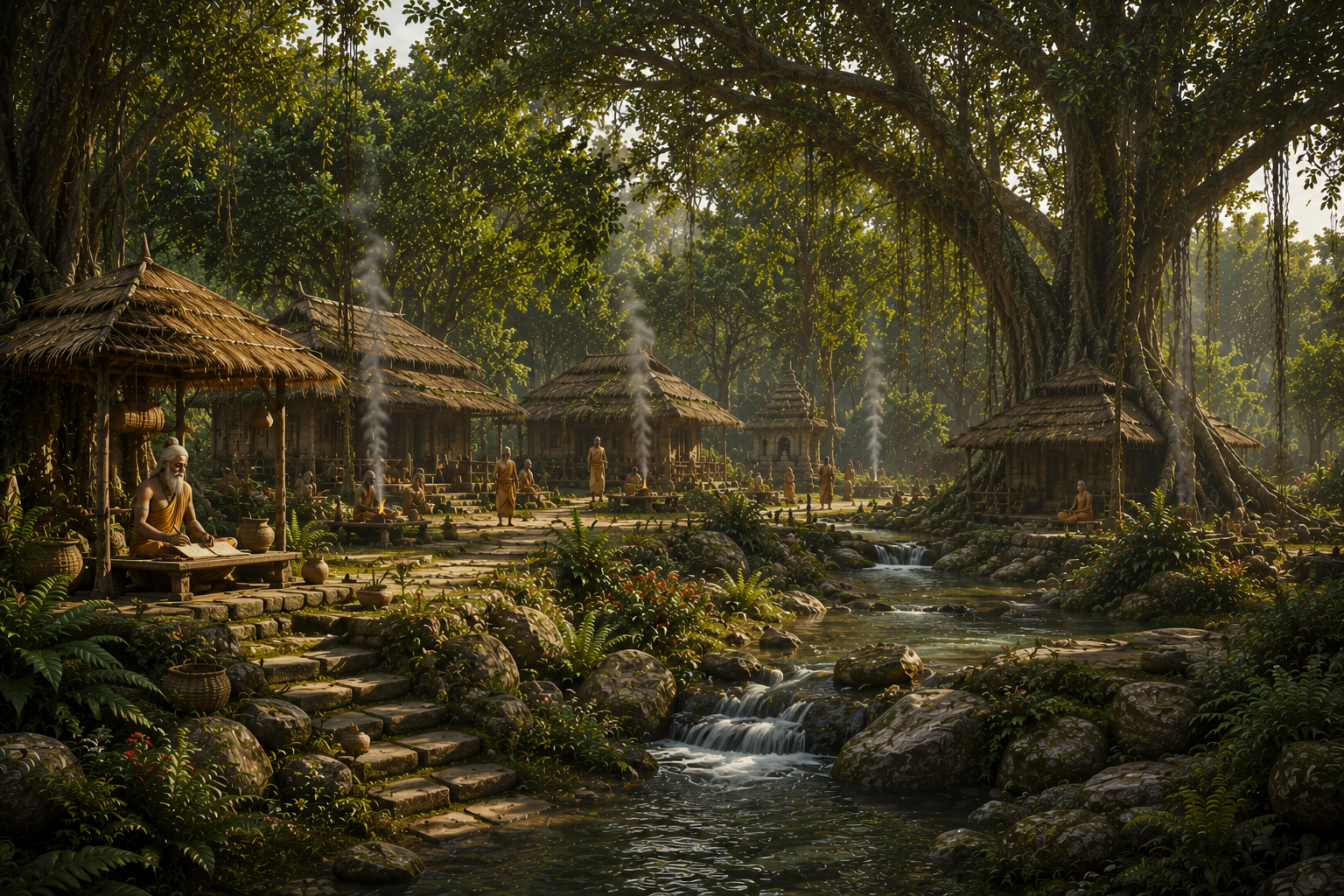
Siddhashrama
Long before Lanka, Rama's first victory for dharma came here. Siddhashrama is where a prince became the guardian of sages and protector of sacred rites.
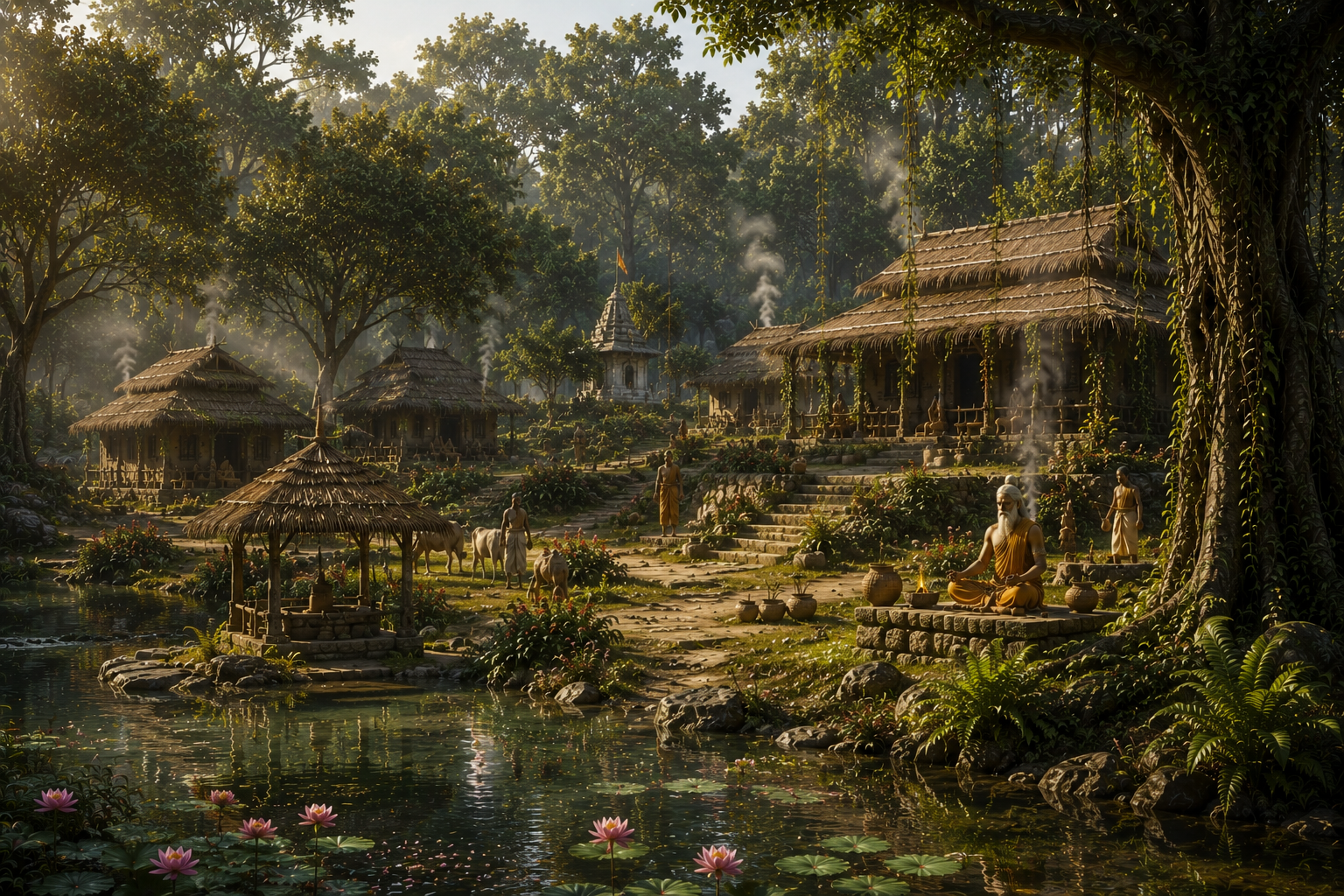
Bharadwaja Ashrama
Where the Ganga and Yamuna meet, Rama found guidance instead of comfort. Bharadwaja Ashrama became the first refuge of exile and the last resting place before returning home.
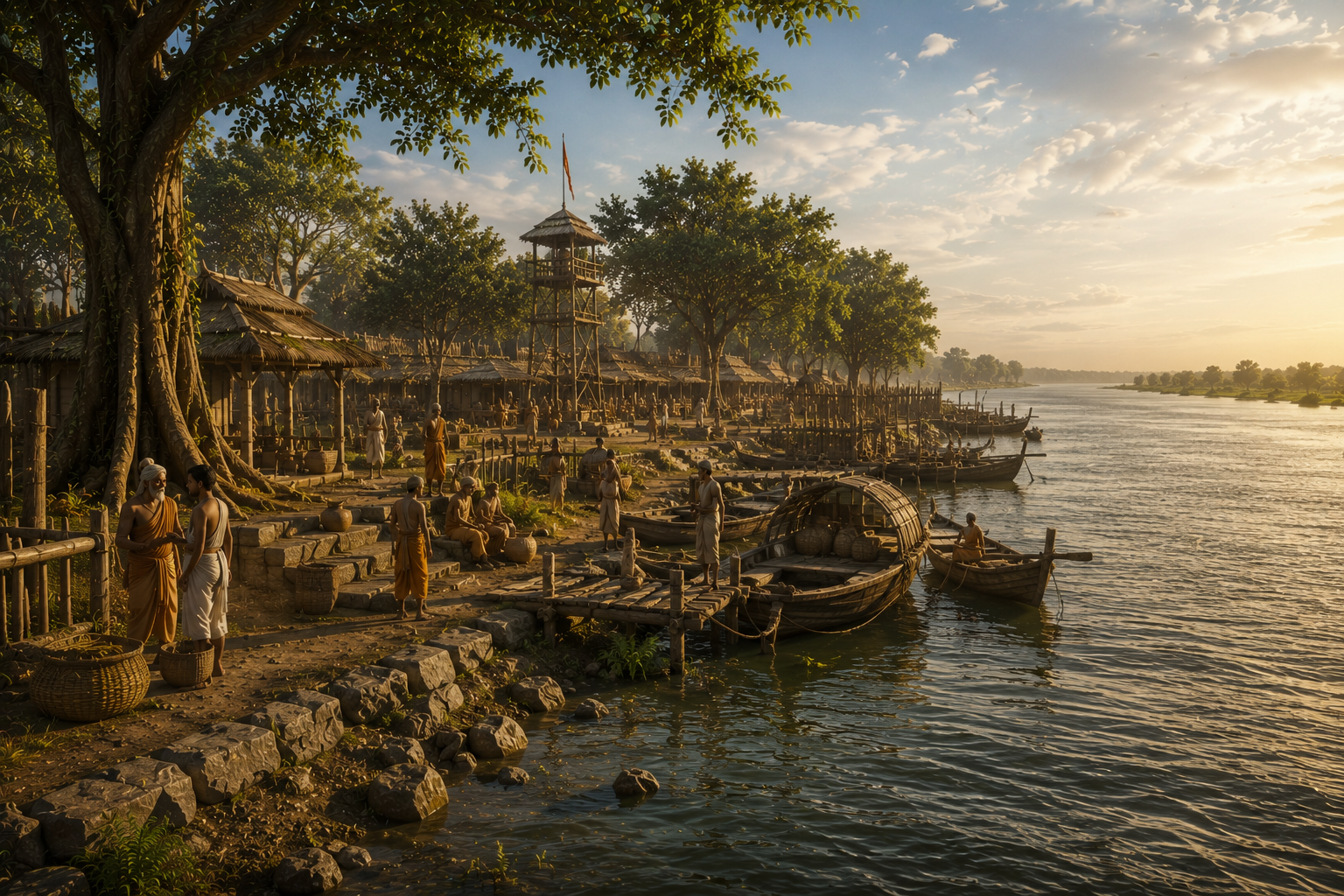
Shringaverapura
At the edge of the Ganga, a king offered his kingdom to an exiled prince. Shringaverapura became the place where friendship mattered more than power.
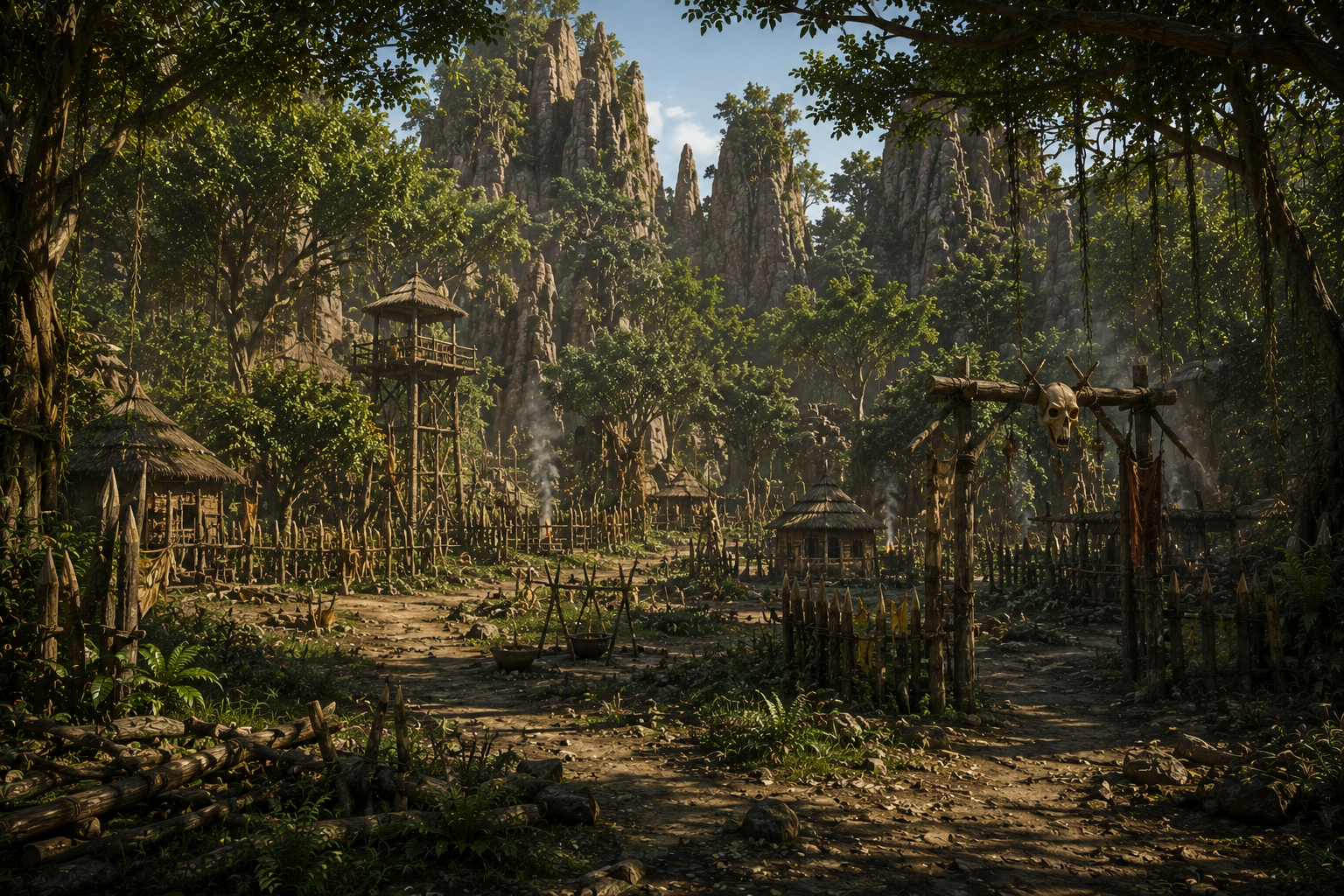
Janasthana
Janasthana was more than a forest. It was Ravana's northern stronghold, where one attack on Sita set the entire Ramayana on the road to war.
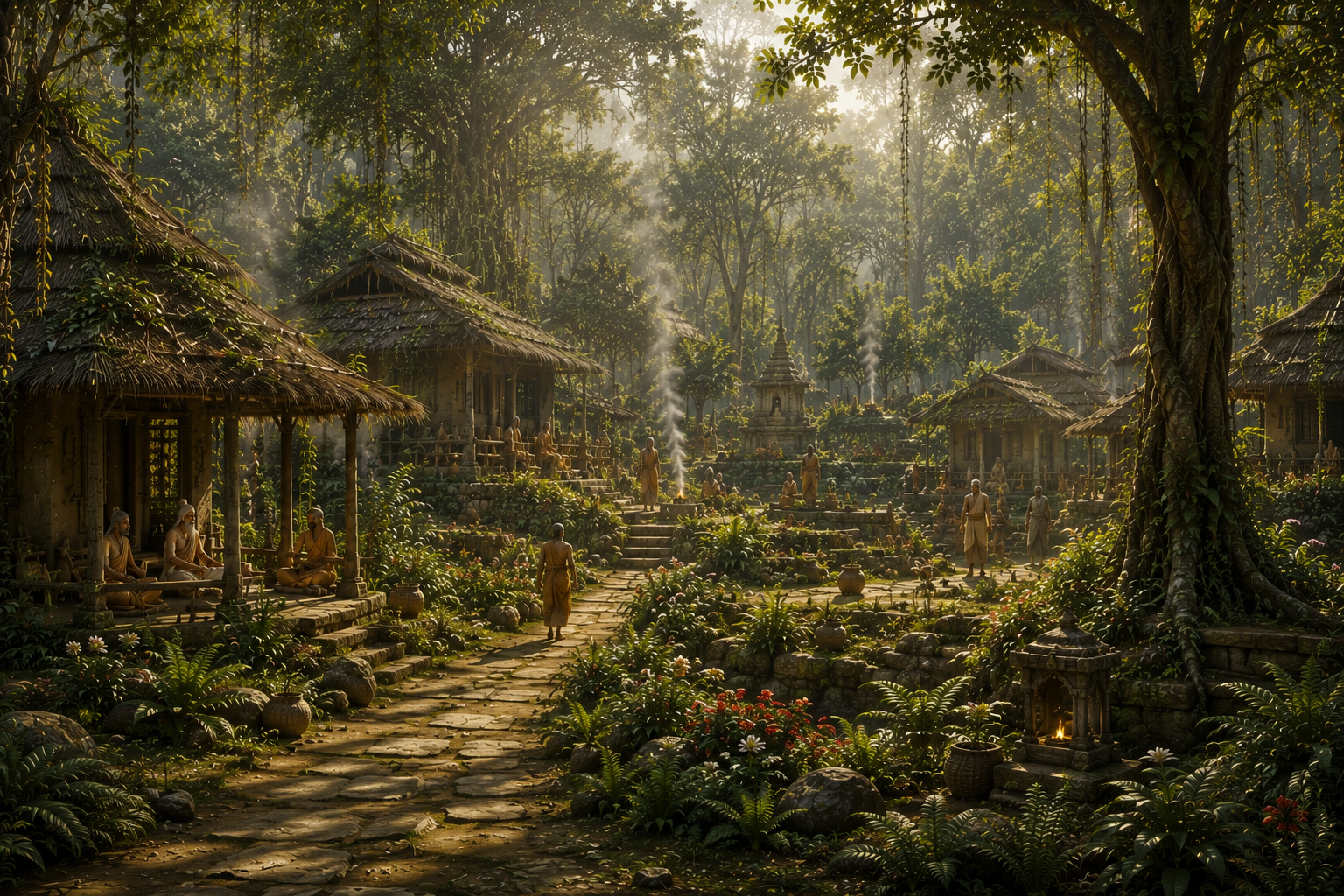
Matanga Ashrama
A quiet hermitage outlived its own sages. Years after they departed, one disciple remained, waiting for Rama with unshaken faith.
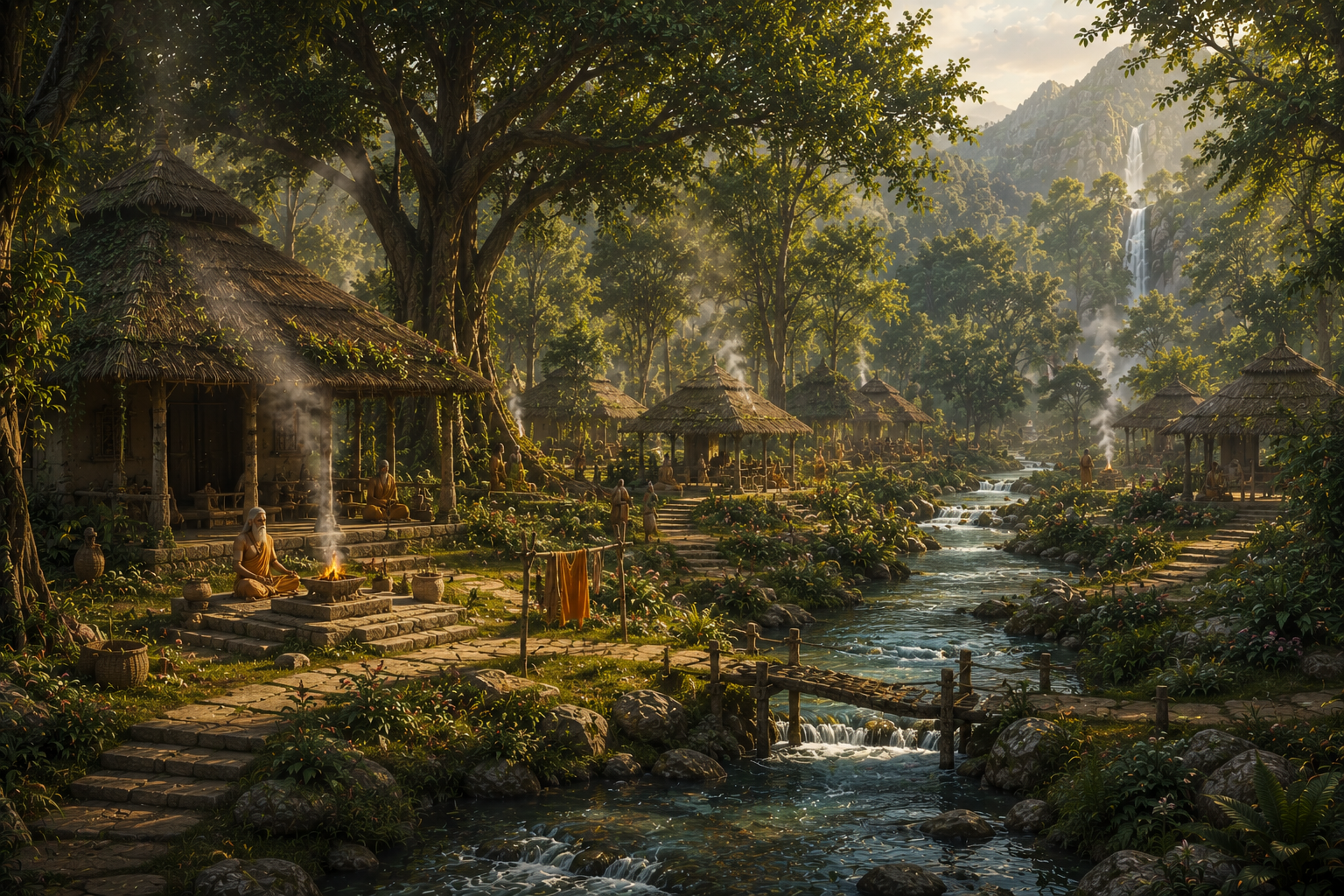
Sharabhanga Ashrama
A sage refused heaven so he could first meet Rama. Sharabhanga Ashrama became the place where devotion outweighed even the promise of the celestial worlds.
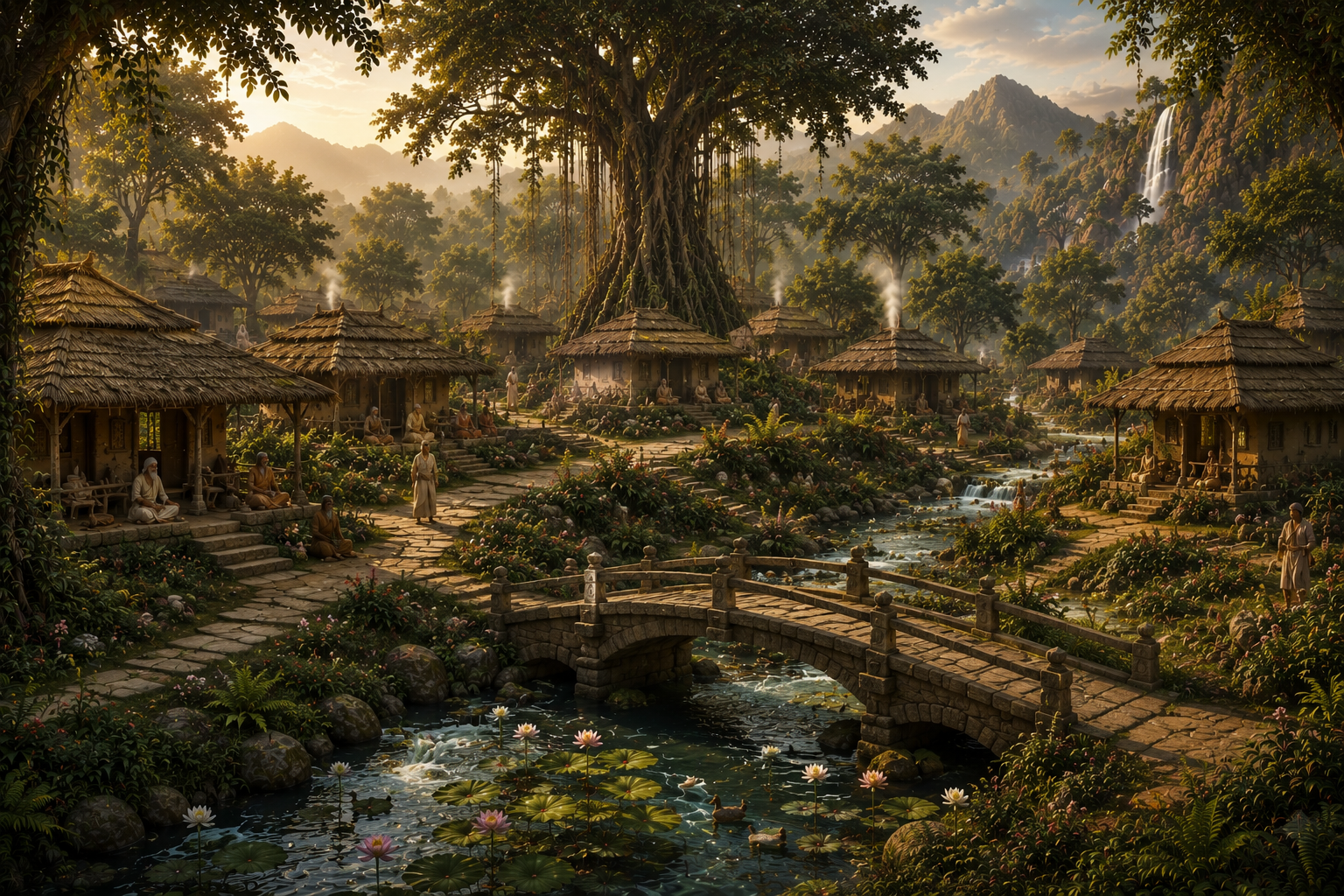
Agastya Ashrama
Rama entered Agastya's hermitage as an exile. He left carrying divine weapons and a new destination that would shape the rest of the Ramayana.
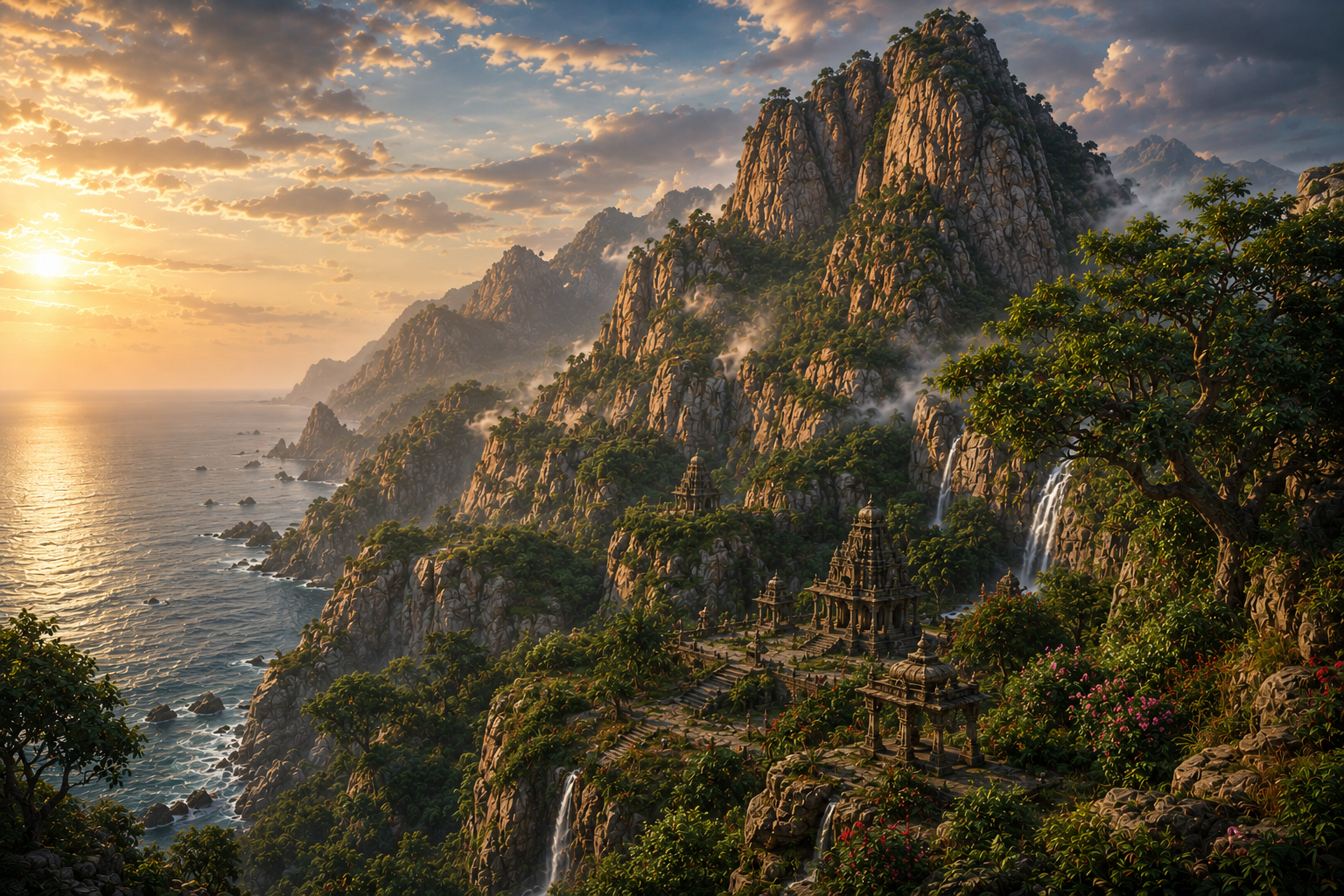
Mahendra Mountain
Mahendra Mountain is where doubt ended. From its summit, Hanuman gathered his strength, expanded to his full might and leapt toward Lanka in one of the defining moments of the Ramayana.
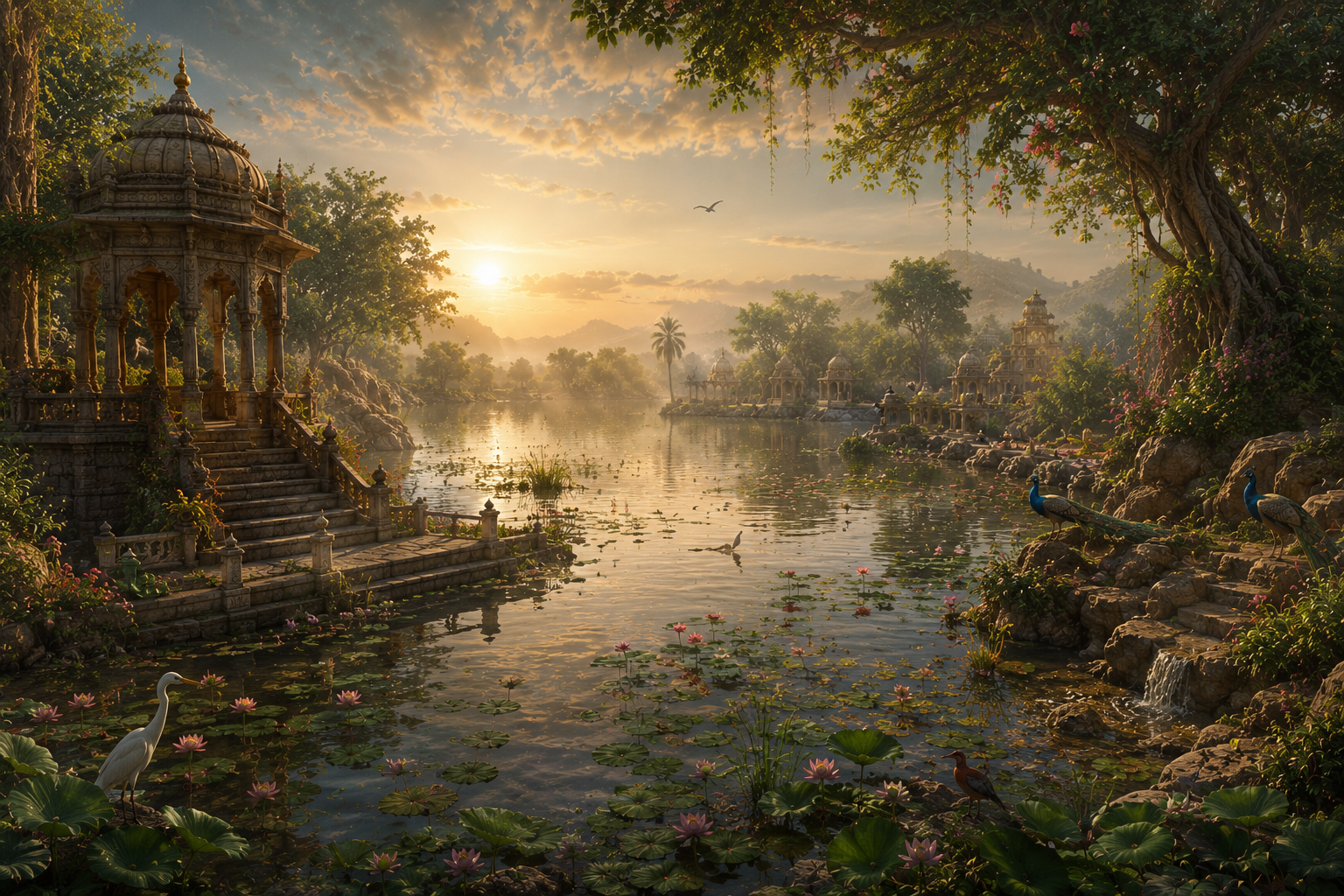
Pampa Sarovar
On the shores of Pampa Sarovar, Rama mourned Sita with a heavy heart. It was also here that fate quietly turned toward hope, leading him to Hanuman and Sugriva.
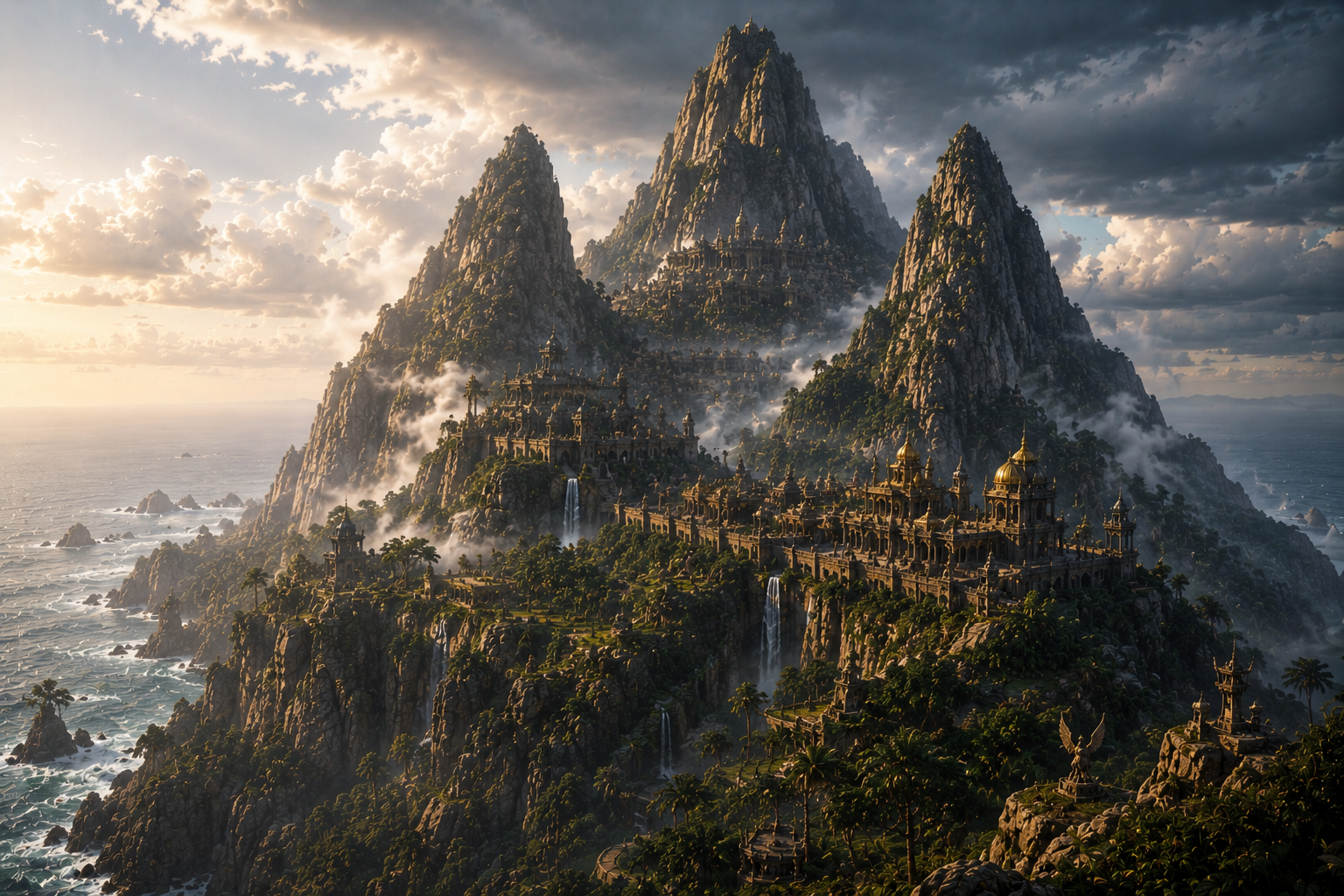
Trikuta Mountain
Trikuta Mountain carried the golden city of Lanka upon its peaks. It watched Ravana's rise, Hanuman's arrival and the final battle that ended the reign of the rakshasa king.
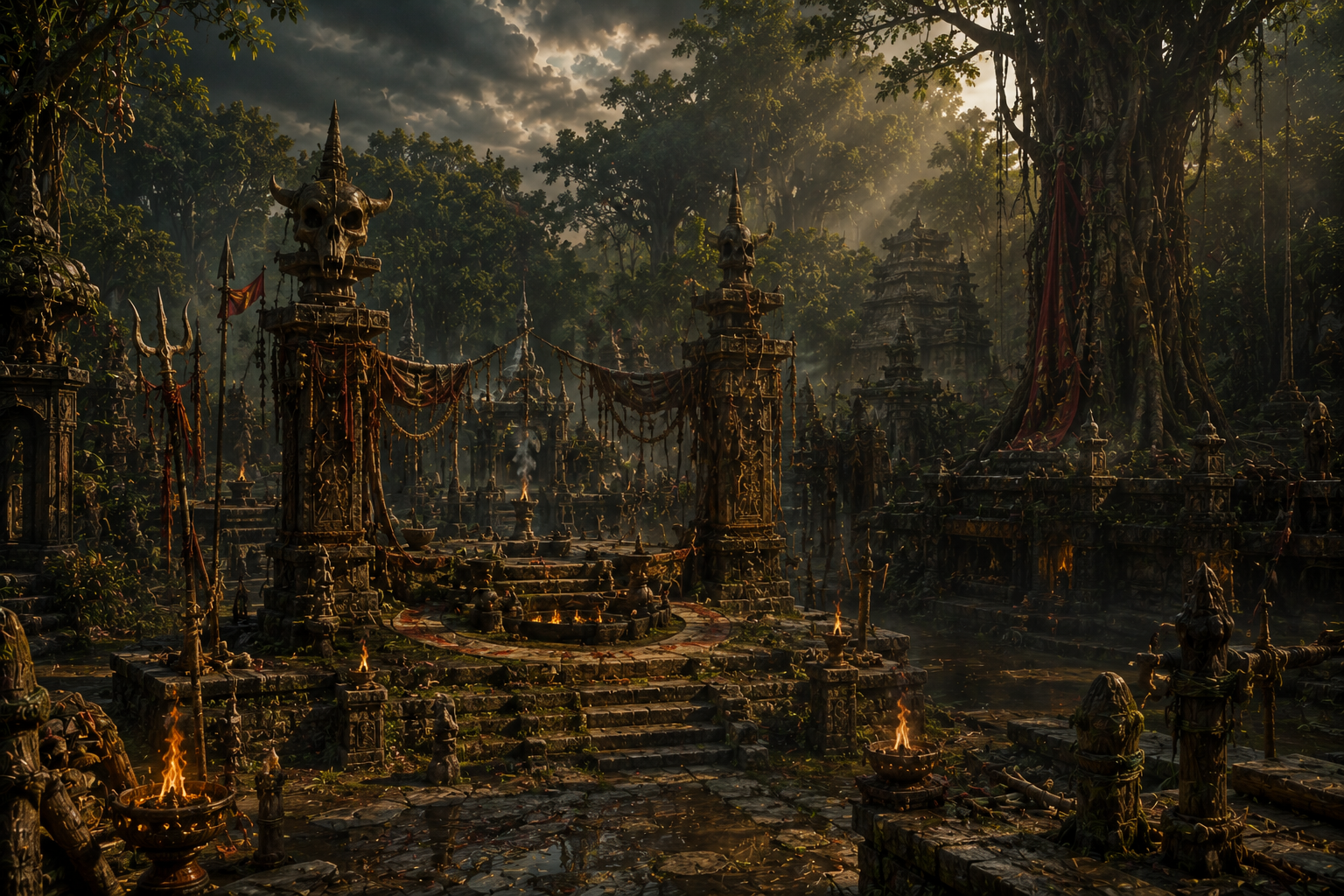
Nikumbhila
Nikumbhila was the place where Indrajit sought victory before battle. Its sacred altar became the target of Lakshmana's most decisive mission in the war for Lanka.
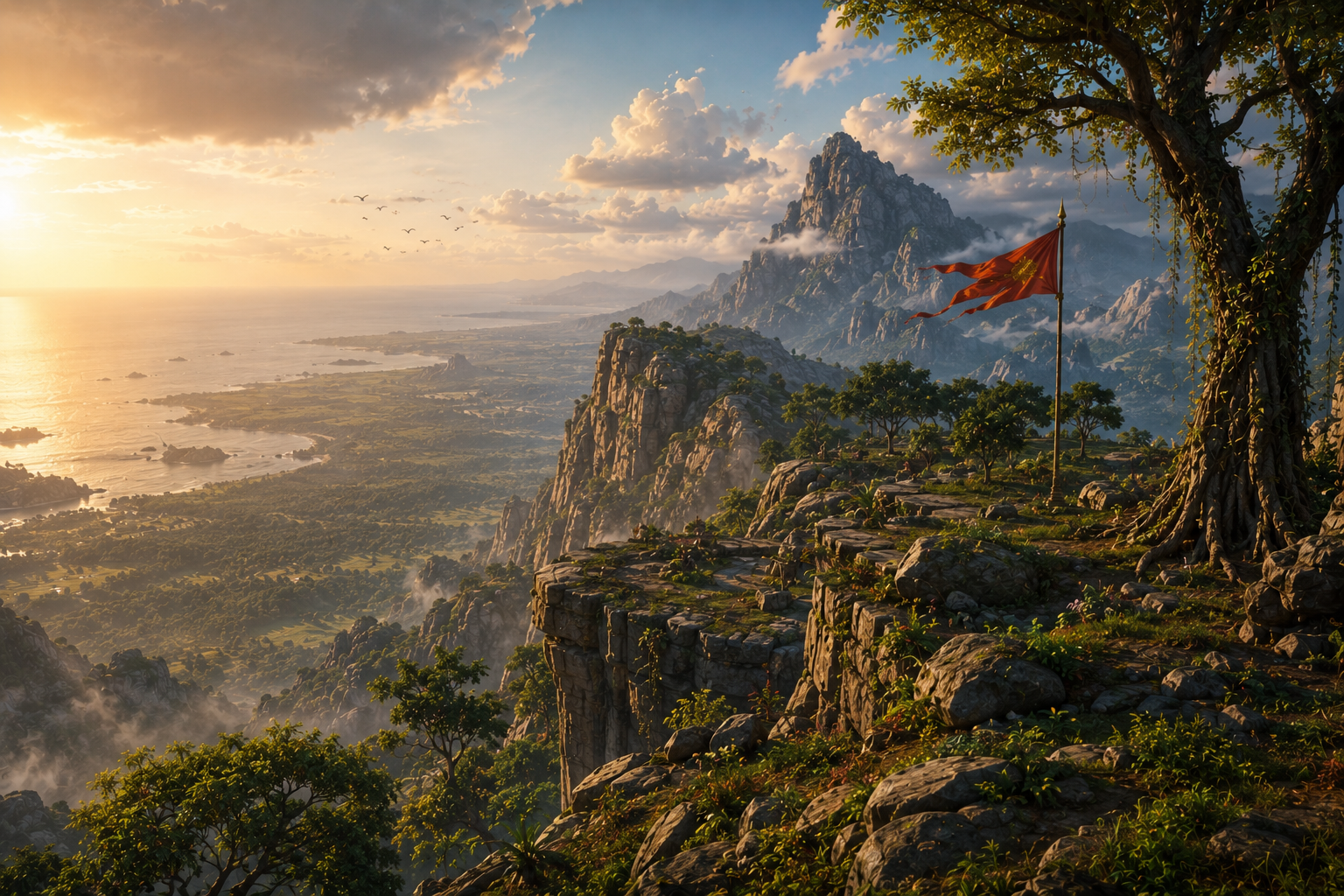
Suvela Mountain
Before the first arrows flew, Rama stood upon Suvela Mountain and looked toward Lanka. The mountain became the final place of preparation before the war that would decide the fate of kingdoms.
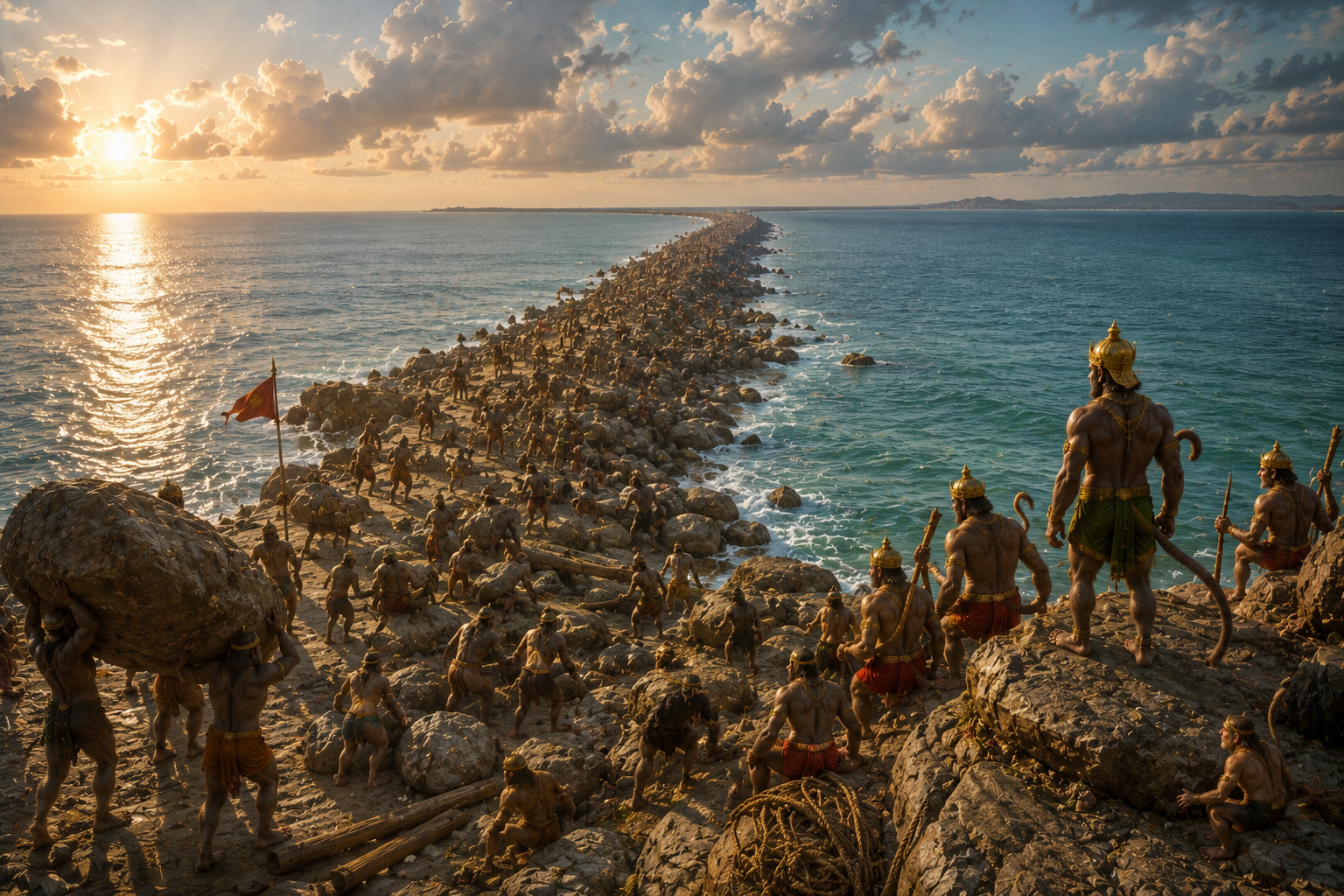
Setubandha
Setubandha turned an uncrossable sea into a road. Built by the vanara army under Nala's direction, it carried Rama's forces toward the war that would end Ravana's reign.
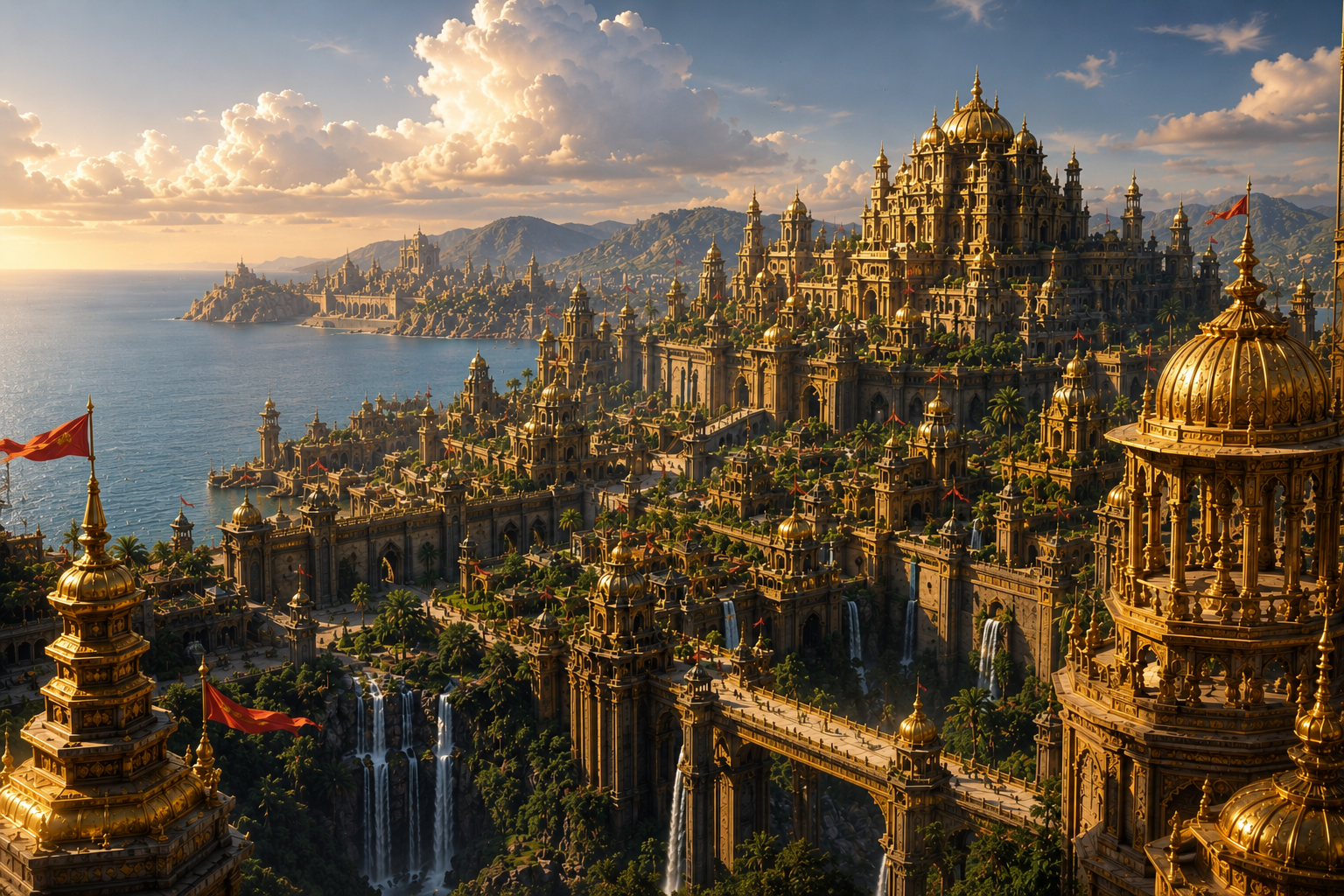
Lanka
Lanka was the greatest fortress of the Ramayana. Its golden towers reflected unmatched prosperity, but its king's choices turned that glory into the setting of an inevitable war.
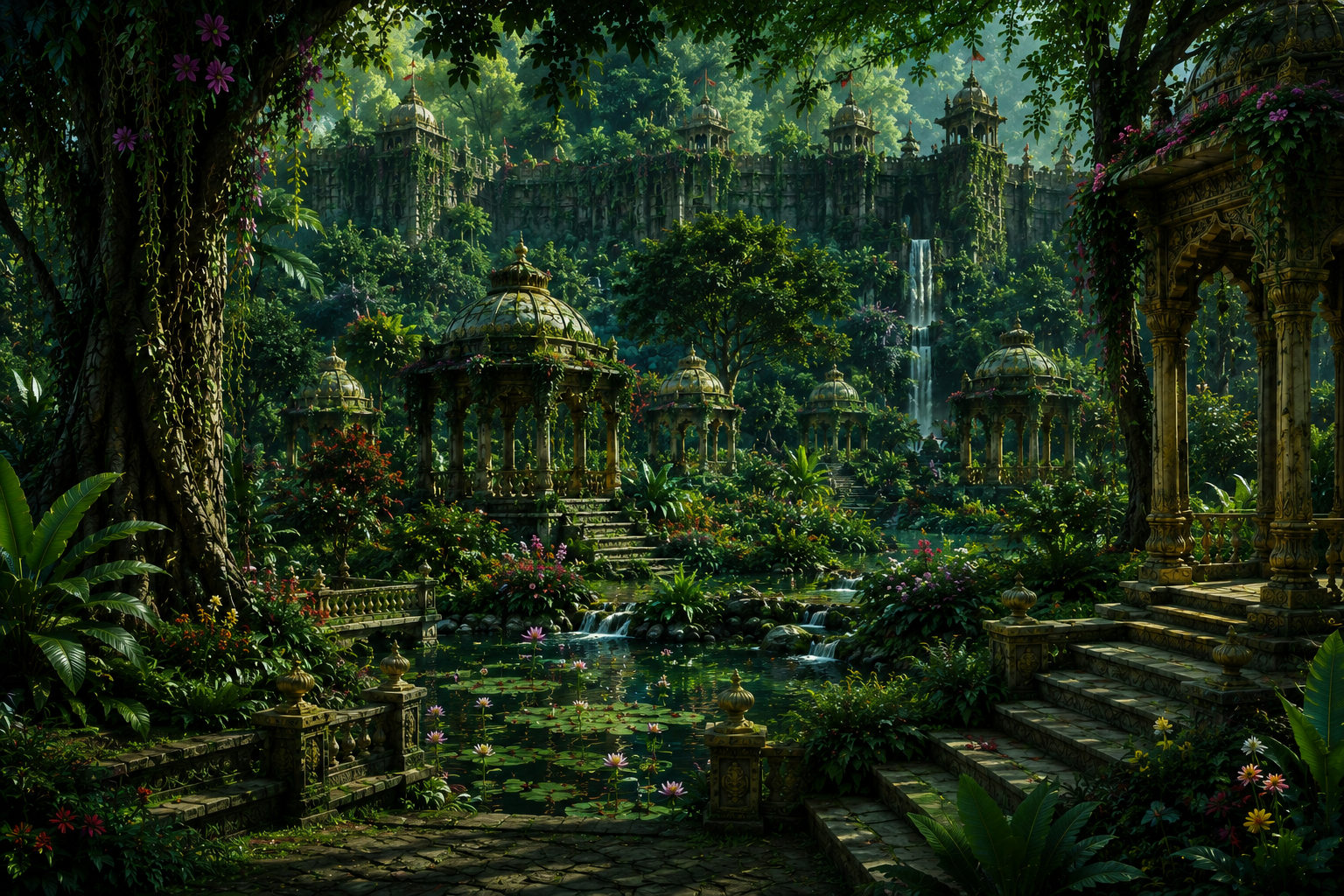
Ashoka Vatika
Ashoka Vatika became Sita's prison, but it never became her defeat. Within its trees, hope survived captivity until Hanuman arrived with Rama's signet ring.
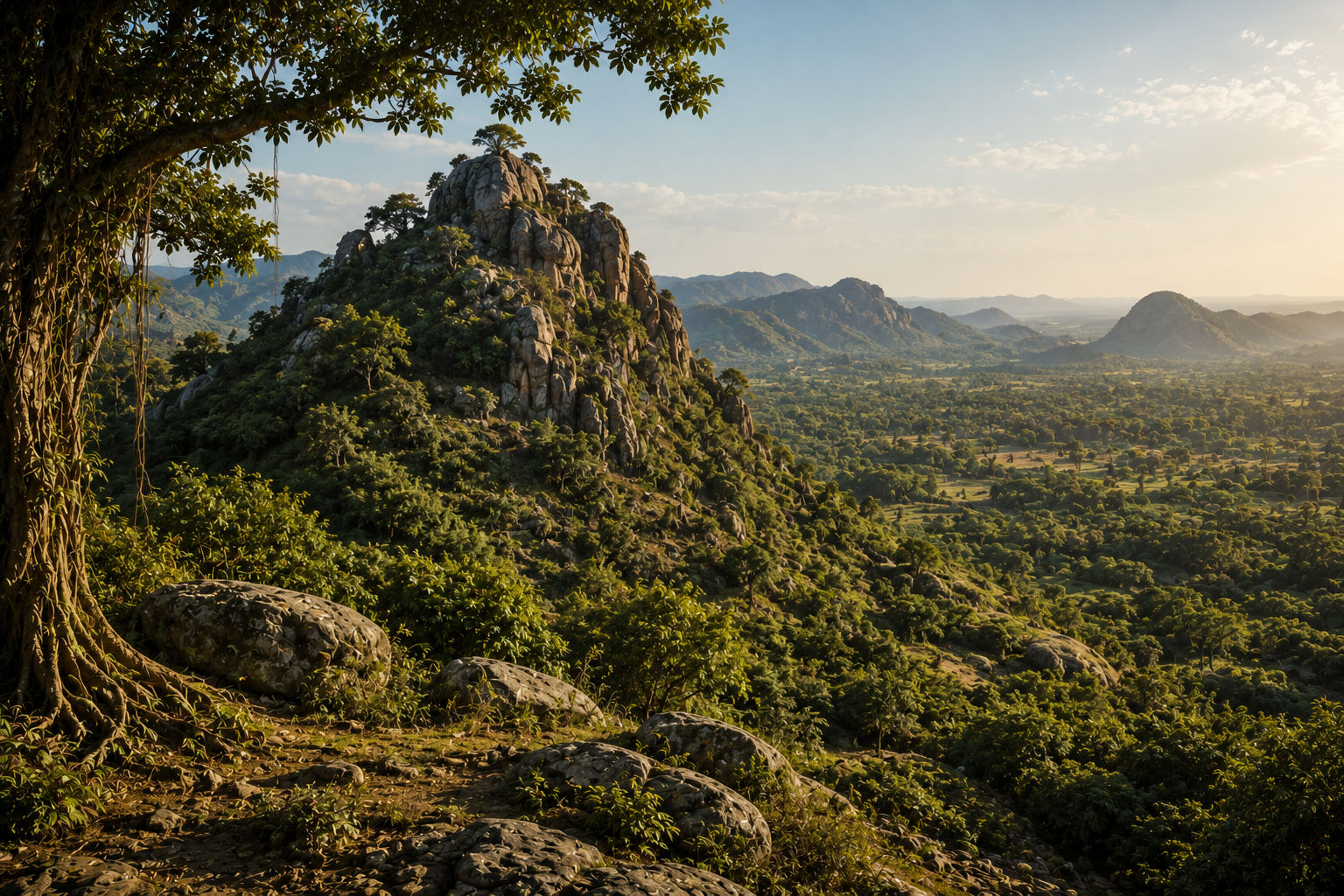
Rishyamuka
Rishyamuka was the mountain where a frightened king found safety. It was also where Rama met Hanuman, beginning the alliance that changed the course of the Ramayana.
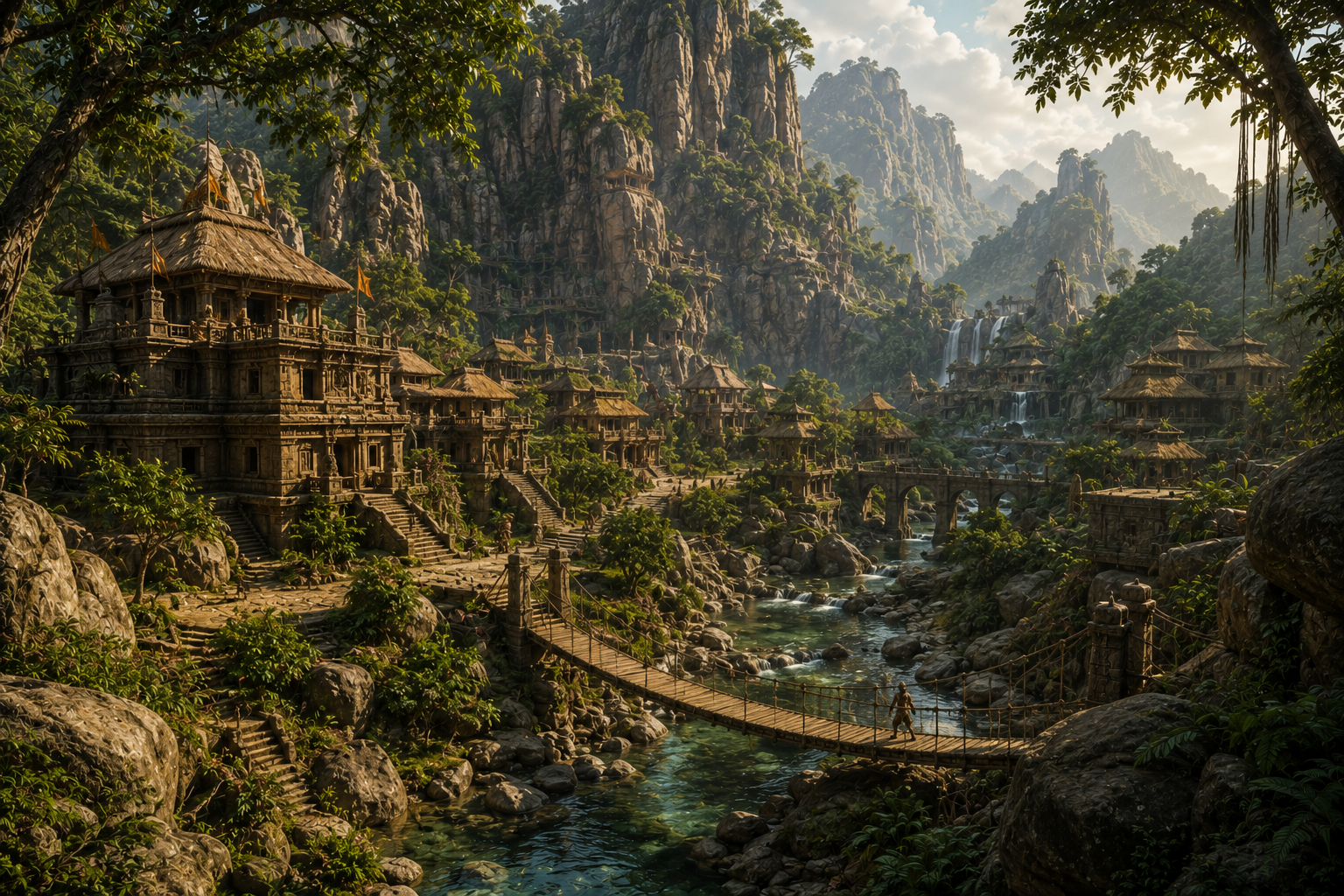
Kishkindha
Kishkindha was more than a vanara kingdom. It was the place where exile became alliance, friendship became duty and the search for Sita became a mission across the world.
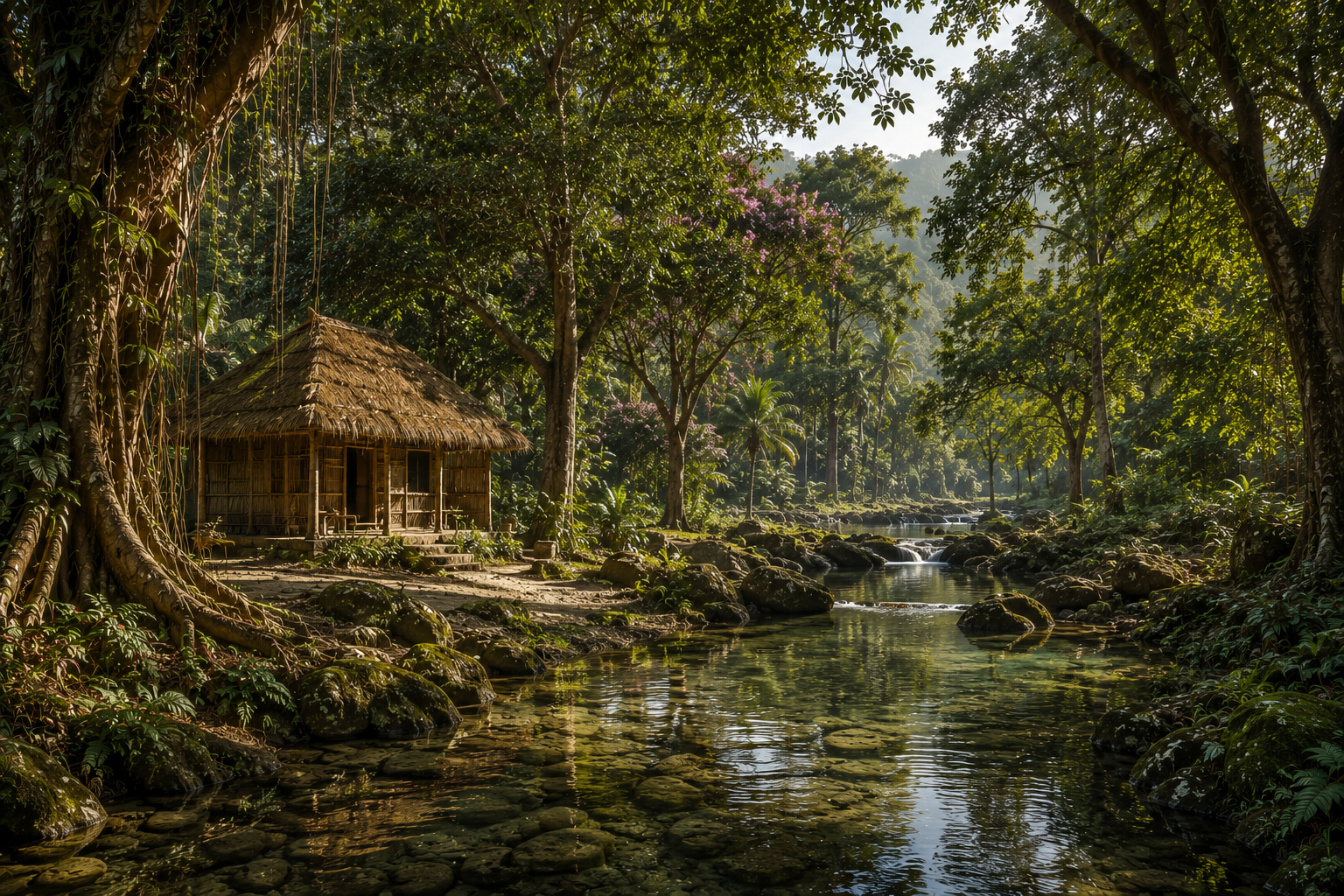
Panchavati
Panchavati was meant to be a peaceful home during exile. Instead, it became the place where the events leading to the war against Ravana began.
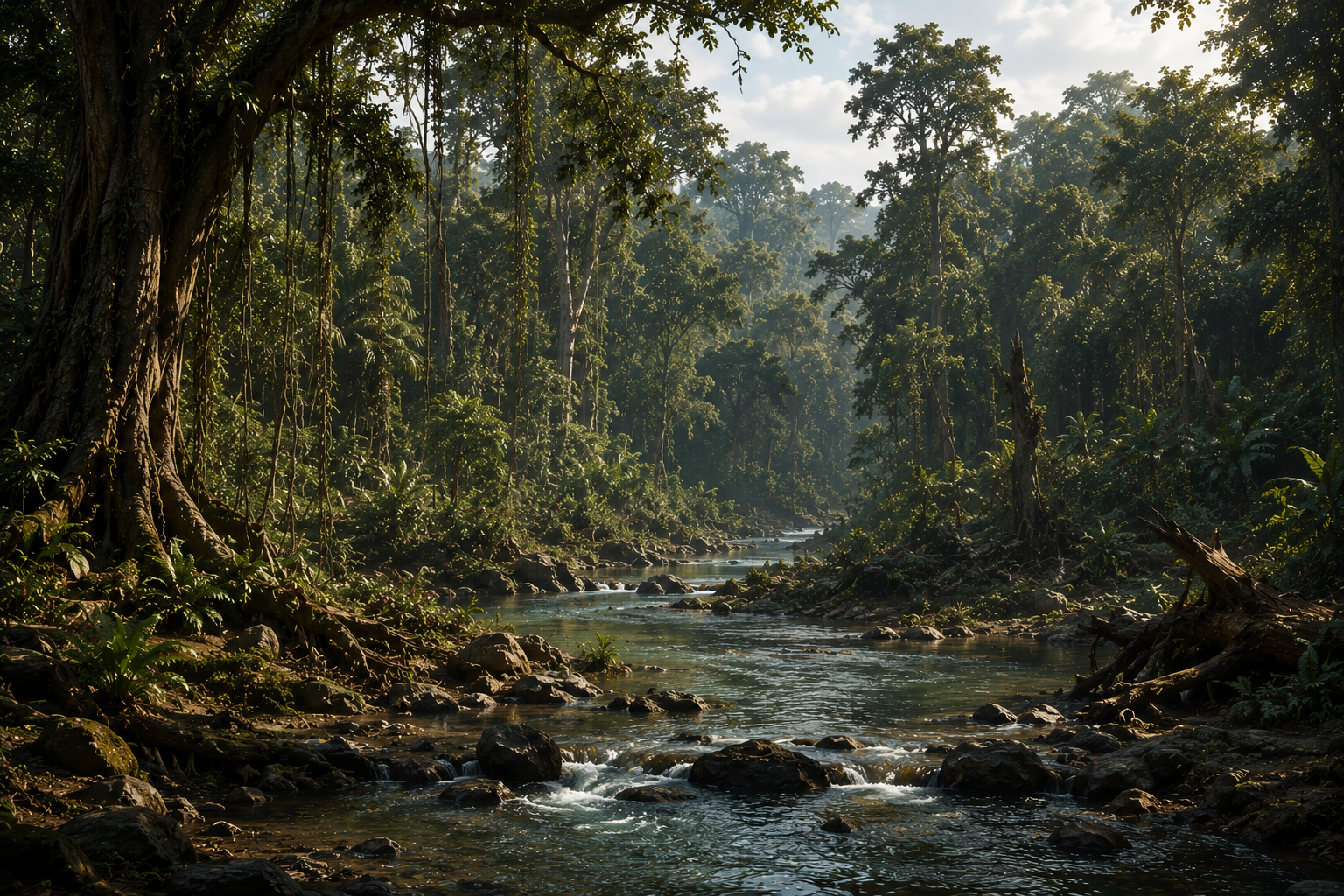
Dandakaranya
Dandakaranya was the vast wilderness where Rama spent much of his exile. It became the proving ground where duty, sacrifice and the struggle against adharma took shape.
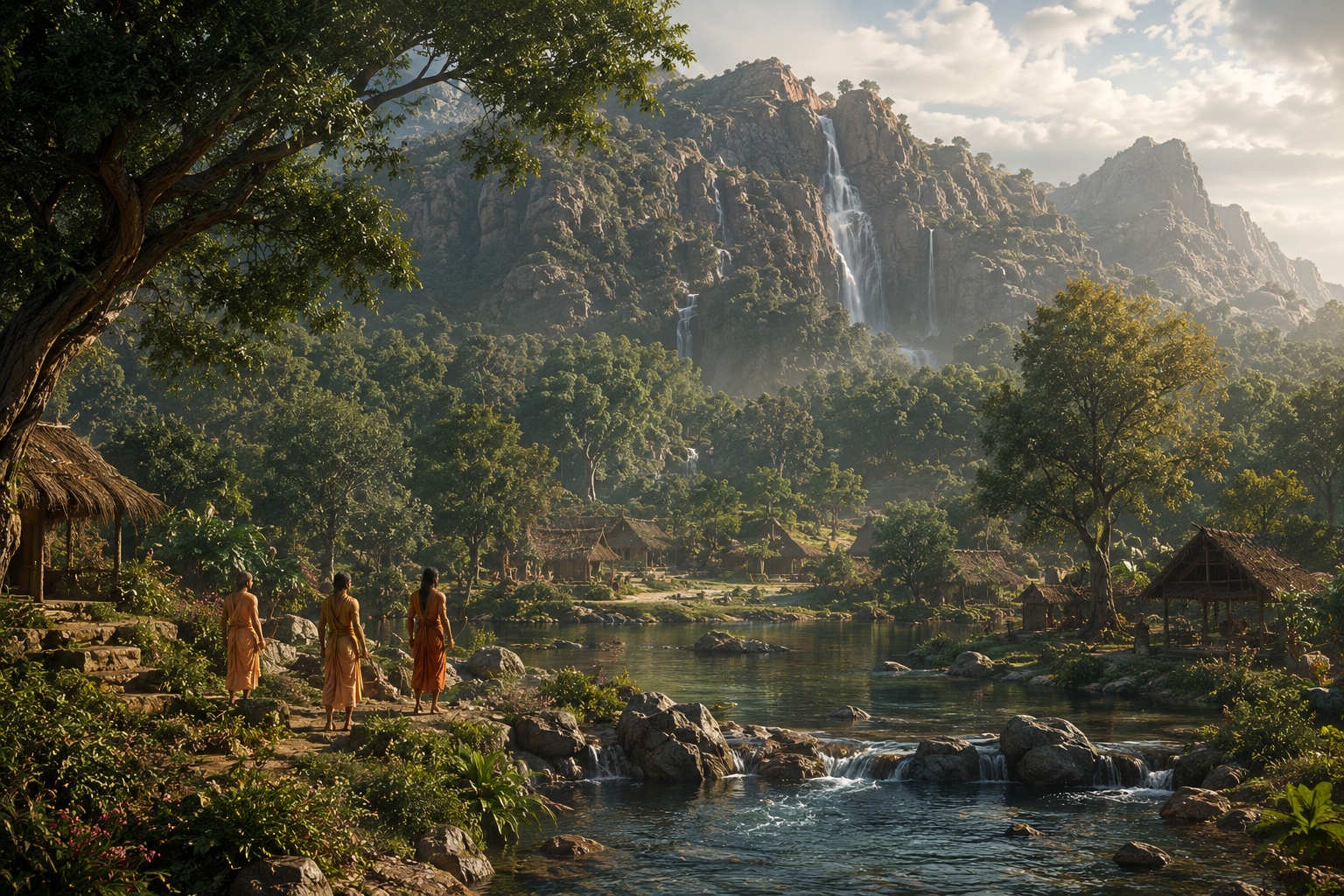
Chitrakuta
Chitrakuta was the first true home of Rama's exile. It witnessed the grief of Ayodhya, Bharata's devotion and the moment when a pair of sandals became the symbol of rightful kingship.
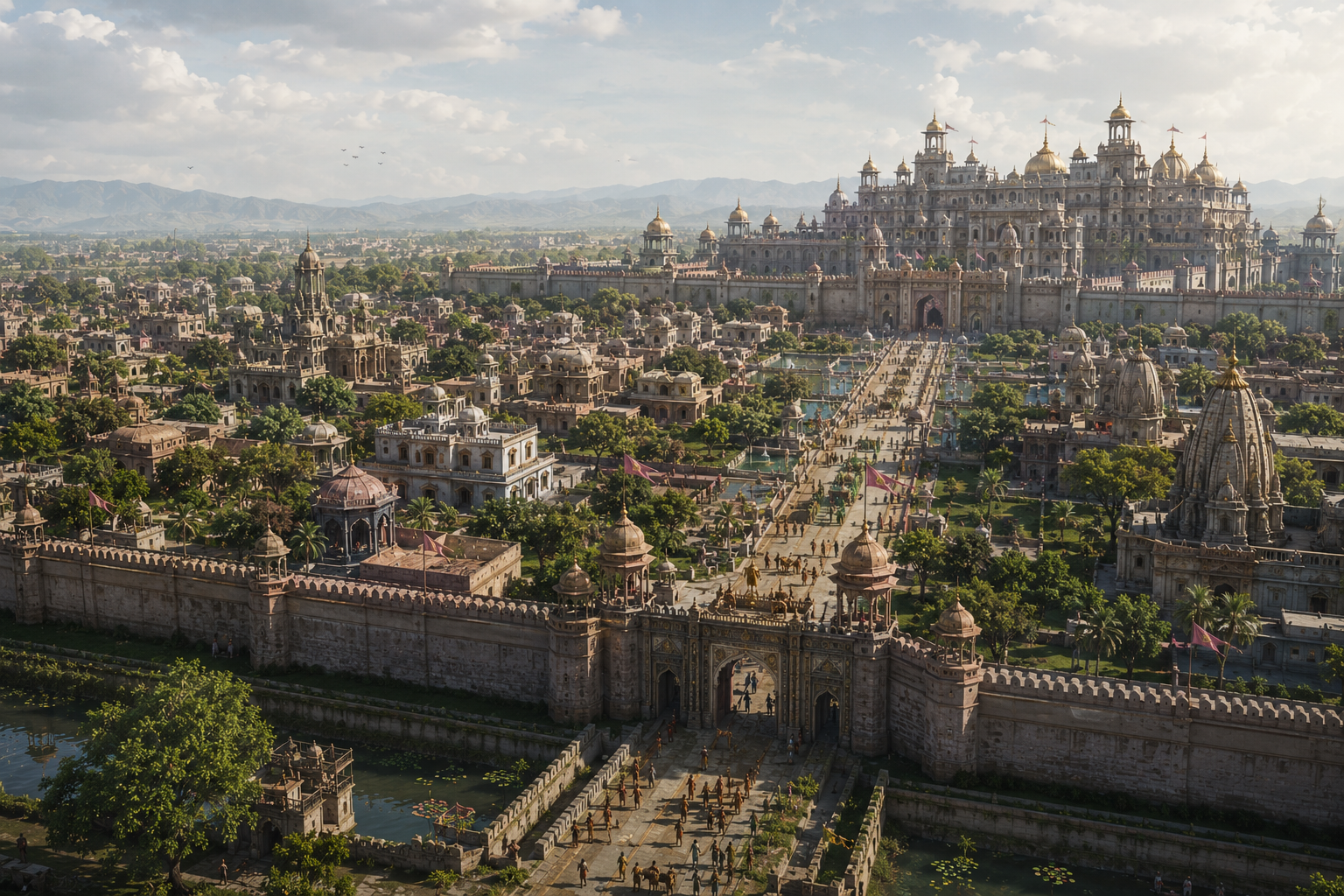
Mithila
Mithila is where destiny chose its king. Within its halls, Rama lifted Shiva's Bow, won Sita's hand and united two royal houses through dharma rather than conquest.
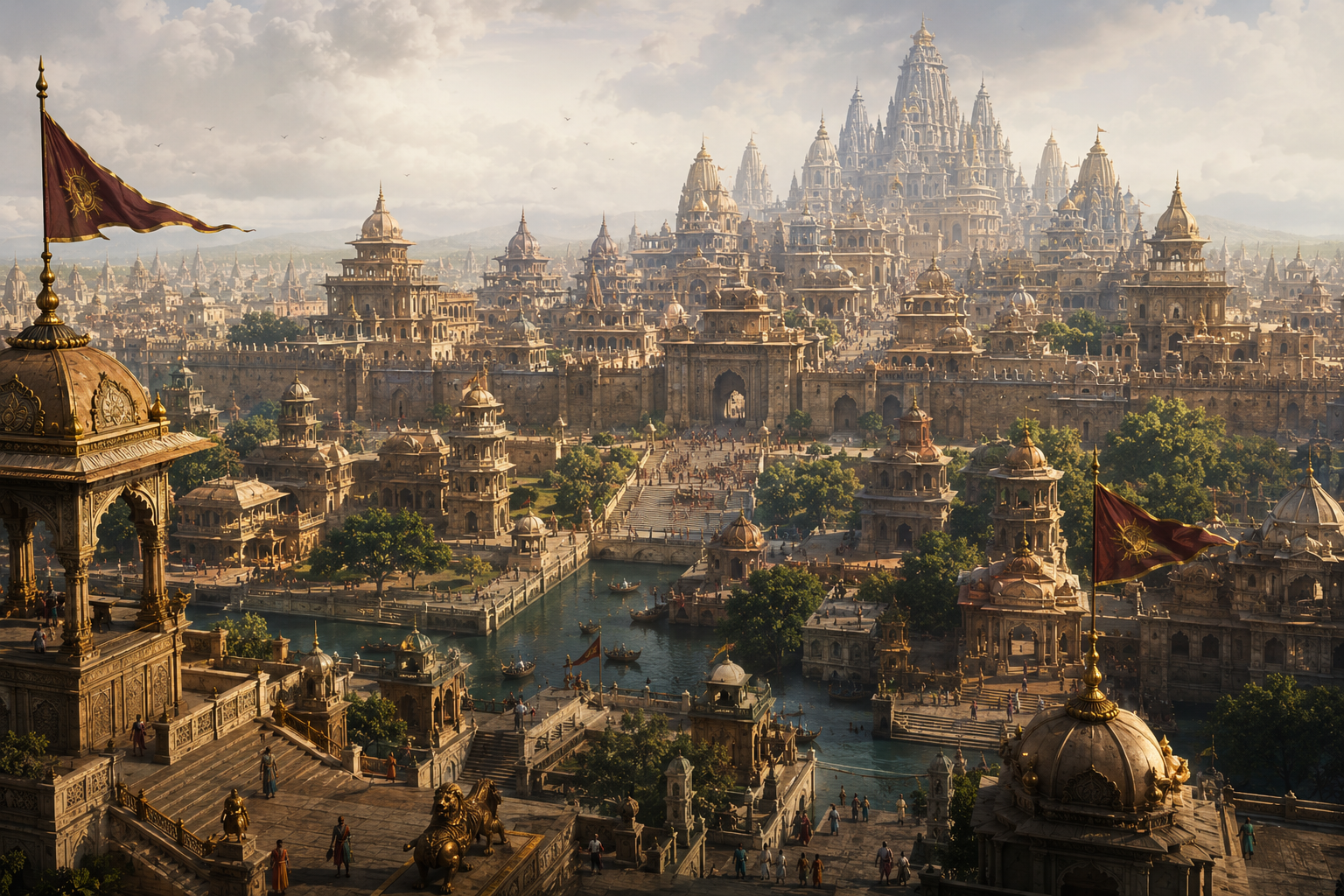
Ayodhya
Ayodhya is where the Ramayana begins and ends. It is the city that watched a prince leave in exile, guarded his throne through Rama's Sandals and welcomed its rightful king home.

Paduka
The sacred wooden sandals of Lord Rama became the rightful rulers of Ayodhya during his fourteen-year exile. Reverently placed upon the royal throne by Bharata, they symbolized Rama's sovereignty, righteousness, and unwavering commitment to Dharma. The Paduka remain one of the greatest symbols of humility, devotion, and ideal kingship in the Ramayana.
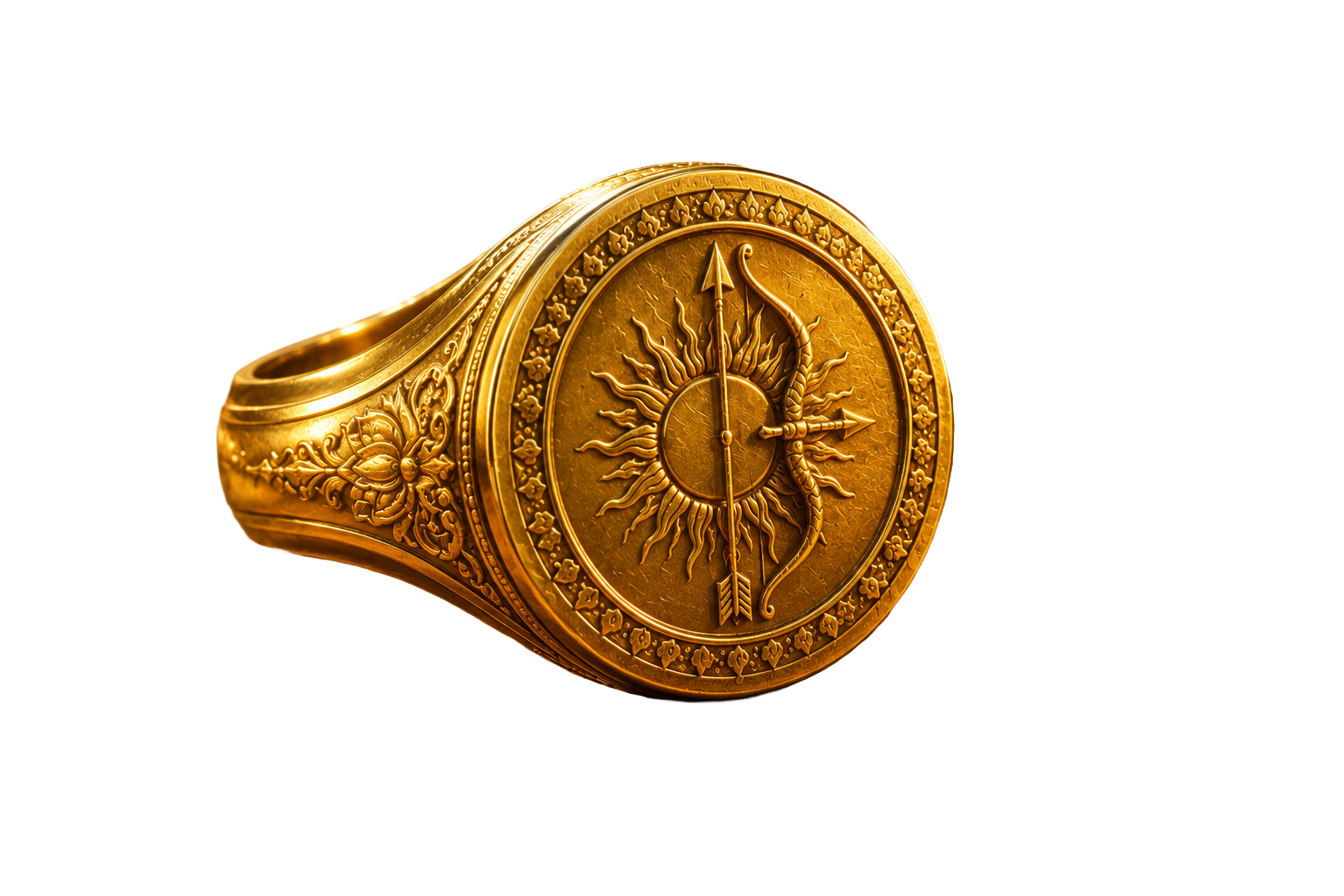
Rama's Signet Ring
The royal signet ring of Lord Rama served as the ultimate proof of his identity and unwavering promise to rescue Sita. Carried across the ocean by Hanuman and delivered in Ashoka Vatika, it restored Sita's hope during her darkest hour. The ring became an enduring symbol of faith, love, and the unbreakable bond between Rama and Sita.
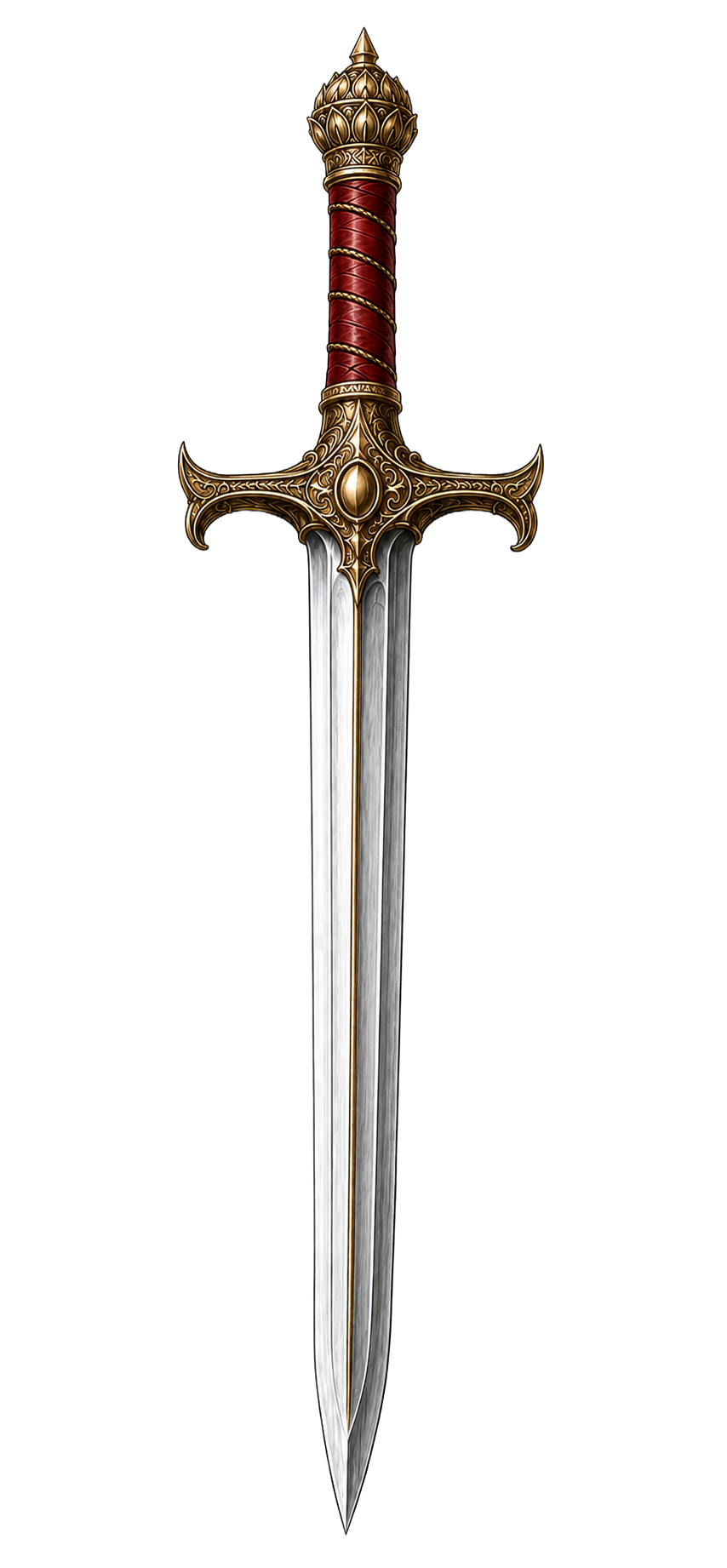
Sword (Asi)
According to ancient tradition, Asi was the primordial sword created by Lord Brahma to uphold Dharma and destroy the forces of evil. Revered as the origin of all swords, it symbolized justice, royal authority, and the righteous triumph of order over chaos.
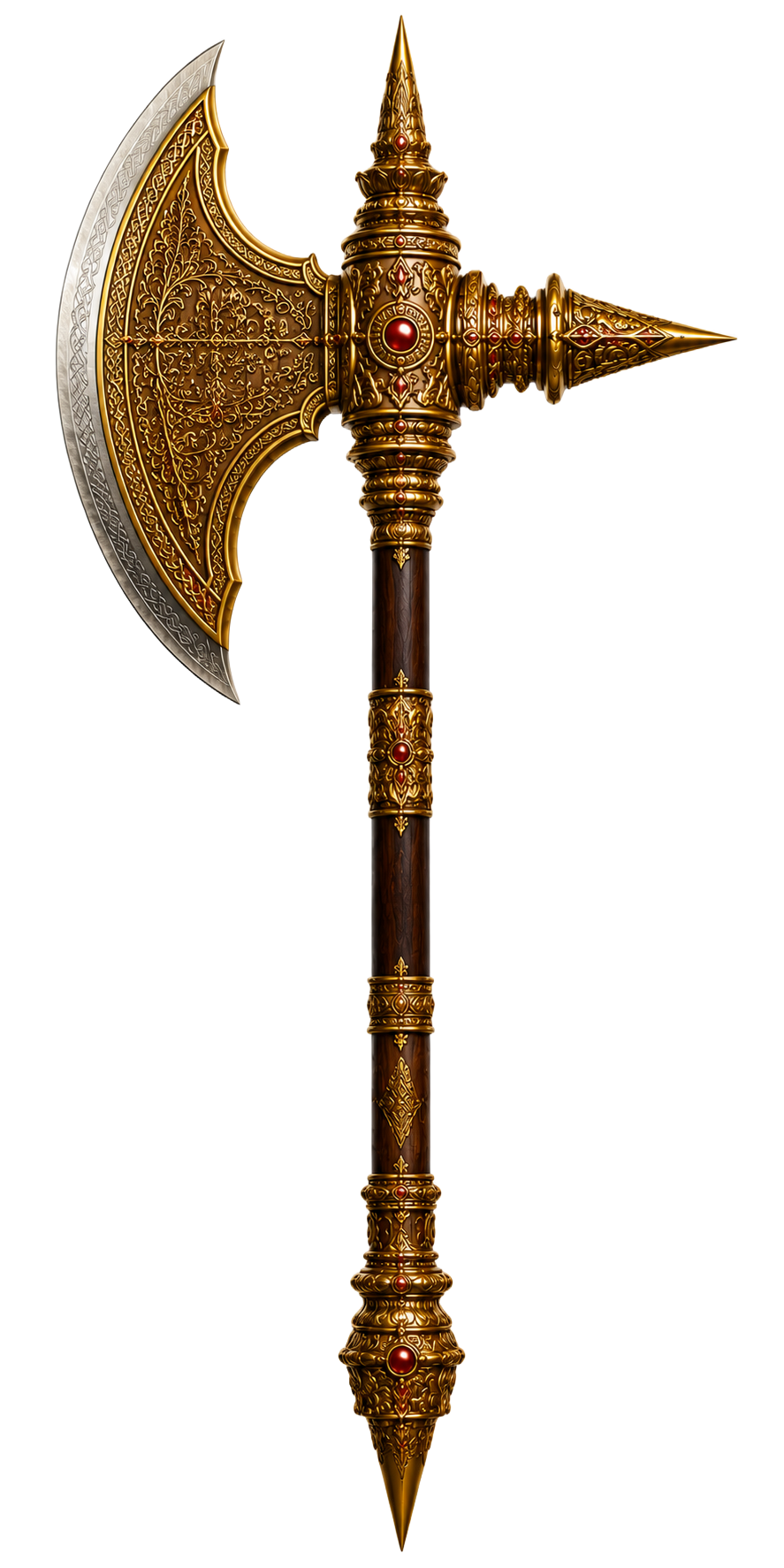
Parashu
The Parashu was a fearsome double-edged battle axe renowned for its ability to cleave through armor and shields with tremendous force. Forever associated with Lord Parashurama, it became an enduring symbol of divine justice, martial mastery, and unstoppable power.

Gada
The legendary mace of ancient India, the Gada symbolized immense physical strength, courage, and mastery of close combat. Wielded by mighty heroes such as Bhima, Duryodhana, and Hanuman, it was capable of crushing even the strongest opponents with devastating blows.
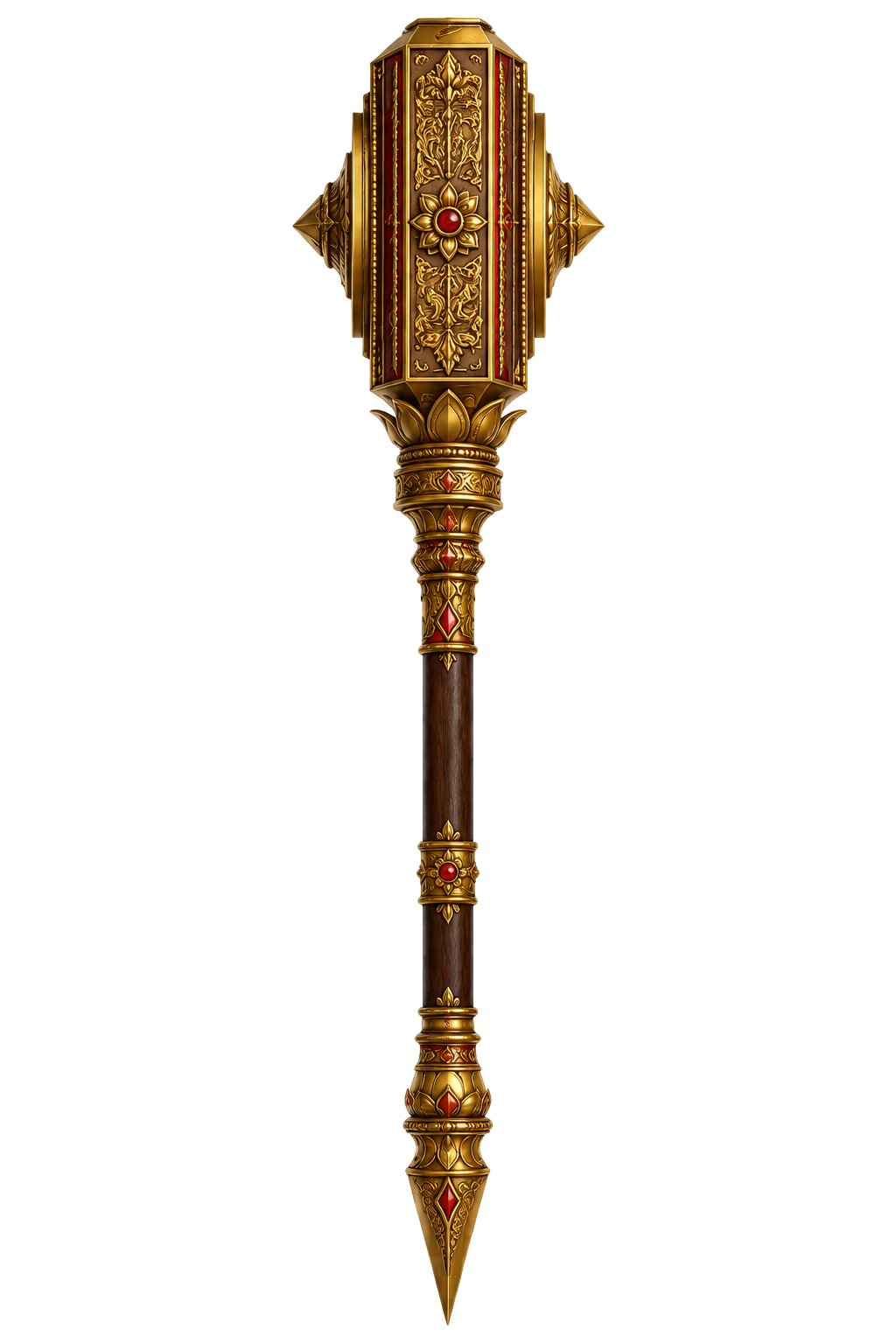
Parigha
A massive iron bar wielded by warriors of extraordinary strength, the Parigha crushed shields, shattered armor, and broke through enemy defenses with overwhelming force. Its sheer destructive power made it one of the most feared close-combat weapons of the epics.
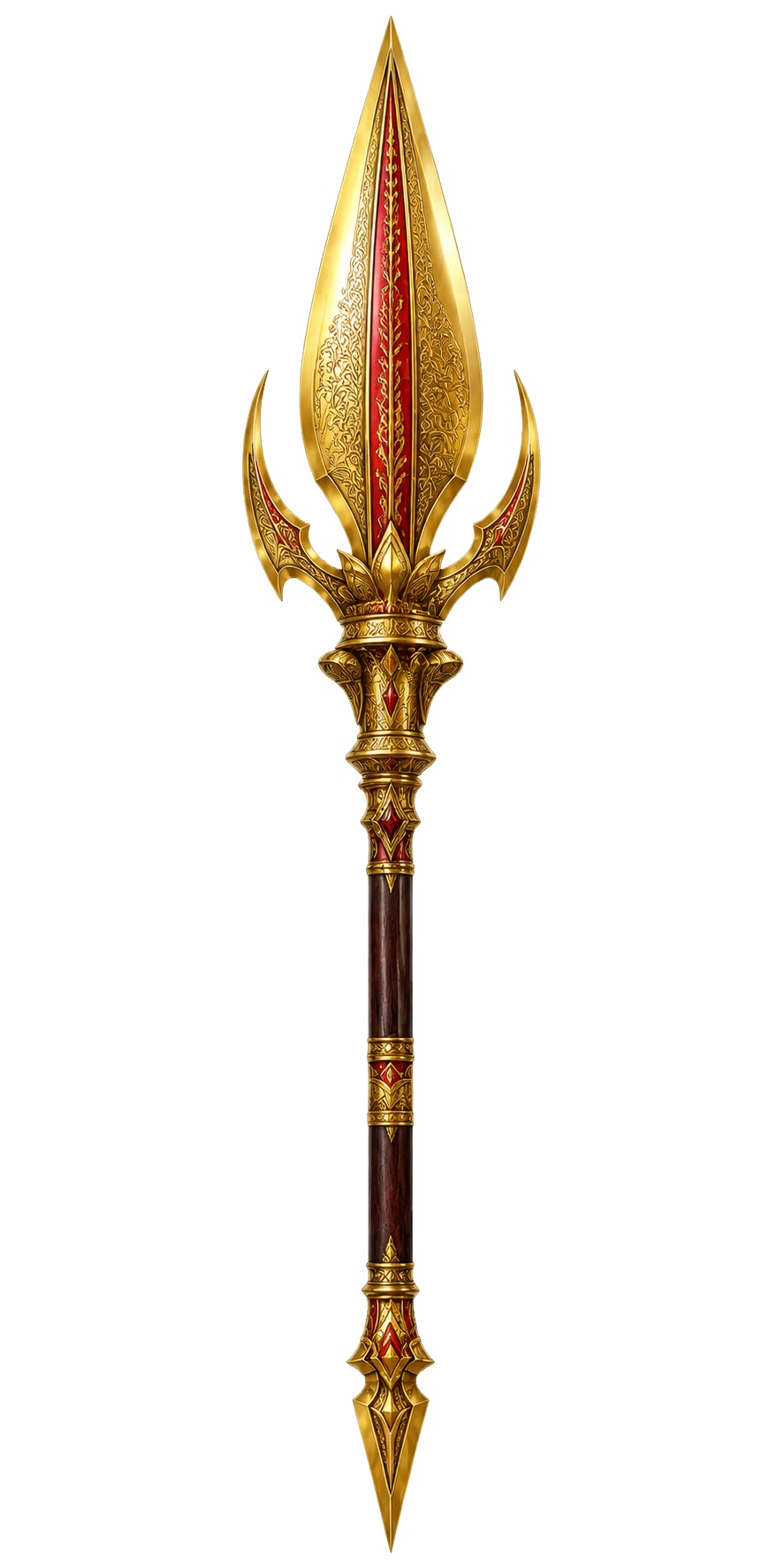
Shula
The Shula was a formidable spear revered for its devastating reach and penetrating power. Capable of piercing armor, shields, and enemy formations, it served as a symbol of martial excellence and unwavering determination on the ancient battlefield.
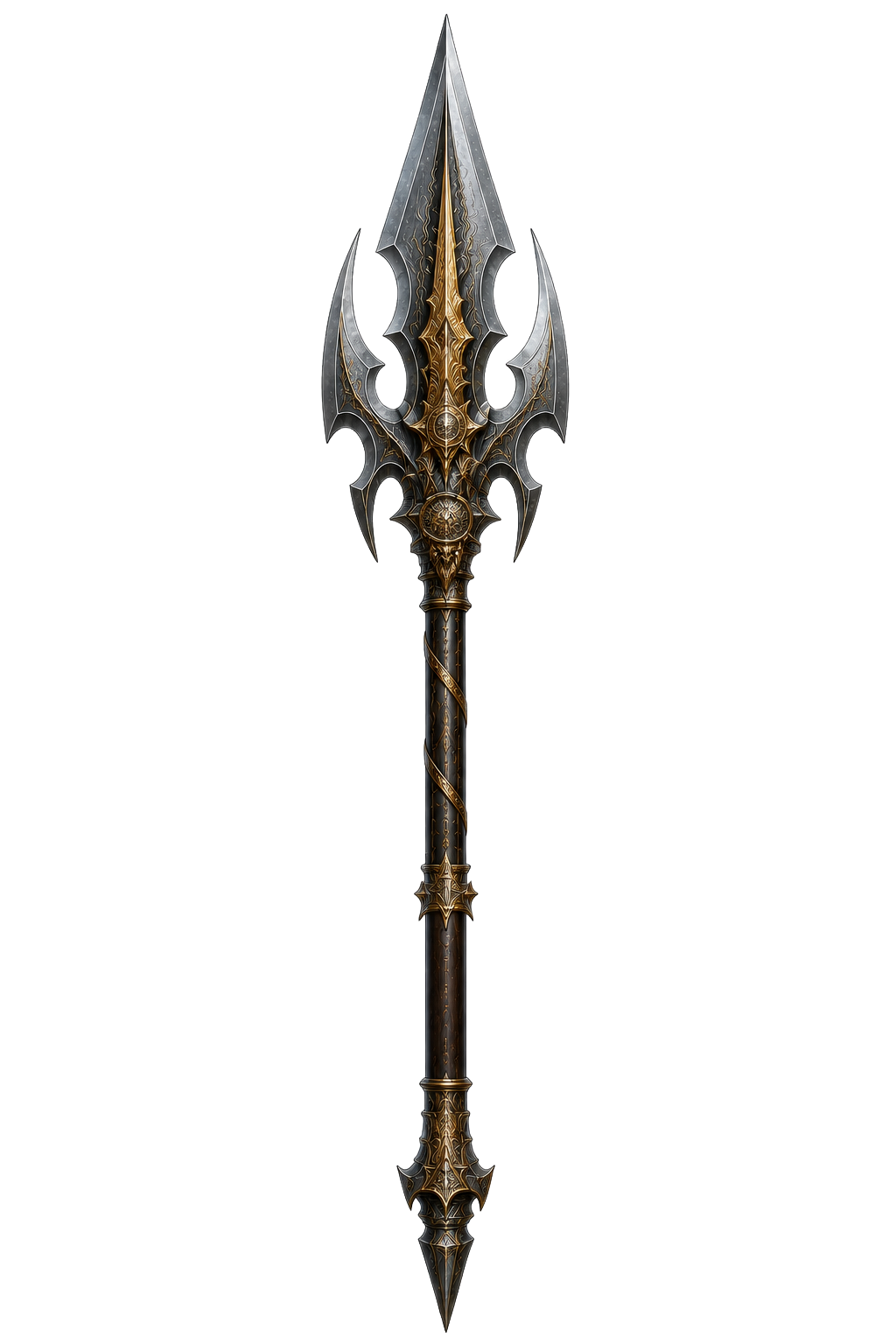
Shakti
A celestial spear blessed with immense destructive power, Shakti was among the deadliest weapons in epic warfare. Once unleashed, it pursued its target with unerring accuracy and overwhelming force, making it a feared weapon wielded by legendary heroes and gods alike.