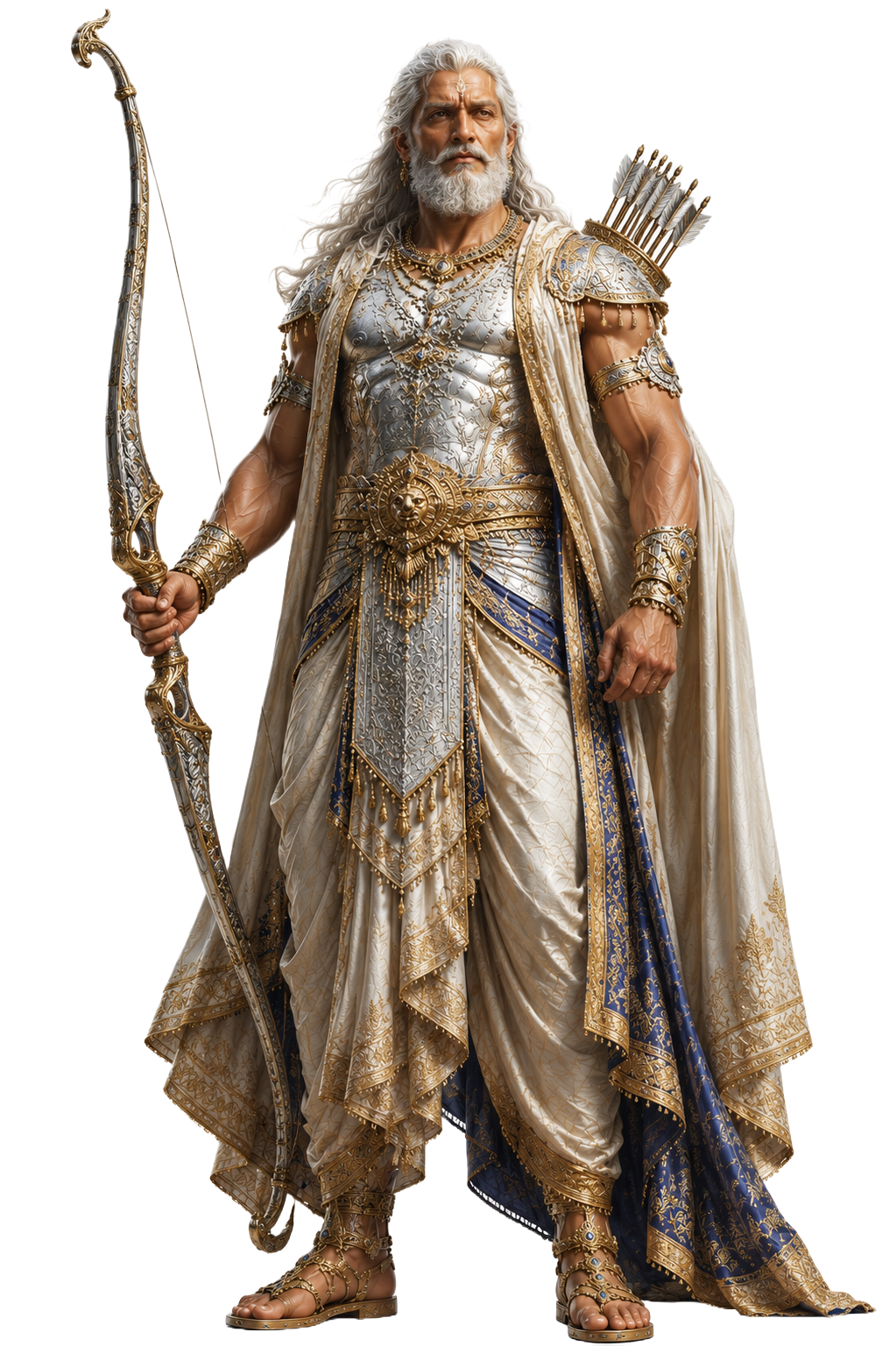
The Grand Sire of the Kurus
Bhishma
Devavrata · Gangaputra · Kuru Pitamaha · Bhishma
Born to King Shantanu and the river goddess Ganga, Devavrata became Bhishma after taking his legendary vow of lifelong celibacy and renouncing the throne for his father's happiness. Blessed with the boon of choosing the time of his own death, he was the greatest guardian of the Kuru dynasty. Revered as the undefeated Grand Sire of the Mahabharata, Bhishma stood as the embodiment of duty, sacrifice, honor, and unparalleled martial excellence.
Biography
Origin
Personality
Stats
Details
- Specialty
- Unbreakable Vow
- Do You Know
- Bhishma was born as Devavrata, one of the Eight Vasus cursed to be born on Earth. Unlike his brothers, who were released soon after birth, Devavrata remained on Earth to fulfill the Vasu's destiny and became the legendary Bhishma.
Powers
Shantanu grants Bhishma the boon that death will come only when Bhishma chooses to surrender his life. This allows him to remain alive after falling upon the battlefield.
Bhishma is trained in the highest traditions of warfare and becomes an exceptional wielder of bows and celestial weapons. His battlefield command reflects both technical mastery and vast experience.
Bhishma dedicates his life to protecting the Kuru dynasty after renouncing the throne. He serves as guardian, counselor and military commander across generations.
Bhishma can withstand sustained attacks from elite warriors and continue fighting with extraordinary control. Even when surrounded by enemies, he remains a formidable battlefield presence.
As commander of the Kaurava forces, Bhishma directs one of the greatest military formations of the epic war. His authority comes from decades of experience and his position as the Kuru grandsire.
Abilities
Bhishma's lifelong vow of celibacy and renunciation of the throne becomes the defining sacrifice of his identity. Once given, he never breaks it.
Bhishma possesses deep knowledge of kingship, political duty and Dharma. His teachings to Yudhishthira after the war become a major source of instruction on righteous rule.
Bhishma combines personal martial excellence with strategic command. He leads the Kaurava army while continuing to fight personally on the front lines.
After falling onto the bed of arrows, Bhishma uses his boon of choosing the time of death to remain alive until he decides the proper moment to release his life.
Relationships
Shantanu is Bhishma's father. Bhishma's greatest personal sacrifice is made to secure his father's happiness and marriage to Satyavati.
Ganga is Bhishma's mother. She raises Devavrata and gives him exceptional education before returning him to Shantanu.
Satyavati becomes Shantanu's wife after Devavrata renounces his claim to the throne and vows lifelong celibacy. Her descendants become the heirs Bhishma protects.
Bhishma is the grandsire of the Pandavas and deeply connected to them through the Kuru family. During the war, he nevertheless fights on the Kaurava side because of his duty to the Kuru throne.
Shikhandi becomes central to Bhishma's fall because Bhishma refuses to fight Shikhandi. Arjuna uses this position to attack Bhishma and bring him down.
Duryodhana is the Kuru prince whom Bhishma serves as commander during the war. Their relationship is shaped by Bhishma's commitment to the Kuru throne rather than personal agreement with every Kaurava decision.
Timeline
- BirthDevavrata Is Born
Devavrata is born to King Shantanu and Ganga. Ganga raises and trains him before eventually returning him to his father and the Kuru kingdom.
- YouthThe Prince Returns to Hastinapura
Devavrata returns as an accomplished prince trained in knowledge, weapons and royal duties. He becomes the natural heir to Shantanu's kingdom.
- The Great VowDevavrata Becomes Bhishma
To secure Satyavati's marriage to Shantanu, Devavrata renounces his claim to the throne and vows lifelong celibacy. The extraordinary vow earns him the name Bhishma.
- The BoonShantanu Grants Death at Will
Moved by his son's sacrifice, Shantanu grants Bhishma the boon that he may choose the time of his death. This gift later allows him to survive after falling in battle.
- Kuru DynastyGuardian of the Throne
Bhishma remains devoted to the Kuru dynasty rather than claiming the throne for himself. He guides and protects successive generations of the royal house.
- Kurukshetra WarCommander of the Kaurava Army
Bhishma becomes the first great commander of the Kaurava forces. He fights the Pandavas while remaining their grandsire and continues to display extraordinary martial power.
- Day of His FallThe Bed of Arrows
Shikhandi stands before Bhishma while Arjuna attacks him with arrows. Bhishma does not fight Shikhandi and is finally brought down, falling from his chariot onto a bed of arrows.
- After the WarBhishma's Final Teachings
Bhishma remains alive through his boon and gives Yudhishthira extensive instruction on kingship, Dharma and the responsibilities of a ruler before finally surrendering his life.
Facts
Cards featuring Bhishma
No cards featuring Bhishma yet.
Stories about Bhishma
No stories about Bhishma yet.
Create a character card like Bhishma
Turn your own characters into premium collectible cards manufactured by Cards Loomia.
Discussion
Loading comments…