CARDSLOOMIA
Dvaita Forest

The Forest That Tested Dharma

Dvaita Forest

Dvaitavana · Refuge of the Pandavas · Forest of the Yaksha's Questions

Mahabharata SagaPlace182.0

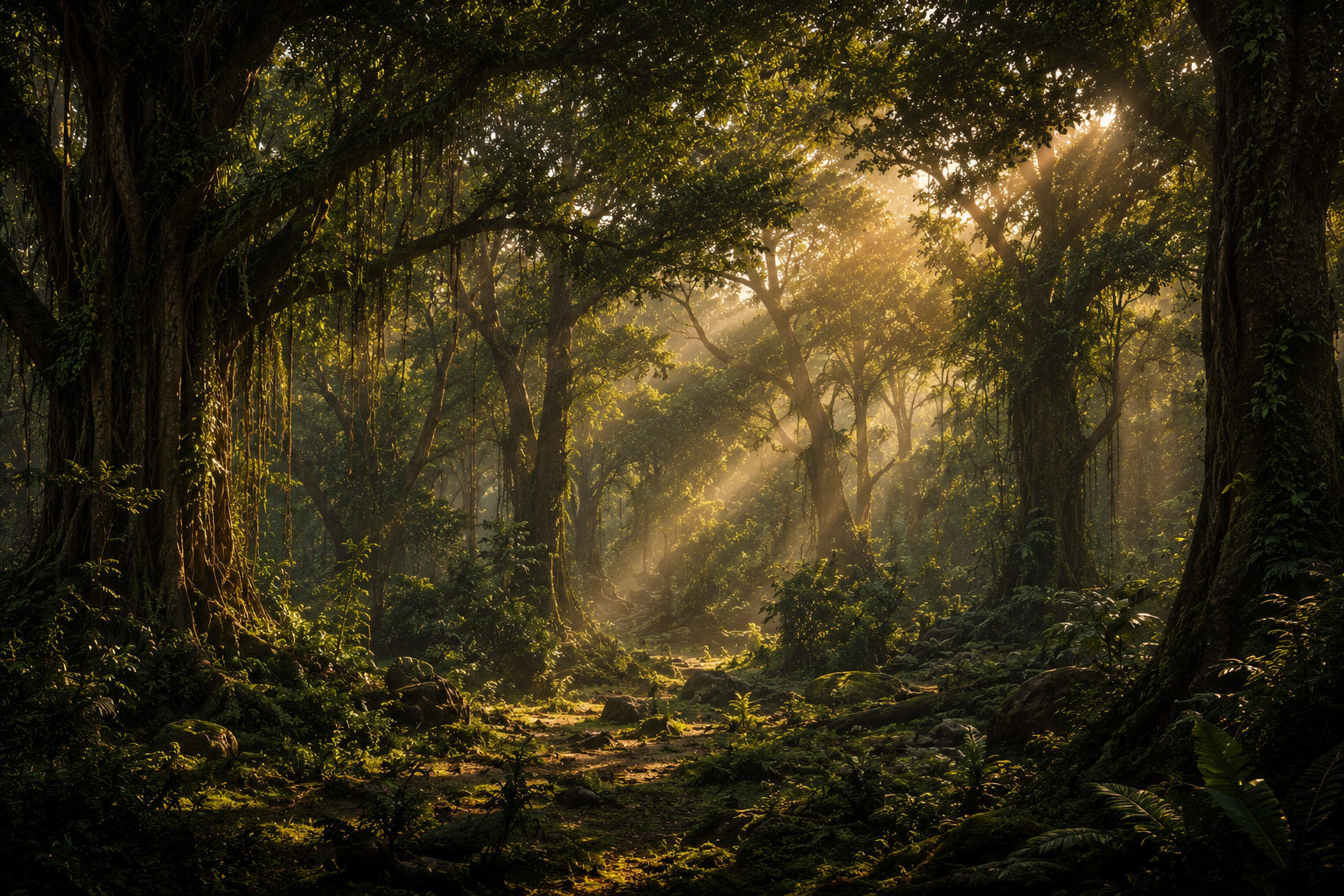
One of the principal forests of the Pandavas' exile, Dvaita Forest became the setting for many important encounters with sages, warriors, and divine beings. Here the Pandavas strengthened their resolve, deepened their spiritual knowledge, and prepared for the trials that lay ahead.

Biography

The primary source for this record is <b>Rung 1: Vyasa's Mahabharata, following the critical-text tradition</b>. Dvaita Forest, or Dvaitavana, is one of the Pandavas' major places of residence during exile. After losing their kingdom in the dice game, they enter a life stripped of courtly power but not of responsibility. Brahmins and ascetics accompany them. Questions of food, kingship, anger, patience and dharma follow them into the trees. Dvaita is therefore more than shelter. It is where Yudhishthira must continue behaving like a king when he no longer possesses a throne. The Pandavas do not remain permanently in one forest. They move between Dvaita, Kamyaka and other sacred regions during exile, undertake pilgrimages and return to forest life after long journeys. Dvaita repeatedly becomes a base where sages visit them and where political consequences reach them from outside. The exile is not isolation. News, enemies, relatives and divine forces keep finding their way into the wilderness. One of Dvaita's sharpest reversals begins when Duryodhana comes toward the region with a royal entourage, using an expedition connected with the cattle stations as an opportunity to display Kaurava prosperity near the exiled Pandavas. Instead, conflict erupts with Gandharvas led by Chitrasena. Duryodhana is defeated and captured. When the news reaches the Pandavas, Bhima initially sees bitter justice in his enemy's humiliation. Yudhishthira refuses that satisfaction. Whatever their internal hatred, he insists that outsiders cannot be allowed to dishonour their Kuru relatives while the Pandavas stand aside. Arjuna and his brothers intervene. The captured Kauravas are released, and Duryodhana survives because the very cousins he dispossessed uphold family duty when he cannot protect himself. Dvaita turns humiliation into a test of dharma. Yudhishthira gains nothing material from saving Duryodhana. That is exactly why the choice matters. The forest is also connected with another crisis born from the Pandavas' own dependence on wilderness. Deer appear in Yudhishthira's dream and plead that the brothers' continued hunting is reducing their numbers. Yudhishthira responds by leaving Dvaita for another forest rather than exhausting the animals that remain. The episode gives the landscape a rare voice in the logic of exile: even dispossessed princes can become a burden on the refuge sustaining them. Near the close of the forest exile comes the episode traditionally known as the Yaksha Prashna. While pursuing a deer that has carried away a Brahmin's fire-making implements, the Pandavas reach a mysterious lake. Nakula, Sahadeva, Arjuna and Bhima ignore an unseen warning to answer questions before drinking and fall lifeless. Yudhishthira obeys. He answers the questioner on dharma, conduct, wisdom and the human condition. The being reveals himself as Dharma, Yudhishthira's divine father, and restores his brothers. The precise textual geography around this final episode should be handled carefully across editions and narrative transitions, but it belongs to the Dvaita phase of the exile tradition. The forest that sheltered the Pandavas ultimately becomes the ground where Yudhishthira proves that survival without dharma is not victory.

Origin

The Mahabharata does not provide a creation story for Dvaita Forest. It enters the epic as an established woodland associated with a lake and suitable for ascetics, animals and the Pandavas' forest residence. Its identity is built through the events of exile rather than through a myth of supernatural creation. After the dice-game catastrophe drives the Pandavas from royal life, Dvaita becomes one of the principal landscapes through which they learn to live without a kingdom. They leave it, return to it and eventually move beyond it. That repeated movement is important: Dvaita is not a prison. It is a station in a long transformation from defeated rulers into people prepared for the moral and military crises still ahead.

Personality

If Dvaita has a temperament, it is patient judgment. It does not attack like Khandava's fire or overwhelm through supernatural spectacle. It waits. Then the choices arrive. Will Yudhishthira rescue the cousin who ruined him? Will exiled princes recognize when their own hunting threatens the animals sustaining them? Will a thirsty man obey a mysterious voice when his brothers lie motionless beside the water? Dvaita's danger is often moral before it is physical. Its deepest victories happen when someone chooses duty without knowing whether duty will reward them.

Details

Do You Know
Dvaita Forest was one of the principal forests where the Pandavas lived during their exile. It became the setting for many encounters with sages and pilgrims, and it was here that Duryodhana's pride was shattered after he was captured by the Gandharva king Chitrasena and rescued by Arjuna.

Powers

Trial of Dharma

Dvaita repeatedly places the Pandavas in situations where immediate desire conflicts with duty. Yudhishthira's decisions turn exile into a sustained test of what righteousness means without the protection of a throne.

Forest of Reflection

Removed from court, the Pandavas receive sages, hear teachings and confront questions of kingship, suffering, restraint and destiny. The wilderness becomes a place where knowledge prepares them for later action.

Sanctuary of Exile

Dvaita provides the Pandavas with a major residence during their years away from Indraprastha. Its woodland and waters sustain a royal family forced to live outside ordinary political power.

Gandharva Reckoning

Near Dvaita, Duryodhana's attempt to approach the exiles in royal splendour ends in defeat and captivity at the hands of Chitrasena's Gandharvas. The episode forces the Pandavas to decide whether hatred outweighs kinship.

The Yaksha's Questions

In the Dvaita phase of the exile tradition, Yudhishthira faces a mysterious questioner after his brothers fall beside a lake. His answers on dharma and wisdom lead to their restoration when the questioner reveals himself as Dharma.

Abilities

Refuge Without Escape

Dvaita shelters the Pandavas physically, but political and moral consequences continue to reach them there. Exile removes their kingdom, not their obligations.

Ground of Reversal

Duryodhana approaches the region from a position of royal superiority and ends as a captive who must be rescued by the Pandavas. Dvaita repeatedly overturns the apparent balance of power.

Discipline Through Hardship

Life in Dvaita demands restraint, hunting, endurance and responsibility toward dependants. The Pandavas' survival depends on adapting royal duty to forest conditions.

Moral Revelation

The forest's defining episodes expose character through decisions rather than titles. Yudhishthira's conduct toward enemies, animals and the mysterious Yaksha reveals the principles he carries into the coming war.

Relationships

Yudhishthiraother

Dvaita repeatedly tests Yudhishthira's understanding of dharma. He orders Duryodhana's rescue, responds to the deer whose survival is threatened and later answers the Yaksha's questions.

Draupadiother

Draupadi shares the hardships of exile in Dvaita, carrying the memory of royal humiliation into a life of forest austerity and uncertainty.

Duryodhanaother

Duryodhana approaches the region in royal splendour but is defeated and captured by Gandharvas. His rescue by the Pandavas turns his intended display of superiority into humiliation.

Chitrasenaother

The Gandharva connected with the defeat and capture of Duryodhana's party. His confrontation with the Kauravas creates one of Dvaita's defining reversals.

Dharmaother

In the Yaksha Prashna episode, the mysterious questioner ultimately reveals himself as Dharma, Yudhishthira's divine father, after testing him through questions and restoring his brothers.

The Pandavasother

Dvaita serves as one of their principal refuges during exile. Here survival, learning, family duty and moral discipline prepare them for the greater trials still to come.

Timeline

  1. Pandava Exile
    The Pandavas Make Dvaita a Refuge

    During their forest exile, Yudhishthira, his brothers and Draupadi reside in Dvaita with Brahmins and ascetics. The forest becomes one of their principal homes outside the kingdom they lost.

  2. Pandava Exile
    The Forest Becomes a School

    Sages and learned visitors bring teachings and sacred narratives into the Pandavas' exile. Dvaita becomes part of a wider period in which suffering is answered not only with weapons, but with knowledge.

  3. Ghosha Expedition
    Duryodhana Comes Toward Dvaita

    Duryodhana travels with a royal entourage toward the region where the Pandavas live, in an expedition associated with the Kuru cattle stations. His display of power ends in confrontation with Gandharvas.

  4. Ghosha Expedition
    Chitrasena Captures Duryodhana

    The Gandharvas defeat the Kaurava party and capture Duryodhana. The king who helped send the Pandavas into exile becomes helpless near the very relatives he sought to overshadow.

  5. Ghosha Expedition
    The Pandavas Rescue Their Enemy

    Yudhishthira orders his brothers to intervene despite Duryodhana's hostility toward them. Arjuna and the Pandavas secure the release of the captured Kauravas, placing family duty above personal revenge.

  6. Later Exile
    The Deer Plead for the Forest

    Deer appear to Yudhishthira in a dream and warn that continued hunting threatens the remaining herd. He responds by moving away rather than exhausting the refuge that has sustained the Pandavas.

  7. Final Forest Phase
    The Brahmin's Fire-Making Implements Are Lost

    A deer carries away a Brahmin's fire-making implements after they become caught in its antlers. The Pandavas pursue it, beginning the chain of events that leads them to the mysterious lake.

  8. Final Forest Phase
    Yudhishthira Faces the Yaksha

    After his brothers fall beside the lake, Yudhishthira answers the unseen questioner's challenges instead of drinking immediately. The questioner is revealed as Dharma, and Yudhishthira's brothers are restored.

Facts

Primary Tradition
Rung 1 · Vyasa's Mahabharata · Critical-text tradition
Also Known As
Dvaita · Dvaitavana
Role in the Epic
One of the principal forest residences used by the Pandavas during their exile, alongside other major wilderness settings such as Kamyaka.
Famous Reversal
Duryodhana is captured by Gandharvas near the Pandavas' forest residence and is ultimately freed through the intervention of the cousins he had helped dispossess.
The Forest Speaks Through Deer
In a dream, deer plead with Yudhishthira that the Pandavas' hunting is reducing their numbers. He responds by moving away, recognizing the burden the exiles themselves place upon the forest.
Defining Theme
Dvaita repeatedly tests whether the Pandavas can preserve duty under humiliation, scarcity, anger and danger before they regain political power.
Strengths
Major refuge during the Pandava exileGround for spiritual and ethical instructionSetting of decisive tests of dharmaLandscape of dramatic reversalsPreparation ground for trials ahead
Weaknesses
Forest resources can be depleted by prolonged residenceIsolation does not prevent hostile intrusionSurvival depends on hunting and disciplined restraintIts peace is repeatedly broken by political consequences

Cards featuring Dvaita Forest

No cards featuring Dvaita Forest yet.

Stories about Dvaita Forest

No stories about Dvaita Forest yet.

Create a character card like Dvaita Forest

Turn your own characters into premium collectible cards manufactured by Cards Loomia.

Discussion

Comments are reviewed before appearing.

Loading comments…