CARDSLOOMIA
Haridwar (Gangadwara)

The Gateway of the Ganga

Haridwar (Gangadwara)

Gangadwara · Sacred Tirtha · Himalayan Gateway

Mahabharata SagaPlace177.0

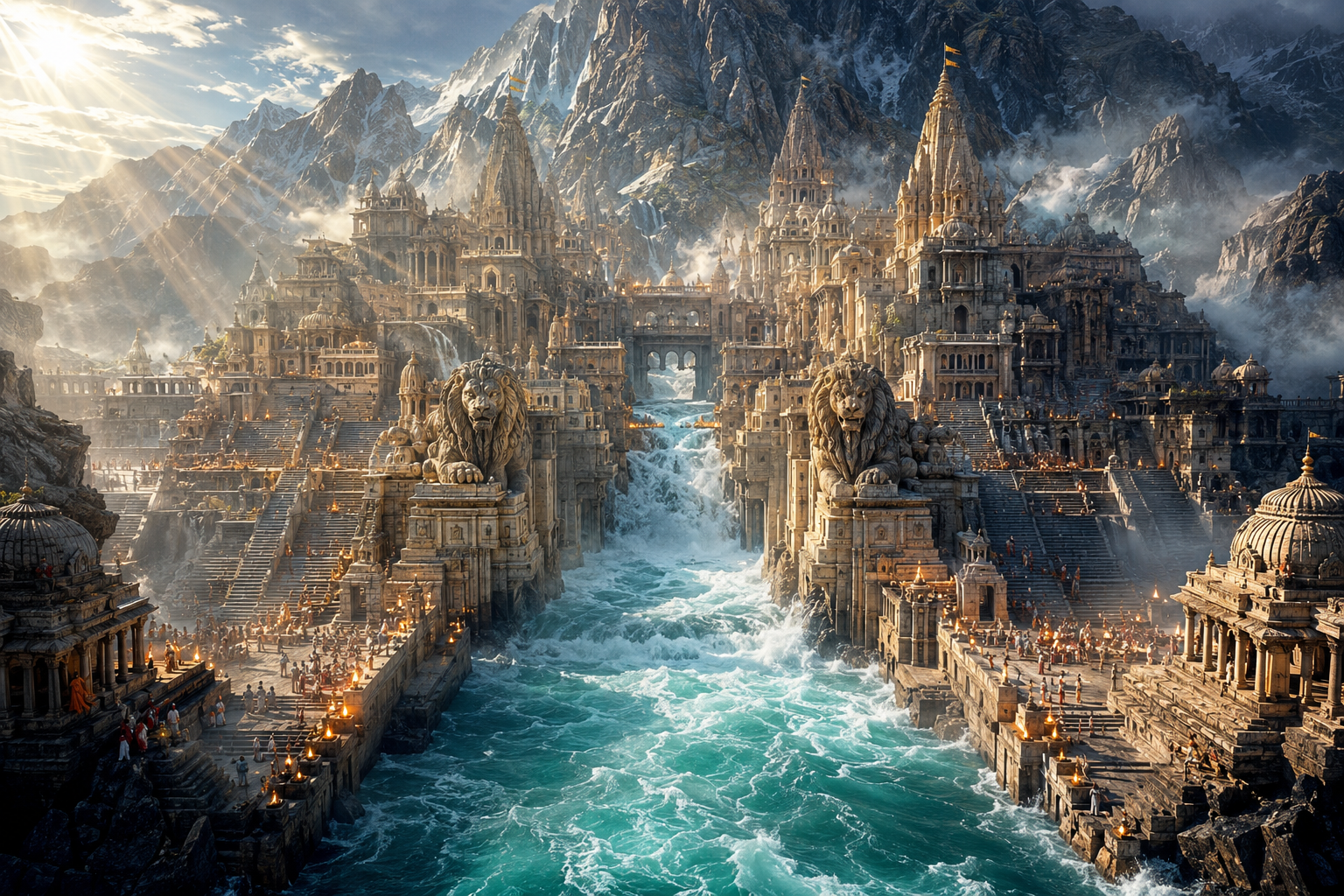
Known in ancient times as Gangadwara, Haridwar marks the sacred gateway where the River Ganga descends from the Himalayas into the plains. Revered by sages, kings, and pilgrims for millennia, it remains one of the holiest places for purification, penance, and spiritual awakening.

Biography

The primary source rung for this record is <b>Rung 1: the Mahabharata</b>, where Gangadwara appears as a sacred tirtha associated with the Ganga, ascetic life and pilgrimage. The ancient Gangadwara of the epic is traditionally identified with the sacred region of present-day Haridwar. That identification should not be used to project every feature of the modern city backward into the epic age. Gangadwara means the gateway of the Ganga. The name fits the landscape: the river comes down from the Himalayan world and enters the northern plains. In epic imagination, this is not merely geography. Water, mountain and pilgrimage meet here. People approach such a tirtha to bathe, perform rites, practice austerity and turn away from ordinary life toward purification. One of Gangadwara's strongest Mahabharata connections comes through Bharadvaja. The epic places the sage at Gangadwara, where the episode leading to the birth of Drona unfolds. Bharadvaja sees the apsara Ghritachi, and his seed is preserved in a vessel; from this vessel Drona is born. The place therefore enters the life story of the man who will later become the martial teacher of the Kuru princes. Gangadwara also appears in the final chapter of Dhritarashtra, Gandhari and Kunti. After leaving royal life, the elders withdraw into the forest and embrace austerity. The Mahabharata associates their ascetic retirement with the region of Gangadwara. The movement is severe: palace life gives way to bark garments, restraint, fasting and silence. The sacred landscape becomes the setting for renunciation after a war that has consumed nearly an entire generation. Their end comes not through a return to court but through forest fire. Dhritarashtra, Gandhari and Kunti remain rather than flee, accepting death in the ascetic state they had chosen. Gangadwara's meaning here is not gentle purification alone. It is a threshold. Kingship is behind them. Possession is behind them. What remains is renunciation. The wider sanctity of the Ganga is inseparable from the place. The Mahabharata repeatedly treats the river as sacred, purifying and bound to rites for ancestors. Later Puranic traditions greatly expand the sacred geography and ritual importance associated with Ganga pilgrimage. For this record, those later layers are kept distinct: the epic's Gangadwara is the foundation, while the full religious identity of historical Haridwar develops across a much longer tradition.

Origin

The Mahabharata does not present Gangadwara with a single founding episode in which the place itself is created. Its sacred identity comes from its relationship with the Ganga and its position at the threshold between the Himalayan region and the plains. It belongs to the epic's network of tirthas, places where physical travel becomes an act of religious passage. The larger story of the Ganga's descent to earth is connected in ancient tradition with Bhagiratha and the liberation of the sons of Sagara. That descent is narrated prominently in Valmiki's Ramayana and developed in later traditions. It explains the sacred force of the river, but it should not be reduced to a claim that one specific episode of the descent occurred at the exact modern urban site of Haridwar unless a particular tradition explicitly says so.

Personality

Gangadwara feels like a threshold because that is what its stories demand. Mountain water enters open country. Warriors, sages, kings and grieving elders approach the same sacred current carrying different burdens. Some come for austerity. Some for rites. Some leave power behind entirely. The place does not fight, command or conquer. Its force is stillness beside movement: the land remains while the Ganga passes through it. In the Mahabharata, that makes Gangadwara a fitting landscape for transformation. You arrive carrying a former life. The question is what you are willing to leave behind.

Details

Do You Know
Known in the Mahabharata as Gangadwara, this sacred gateway marks the place where the Ganga descends from the Himalayas into the plains. The Pandavas visited this revered site during their pilgrimages, and it has remained one of India's holiest places for thousands of years.

Powers

Gateway of the Ganga

Gangadwara is defined by its sacred relationship with the Ganga at the Himalayan gateway. Its identity joins river, pilgrimage and the transition between mountain and plain.

Tirtha of Purification

As a sacred crossing place associated with the Ganga, Gangadwara belongs to the religious geography of bathing, rites, austerity and purification celebrated in epic and later sacred tradition.

Sanctuary of Renunciation

The region becomes associated with withdrawal from worldly power, most powerfully through the final ascetic life of Dhritarashtra, Gandhari and Kunti.

Current of Ancestral Rite

The Ganga is deeply connected in ancient tradition with purification and rites for the dead. Gangadwara draws sacred force from its relationship with that river and the duties performed at holy waters.

Threshold Between Worlds

Gangadwara marks a natural and spiritual transition: mountains opening toward plains, worldly life giving way to austerity, and pilgrimage turning geography into sacred passage.

Abilities

Purifying Passage

The sacred river setting makes Gangadwara a place where bathing and religious observance carry the meaning of purification rather than ordinary travel.

Ascetic Refuge

Its association with sages and royal renunciants makes the region suited to withdrawal, restraint and austerity away from political life.

Sacred Convergence

Gangadwara joins several powerful strands of epic culture: the Ganga, tirtha pilgrimage, sages, ancestral duty and the renunciation of kings.

Enduring Threshold

People pass through, dynasties collapse and generations change, but the sacred geography remains anchored to the river's descent from the Himalayan region.

Relationships

Gangaother

The sacred river gives Gangadwara its name, geography and spiritual identity. Without the Ganga, there is no gateway.

Bharadvajaother

The sage is associated with Gangadwara in the Mahabharata, where the episode leading to the birth of his son Drona unfolds.

Dronaother

Drona's unusual birth story is linked to Bharadvaja's presence at Gangadwara, connecting the sacred site indirectly to one of the central martial teachers of the Mahabharata.

Dhritarashtraother

After relinquishing royal life, the aged Kuru king enters ascetic retirement in the sacred region associated with Gangadwara.

Gandhariother

Gandhari accompanies Dhritarashtra into renunciation after the war, exchanging the palace for severe ascetic life before meeting her end in the forest.

Kuntiother

Kunti chooses to accompany the older Kuru generation into forest retirement rather than remain in royal comfort, making the Gangadwara region part of the final movement of her life.

Timeline

  1. Ancient Sacred Geography
    Gangadwara Becomes a Celebrated Tirtha

    The gateway of the Ganga is known within ancient sacred geography as a place connected with pilgrimage, purification and ascetic practice.

  2. Age of Bharadvaja
    Bharadvaja Dwells at Gangadwara

    The Mahabharata associates the sage Bharadvaja with Gangadwara, establishing the place within the lineage story that leads to Drona.

  3. Age of Bharadvaja
    The Birth Story of Drona Begins

    At Gangadwara, Bharadvaja sees the apsara Ghritachi. His seed is preserved in a vessel, and Drona is born from it, linking the sacred place to the future teacher of the Kuru princes.

  4. Pilgrimage Tradition
    The Ganga Draws Seekers and Ascetics

    Gangadwara's identity as a tirtha rests on the sacred river and the practices surrounding holy waters: bathing, austerity, offerings and religious observance.

  5. After the Kurukshetra War
    The Kuru Elders Renounce Royal Life

    Dhritarashtra, Gandhari and Kunti leave the world of the court and enter an ascetic life associated in the Mahabharata with the Gangadwara region.

  6. Forest Retirement
    Palace Life Gives Way to Austerity

    The former king and the two royal women live under severe discipline, turning away from status and comfort after the destruction of the Kuru dynasty.

  7. Final Renunciation
    Dhritarashtra, Gandhari and Kunti Meet Their End

    A forest fire overtakes the ascetic elders. They do not seek a return to worldly safety, and their deaths complete the renunciation that followed the war.

  8. Later Sacred Tradition
    Haridwar's Pilgrimage Identity Expands

    Later Hindu traditions deepen the sacred importance of the region identified with Gangadwara. These later layers belong to subsequent religious history and should not all be projected into the Mahabharata narrative.

Facts

Primary Source Rung
Rung 1 · Mahabharata for Gangadwara as sacred geography and for its epic associations.
Ancient Name
Gangadwara, meaning the gateway of the Ganga.
Modern Identification
Gangadwara is traditionally identified with the sacred region of present-day Haridwar, though ancient textual geography should not be mapped onto every modern feature without qualification.
Sacred River
Ganga, revered across epic and later Hindu tradition as a sacred and purifying river.
Royal Renunciation
Dhritarashtra, Gandhari and Kunti withdraw from royal life into ascetic retirement associated with the Gangadwara region after the Kurukshetra war.
Tradition Boundary
The story of Ganga's descent through Bhagiratha belongs prominently to Valmiki's Ramayana and later traditions; it should not be treated as proof that every detail occurred at the exact site of modern Haridwar.
Strengths
Sacred association with the GangaMajor setting for pilgrimage and austerityRefuge from royal and worldly lifeDeep connection to purification and ancestral dutyEnduring threshold between mountain and plain
Weaknesses
Sacred identity depends on careful distinction between epic and later traditionAncient Gangadwara cannot be equated with every feature of modern HaridwarA place of renunciation rather than worldly powerAssociated with severe austerity, grief and mortality

Cards featuring Haridwar (Gangadwara)

No cards featuring Haridwar (Gangadwara) yet.

Stories about Haridwar (Gangadwara)

No stories about Haridwar (Gangadwara) yet.

Create a character card like Haridwar (Gangadwara)

Turn your own characters into premium collectible cards manufactured by Cards Loomia.

Discussion

Comments are reviewed before appearing.

Loading comments…