CARDSLOOMIA
Naimisharanya

The Forest Where the Epic Was Heard

Naimisharanya

Naimisharanya · Forest of Sages · Seat of Shaunaka's Sacrifice

Mahabharata SagaPlace176.0

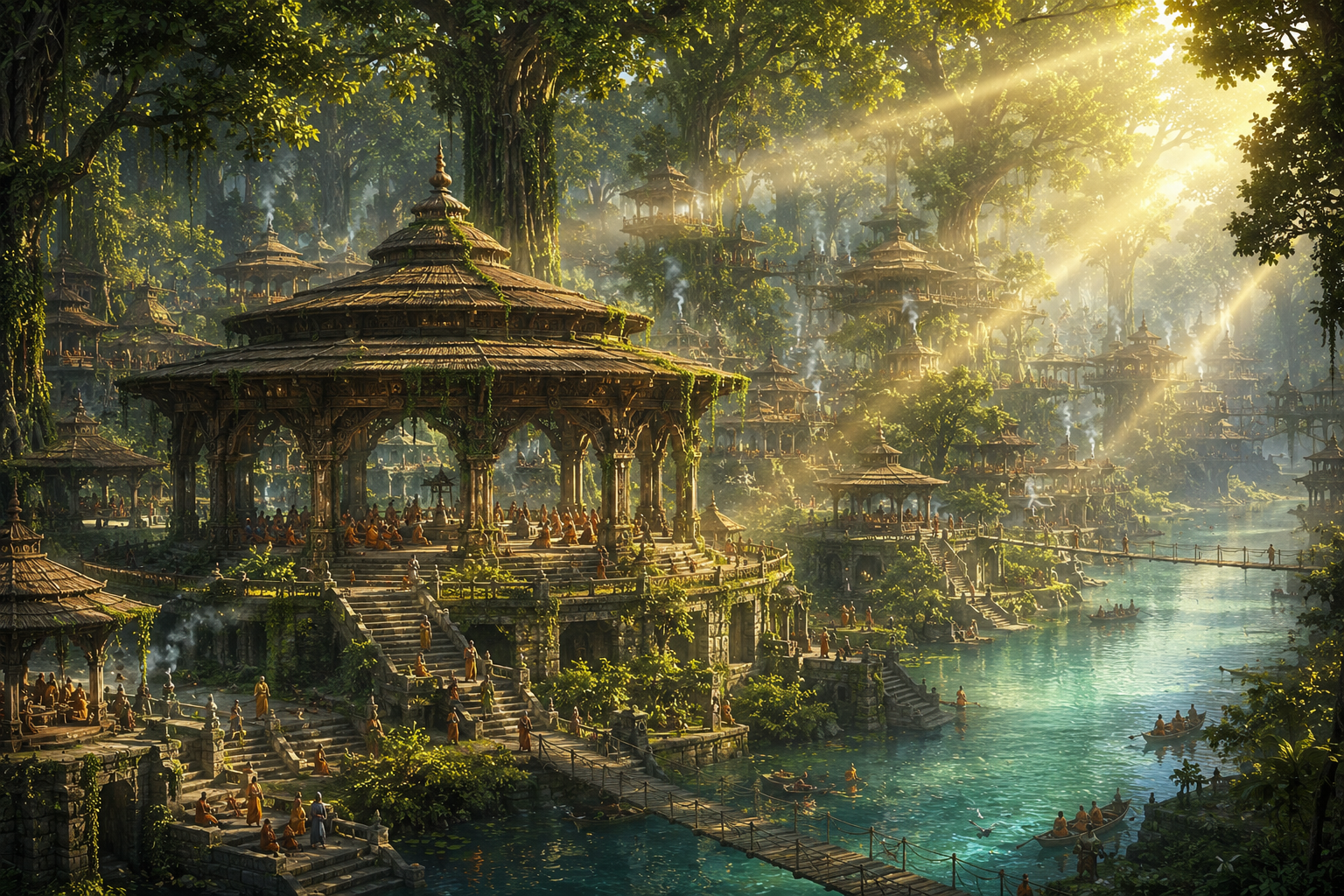
The legendary forest of sages where countless Vedic sacrifices and spiritual discourses were performed. It was here that Sage Ugrashrava Sauti narrated the Mahabharata to assembled rishis, preserving the epic for future generations.

Biography

The primary source rung for this record is <b>Rung 1: the Mahabharata</b>. Naimisharanya, also called the Naimisha Forest, frames the epic itself. The Mahabharata opens with Ugrashrava Sauti arriving among sages gathered in this sacred woodland, where Shaunaka is conducting an extended sacrificial session. Before armies move at Kurukshetra, before dice fall in Hastinapura, the story begins with listeners in a forest. Ugrashrava is a travelling narrator learned in ancient stories. He comes to the sages after attending Janamejaya's snake sacrifice, where he has heard Vaishampayana recite the history of the Bharatas as taught by Vyasa. At Naimisharanya, the sages ask for sacred narratives. Ugrashrava becomes the outer narrator through whom the Mahabharata reaches its listening assembly. That distinction matters. Naimisharanya is not presented as the place where Vyasa first composed the Mahabharata, nor as the location of its earlier recitation to Janamejaya. Within the epic's layered narrative, Vaishampayana tells the Bharata story to King Janamejaya during the snake sacrifice. Ugrashrava later carries what he heard into the gathering at Naimisharanya. The forest is therefore a place of transmission: memory moves from teacher to disciple, from ritual gathering to storyteller, from one audience to another. Shaunaka's gathering gives the forest its atmosphere. This is not a royal court demanding entertainment. The listeners are sages committed to sacrifice, discipline and sacred learning. Their questions open doors into genealogies, vows, curses, wars, pilgrimages and arguments about dharma. Naimisharanya becomes the quiet frame around an epic filled with noise: bowstrings snapping, conches sounding, dice striking the board and families destroying themselves. Its deepest power is preservation. The battlefield of Kurukshetra belongs to those who fought. Naimisharanya belongs to those who listened afterward. Here catastrophe becomes remembered history. Questions keep the narrative moving. Recitation keeps names alive. The forest shows that an epic survives not only because someone performs great deeds, but because someone hears them carefully enough to tell them again.

Origin

For the Mahabharata record, Naimisharanya enters securely as an already sacred forest where Shaunaka and assembled sages conduct a major sacrificial session. The critical epic does not require a separate supernatural founding story to explain why the narrative gathering matters, so later origin legends about the forest are not merged into this Rung 1 account. Its role is established through sacred use rather than conquest or kingship. Sages gather there for sacrifice and discourse. Into that setting comes Ugrashrava Sauti carrying the remembered narration connected to Janamejaya's sacrifice. A forest of ritual becomes one of the great narrative thresholds of Indian tradition.

Personality

Naimisharanya is patient. That is its force. It does not enter the Mahabharata as a kingdom seeking territory or a battlefield demanding blood. It listens. Around the sacrificial gathering, sages ask questions and Ugrashrava answers with stories nested inside other stories. The contrast is sharp: Kurukshetra shows what happens when a dynasty can no longer resolve its conflict; Naimisharanya shows what happens when later generations refuse to forget the cost. Its character is disciplined memory. Fire burns in sacrifice, but the greater work is preservation.

Details

Do You Know
Naimisharanya became the legendary gathering place where Ugrashrava Sauti narrated the Mahabharata to a great assembly of sages. Because of this, it is regarded as the traditional setting through which the epic was preserved for future generations.

Powers

Sanctuary of Sacred Recitation

Naimisharanya provides the forest setting in which Ugrashrava Sauti narrates the Mahabharata tradition to Shaunaka and the assembled sages.

Preservation Through Listening

The forest symbolizes the oral chain by which sacred history survives. Knowledge is received, questioned, remembered and transmitted rather than allowed to vanish with those who lived it.

Sacrificial Sanctity

Shaunaka's sacrificial gathering establishes Naimisharanya as a landscape of ritual discipline. Sacred fire and sustained recitation share the same space.

Gateway of the Epic

The Mahabharata's outer narrative opens in the Naimisha Forest. From this quiet gathering, the listener is carried into generations of Bharata history and ultimately the catastrophe of Kurukshetra.

Assembly of Sages

Naimisharanya draws authority from a community of learned listeners rather than a throne. Questions from the sages become part of the mechanism through which ancient narratives are unfolded.

Abilities

Living Memory

Naimisharanya turns remembered events into transmitted tradition. Its narrative role depends on hearing accurately and passing knowledge onward.

Sacred Inquiry

The sages do not remain passive listeners. Their questions create openings for genealogies, teachings and embedded narratives to be explained.

Narrative Convergence

At Naimisharanya, multiple layers of narration meet: Vyasa's teaching, Vaishampayana's recitation before Janamejaya and Ugrashrava's retelling to Shaunaka's assembly.

Stillness Beyond War

The forest frames violent history from a place of ritual and reflection. Its strength is not participation in the conflict but the preservation of what the conflict means.

Relationships

Ugrashrava Sautiother

The travelling narrator who arrives at Naimisharanya and recounts the Mahabharata tradition to the assembled sages.

Shaunakaother

The leading sage of the sacrificial gathering at Naimisharanya. His assembly provides the listening community within the epic's outer narrative frame.

Vaishampayanaother

Vyasa's disciple whose earlier narration of the Bharata history before King Janamejaya is embedded within the tradition Ugrashrava recounts at Naimisharanya.

Vyasaother

The sage at the source of the Mahabharata's transmission tradition. His teaching passes through disciples and narrators before reaching the forest assembly.

Janamejayaother

The Kuru king who hears Vaishampayana's narration during his snake sacrifice. That earlier telling becomes a central narrative layer retold before the sages at Naimisharanya.

Timeline

  1. Sacred Gathering
    Shaunaka's Sacrificial Session

    Shaunaka and an assembly of sages gather in the Naimisha Forest for an extended sacrificial observance, creating the sacred setting that frames the epic's outer narration.

  2. Before Naimisharanya
    Vaishampayana Recites to Janamejaya

    At Janamejaya's snake sacrifice, Vaishampayana narrates the history of the Bharatas as transmitted by Vyasa. This earlier recitation becomes the central narrative later carried by Ugrashrava.

  3. Arrival at Naimisharanya
    Ugrashrava Sauti Enters the Forest

    After attending Janamejaya's sacrifice, Ugrashrava comes to the sages gathered at Naimisharanya and is respectfully received as a learned narrator.

  4. Forest Assembly
    The Sages Ask for Sacred Narratives

    The assembled rishis invite Ugrashrava to speak. Their questions establish the pattern of inquiry and response through which the epic's vast narrative unfolds.

  5. Epic Transmission
    The Bharata Story Is Retold

    Ugrashrava recounts the tradition he heard surrounding Vaishampayana's narration to Janamejaya, placing Naimisharanya around the Mahabharata as its outer listening frame.

  6. Continuing Recitation
    Stories Within Stories Unfold

    Genealogies, ancient legends, vows, conflicts and teachings emerge through layered narration. The forest gathering becomes the stable point from which generations of remembered events are heard.

  7. Legacy
    Naimisharanya Becomes Bound to the Epic's Memory

    Because the Mahabharata frames Ugrashrava's narration before Shaunaka and the sages here, Naimisharanya becomes inseparable from the tradition of hearing and preserving the epic.

Facts

Primary Source Rung
Rung 1 · Mahabharata critical-text tradition for the Naimisha Forest as the setting of Ugrashrava Sauti's narration before Shaunaka and assembled sages.
Also Known As
Naimisha Forest · Naimisharanya
Principal Narrator
Ugrashrava Sauti serves as the outer narrator addressing the sages gathered in the Naimisha Forest.
Principal Listener
Shaunaka is the leading sage associated with the sacrificial gathering in which Ugrashrava's narration unfolds.
Narrative Function
Naimisharanya forms the outer storytelling frame through which the Mahabharata presents earlier layers of narration and Bharata history.
Sacred Identity
Within the epic frame, Naimisharanya is a forest of sages, sacrifice, inquiry and recitation rather than a royal capital or battlefield.
Strengths
Sacred gathering place of sagesCentral frame for the Mahabharata's transmissionCulture of disciplined listening and inquiryAssociation with sacrifice and sacred learningPreserves memory beyond the lives of kings and warriors
Weaknesses
Power depends on faithful human transmissionA place of remembrance rather than direct worldly authorityIts narrative layers can be confused with the earlier recitation to JanamejayaLater traditions add claims that must be kept distinct from the critical epic

Cards featuring Naimisharanya

No cards featuring Naimisharanya yet.

Stories about Naimisharanya

No stories about Naimisharanya yet.

Create a character card like Naimisharanya

Turn your own characters into premium collectible cards manufactured by Cards Loomia.

Discussion

Comments are reviewed before appearing.

Loading comments…