CARDSLOOMIA
Pushkara

The Tirtha Where Pilgrimage Begins

Pushkara

Pushkara · Sacred Tirtha · Brahma's Holy Ground

Mahabharata SagaPlace175.0

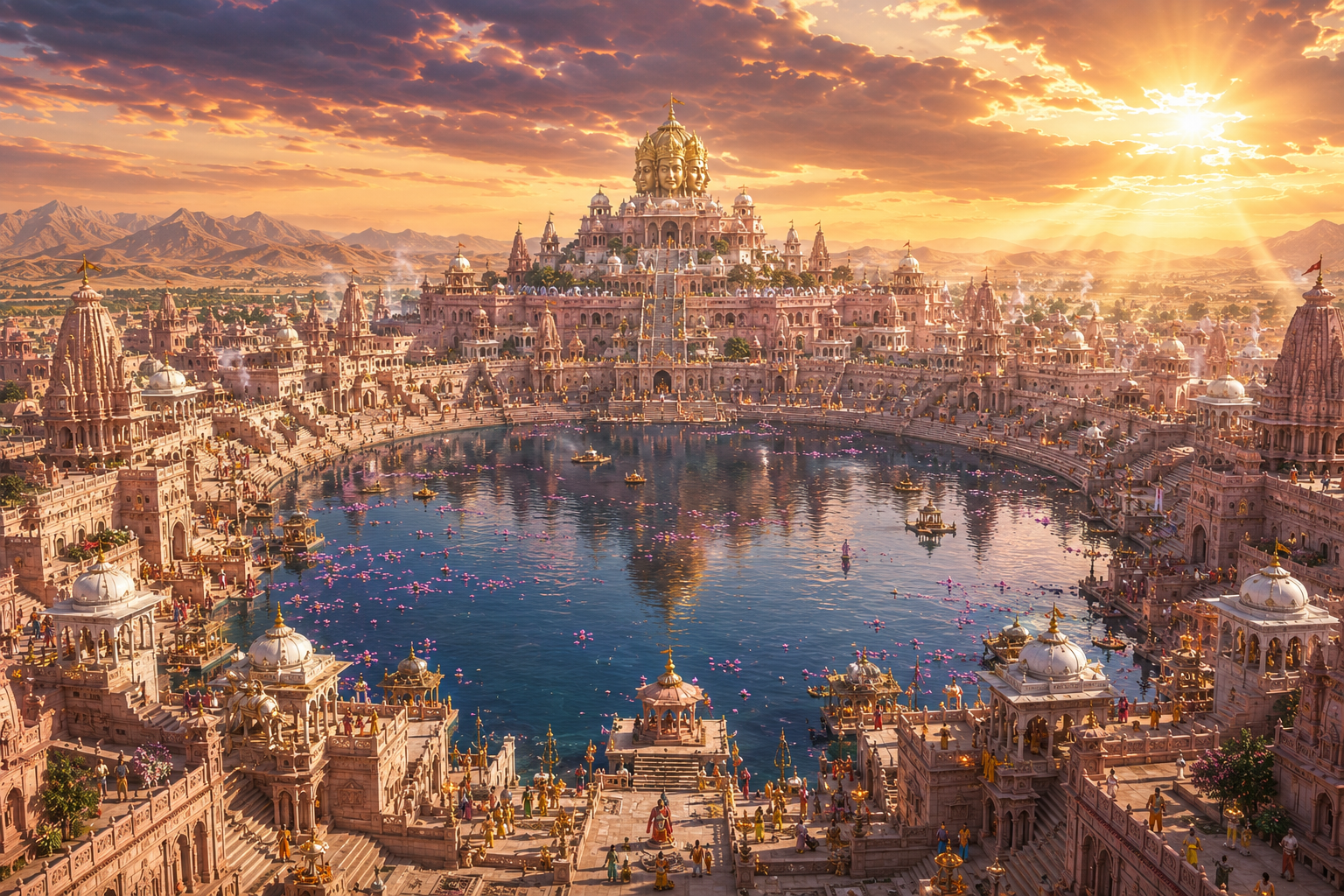
A sacred city famed for its ancient lake and the worship of Lord Brahma. Revered by sages and pilgrims alike, Pushkara served as a center of spiritual learning, sacrifice, and penance, making it one of the holiest pilgrimage sites in ancient Bharata.

Biography

The primary source rung for this record is <b>Rung 1: the Mahabharata</b>. In its sacred geography, Pushkara is not a minor stop on a pilgrim's road. The epic praises it as an exceptionally holy tirtha and places it prominently within the great tradition of pilgrimage. Its identity is tied to Brahma, sacred waters, austerity, sacrifice and the religious merit sought by those who undertake the difficult journey to holy places. When the Mahabharata describes tirthas through the teachings associated with sages such as Pulastya, Pushkara receives extraordinary praise. The pilgrimage sequence begins with Pushkara and returns repeatedly to its sanctity. Gods, sages and other sacred beings are associated with the place in the epic's praise of it. The message is direct: reaching Pushkara is itself an act of discipline, and religious observance there carries exceptional weight. Pushkara also enters the Mahabharata through the story of Vishvamitra. Before he becomes one of tradition's greatest sages, his life is marked by kingship, rivalry, anger and fierce ambition. Pushkara becomes one of the places associated with his austerities. The setting matters. A king who once relied on armies and royal force turns instead toward tapas. Power is no longer measured by territory. It is measured by what the body and mind can endure. The epic's Pushkara should be distinguished from every later detail attached to the modern pilgrimage town. The Mahabharata securely presents Pushkara as a celebrated tirtha with strong Brahma associations and immense religious prestige. Later Puranic traditions expand its sacred mythology, including fuller narratives connecting Brahma, sacrifice and the sacred landscape. Those traditions are important, but they belong to a different source rung and should not be silently inserted into the critical epic. Pushkara's deepest identity is therefore not spectacle but effort. A pilgrim leaves familiar ground, travels to a sacred place, bathes, restrains the senses, gives, fasts or performs prescribed observances. The body gets tired. The purpose is exactly that difficulty. In the Mahabharata's vision of pilgrimage, sacred geography tests intention. That is why Pushkara carries such weight. Kingdoms move. Wars redraw borders. Pushkara remains a destination people approach voluntarily, seeking purification rather than conquest. Its story is about choosing the harder road because the journey itself changes the traveller.

Origin

The <b>Rung 1 Mahabharata</b> treats Pushkara as an already established and exceptionally sacred tirtha associated with Brahma. It does not require a single detailed founding episode to establish the site's authority. The place enters the epic's pilgrimage tradition with its sanctity already recognized. Later Puranic traditions provide expanded accounts linking Brahma's sacrifice and the sacred landscape of Pushkara. Those narratives belong to Rung 2 and vary in their details, so they should not be flattened into the Mahabharata's account. For this record, the secure epic foundation is simple: Pushkara is an ancient Brahma-associated tirtha of exceptional sanctity, pilgrimage and austerity.

Personality

Pushkara is demanding without being violent. Its challenge is voluntary. No army forces the pilgrim onto the road. No rival waits with a drawn bow. You come because sacred duty, purification or spiritual discipline matters enough to make the journey. That gives Pushkara a different kind of force from the Mahabharata's battlefields. Kurukshetra tests warriors against warriors. Pushkara tests intention against fatigue, distraction and attachment. Its Brahma association gives it cosmic dignity; its tirtha identity keeps that dignity grounded in human action: travel, restraint, bathing, worship and austerity.

Details

Do You Know
During their exile, the Pandavas visited Pushkara, one of India's oldest sacred pilgrimage sites. The Mahabharata praises it as a place where sages performed penance and where pilgrims sought spiritual merit through worship and austerity.

Powers

Supreme Tirtha Sanctity

The Mahabharata gives Pushkara exceptional prominence among sacred pilgrimage places. Its religious power is expressed through the merit attached to reaching it and undertaking proper observances there.

Brahma's Sacred Presence

Pushkara is strongly associated with Brahma in the epic's praise of the tirtha. Later Puranic traditions expand this connection with additional sacred narratives.

Waters of Purification

Pushkara belongs to the ancient tirtha tradition in which sacred waters, bathing and disciplined observance mark a passage from ordinary life toward purification.

Ground of Tapas

Pushkara is associated with austerity and spiritual discipline, including traditions surrounding Vishvamitra's severe pursuit of ascetic power.

Gateway to Sacred Pilgrimage

Pushkara receives a prominent place at the opening of the Mahabharata's great enumeration of tirthas, making it a symbolic threshold into the wider sacred geography of Bharata.

Abilities

Pilgrim's Trial

Pushkara turns physical journey into spiritual discipline. Reaching a tirtha, observing restraint and performing sacred duties make effort itself part of pilgrimage.

Ascetic Focus

The sacred setting supports tapas, restraint and withdrawal from ordinary ambitions. Its traditions repeatedly connect holiness with disciplined effort.

Sacred Convergence

Brahma, sages, pilgrimage, sacred waters and austerity converge in Pushkara's identity, giving the place importance beyond any single narrative episode.

Enduring Sanctity

Pushkara's importance survives beyond dynasties and wars because its authority comes from sacred geography and continued pilgrimage rather than political control.

Relationships

Brahmaother

Pushkara's most important divine association is with Brahma. The Mahabharata recognizes the sacred connection, while later Puranic traditions develop it through fuller narratives.

Vishvamitraother

The great sage's traditions of severe austerity are connected with Pushkara, making the place part of his long movement from royal identity toward ascetic attainment.

Pulastyaother

The sage is associated with the Mahabharata's major teaching on pilgrimage in which Pushkara receives exceptional praise and a prominent place in the sacred itinerary.

Yudhishthiraother

The Mahabharata's teachings on tirtha pilgrimage are delivered within the Pandavas' exile narrative, where sacred journeys and knowledge of holy places become part of Yudhishthira's education in dharma.

Dhaumyaother

As priest and guide of the Pandavas, Dhaumya participates in the epic's wider pilgrimage tradition and sacred geography, within which Pushkara holds exceptional prestige.

Timeline

  1. Ancient Sacred Tradition
    Pushkara Emerges as a Celebrated Tirtha

    By the world reflected in the Mahabharata's pilgrimage traditions, Pushkara is already recognized as an exceptionally sacred destination associated with religious merit and Brahma.

  2. Age of the Sages
    Pushkara Becomes Ground for Austerity

    The sacred region is associated with tapas and disciplined spiritual practice, attracting those who seek power or purification through restraint rather than worldly force.

  3. Vishvamitra Tradition
    Vishvamitra Practices Austerities at Pushkara

    Pushkara is connected with Vishvamitra's long transformation through tapas, linking the sacred landscape with one of the great stories of ascetic ambition and spiritual attainment.

  4. Epic Pilgrimage Tradition
    Pulastya Praises the Sacred Tirthas

    In the Mahabharata's pilgrimage teaching, Pushkara receives extraordinary praise and appears prominently at the beginning of a sweeping sacred journey through Bharata.

  5. Pilgrimage Practice
    Pilgrims Seek Merit at Sacred Waters

    Pushkara's religious identity centers on pilgrimage, sacred observance, bathing, restraint and acts performed with disciplined intention.

  6. Epic Sacred Geography
    Pushkara Remains a Benchmark of Sanctity

    Repeated praise within the Mahabharata's tirtha tradition marks Pushkara as one of the places against which the spiritual value of pilgrimage is understood.

  7. Later Sacred Tradition
    Brahma Traditions Expand

    Later Puranic and regional traditions develop fuller narratives connecting Brahma, sacrifice and Pushkara's sacred landscape. These later accounts deepen its identity but remain distinct from the critical epic.

Facts

Primary Source Rung
Rung 1 · Mahabharata for Pushkara's exceptional status as a sacred tirtha, its pilgrimage importance and its Brahma association.
Sacred Identity
Pushkara is one of the most highly praised tirthas in the Mahabharata's pilgrimage tradition.
Principal Divine Association
Brahma is strongly associated with Pushkara in ancient sacred tradition, while later Puranic sources expand the mythology of that connection.
Spiritual Practices
Pilgrimage, sacred bathing, restraint, austerity and religious observance define Pushkara's role in epic sacred geography.
Vishvamitra Connection
Pushkara is associated in ancient tradition with Vishvamitra's austerities during his long transformation from royal power toward the status of a great sage.
Modern Continuity
The ancient Pushkara is traditionally identified with present-day Pushkar in Rajasthan, though modern institutions and local features should not automatically be projected into the epic period.
Strengths
Exceptional status among ancient tirthasStrong sacred association with BrahmaCenter of pilgrimage and purificationLandscape suited to austerity and spiritual disciplineProminent place in Mahabharata sacred geography
Weaknesses
Spiritual rewards depend on disciplined observancePilgrimage demands effort and restraintEpic and later Puranic traditions must be kept distinctModern sacred geography cannot be projected wholesale into the epic age

Cards featuring Pushkara

No cards featuring Pushkara yet.

Stories about Pushkara

No stories about Pushkara yet.

Create a character card like Pushkara

Turn your own characters into premium collectible cards manufactured by Cards Loomia.

Discussion

Comments are reviewed before appearing.

Loading comments…