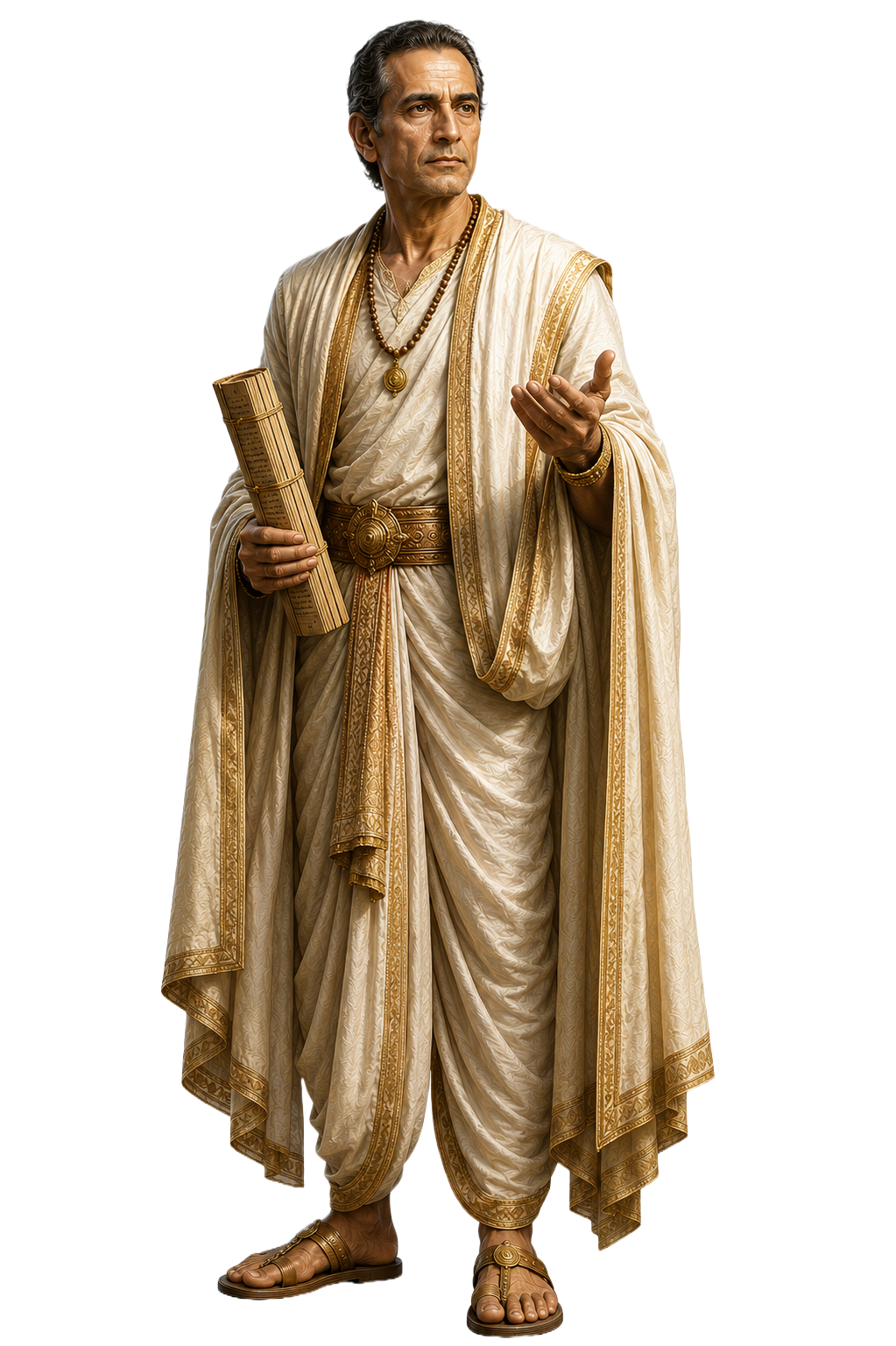
The Voice of Dharma
Vidura
Vidura · Wise Counselor · Son of Vyasa · Incarnation of Dharma
Born to Sage Vyasa through a maidservant, Vidura was the wisest counselor of Hastinapura and an incarnation of Dharma. Renowned for his unwavering honesty, profound wisdom, and fearless counsel, he repeatedly urged peace between the Pandavas and Kauravas. Though denied the throne, his righteousness made him one of the greatest statesmen in the Mahabharata.
Biography
Origin
Personality
Stats
Details
- Specialty
- Moral Compass
- Do You Know
- Long before the Lakshagriha (House of Lac) conspiracy unfolded, Vidura secretly warned the Pandavas using coded language, enabling them to escape the deadly trap prepared by Duryodhana.
Powers
Vidura is identified with Dharma and possesses profound knowledge of right conduct, justice and the duties of rulers. His counsel repeatedly exposes the moral cost of the Kuru court's decisions.
Vidura recognizes the dangers created by Duryodhana's hostility toward the Pandavas and repeatedly warns Dhritarashtra before conflict becomes irreversible.
He speaks difficult truths directly to kings and princes. His position at court never silences his opposition to destructive or unjust decisions.
Vidura combines moral judgment with practical strategy. His warning about the house of lac helps the Pandavas survive a plot against their lives.
His teachings on ethics, governance, self-control and wise conduct became known through the tradition as Vidura Niti. They reflect the practical wisdom associated with his character.
Abilities
Vidura advises Dhritarashtra on matters of justice, family conflict and royal duty, repeatedly urging him to restrain destructive conduct.
He recognizes schemes against the Pandavas and understands how unchecked rivalry can destroy the Kuru dynasty.
Vidura teaches principles of self-control, ethical conduct and responsible leadership, making wisdom itself his principal instrument.
Relationships
Vidura's father and the sage through whom he was born into the Kuru family.
Vidura's half-brother and the blind Kuru king whom he repeatedly advises to restrain Duryodhana and uphold justice.
Vidura's half-brother and the father of the Pandavas. Vidura remains protective of Pandu's sons after his death.
Vidura repeatedly protects and advises the Pandavas, warning them of danger and opposing the injustices committed against them.
Duryodhana repeatedly rejects Vidura's counsel. Their conflict is fundamentally between political ambition and the restraint Vidura demands from a Kuru prince.
Vidura and Krishna share a commitment to preventing the destruction of the Kuru family. Krishna also values Vidura's wisdom and integrity.
Timeline
- BirthBorn to Vyasa and a Maidservant
Vidura is born through Sage Vyasa and a maidservant of the Kuru household. He becomes the half-brother of Dhritarashtra and Pandu.
- Early Kuru CourtThe Wise Counselor Emerges
Vidura becomes a trusted adviser within Hastinapura and gains influence through his understanding of law, governance and Dharma.
- Lakshagriha PlotWarning the Pandavas
Vidura recognizes the danger surrounding the house of lac and communicates a warning that helps the Pandavas escape the attempt on their lives.
- Dice GameOpposing the Destructive Game
Vidura speaks against the course taken in the dice game and the humiliation of the Pandavas. His counsel is repeatedly ignored by those driving the conflict.
- Kuru CrisisCalling for Peace
As hostility between the Pandavas and Kauravas deepens, Vidura continues urging Dhritarashtra to restrain Duryodhana and preserve peace.
- Before KurukshetraLeaves the Court
Vidura refuses to support the destructive course of the Kuru court and withdraws from its immediate political struggle before the great war.
- After the WarReturns to the Kuru Household
Vidura later remains associated with the surviving members of the Kuru family and eventually turns away from worldly life.
- Final YearsRenunciation
Vidura leaves behind courtly concerns and embraces a life oriented toward spiritual release. His final period reflects the same detachment from power that defined his counsel.
Facts
Cards featuring Vidura
No cards featuring Vidura yet.
Stories about Vidura
No stories about Vidura yet.
Create a character card like Vidura
Turn your own characters into premium collectible cards manufactured by Cards Loomia.
Discussion
Loading comments…