Karna: The Greatest Warrior Who Never Won
He was the eldest Pandava, the Sun's own son, and Arjuna's equal with a bow. He died in the mud, called a charioteer's son to the very end. This is why.
Cards Loomia Studio13 July 20269 min read
He was the eldest Pandava, the Sun's own son, and Arjuna's equal with a bow. He died in the mud, called a charioteer's son to the very end. This is why.
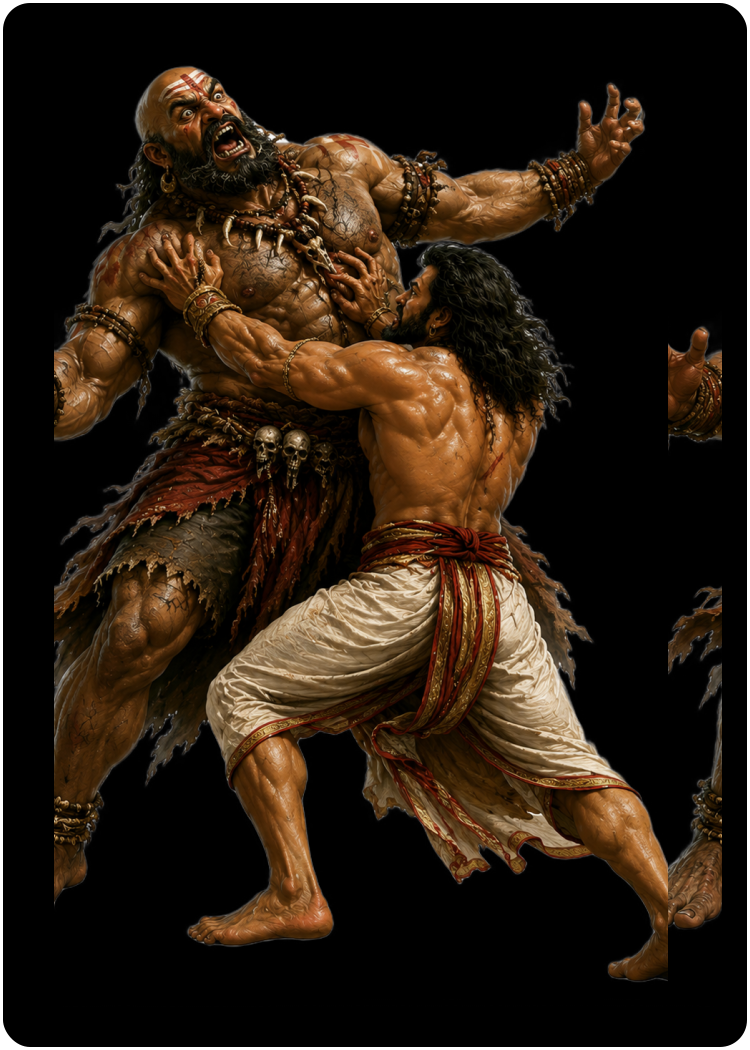
There is a moment in the Mahabharata that readers argue about three thousand years later, and it lasts about four seconds. A chariot wheel sinks into wet earth. A man steps down to lift it. He is, at that instant, the finest archer alive and completely unarmed. He looks up and asks for the pause that the rules of war guarantee him.
He does not get it. And the epic — which has spent eighteen books telling you who the heroes are — goes very, very quiet.
That man is Karna. And the reason his death still stings is that the Mahabharata never once lets you off the hook about him.
Kunti was a girl when the sage Durvasa gave her a mantra that could summon any god. She was curious. She tried it on the sun. Surya arrived — and a mantra, once spoken, is not a request.
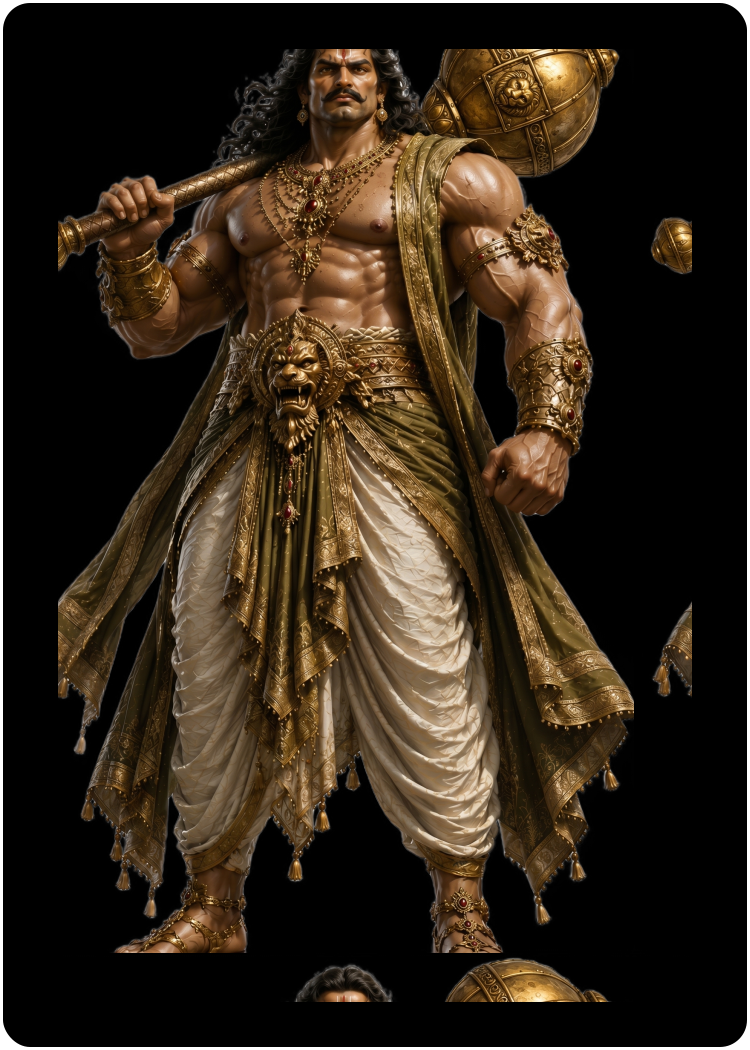
The child was born already wearing kavacha and kundala — divine armour and earrings, fused to his skin, making him unkillable. He was also born to an unmarried princess, which made him unkeepable. She put him in a basket and set him on the river.
The first thing the world ever did to Karna was throw him away. The second thing it did was never let him forget it.— DEVAVEIL Lore Team
He was found by Adhiratha, a charioteer, and raised by his wife Radha. From that day he was Radheya — Radha's son. And suta-putra — charioteer's son. That second name is a weapon, and everyone in the epic uses it.
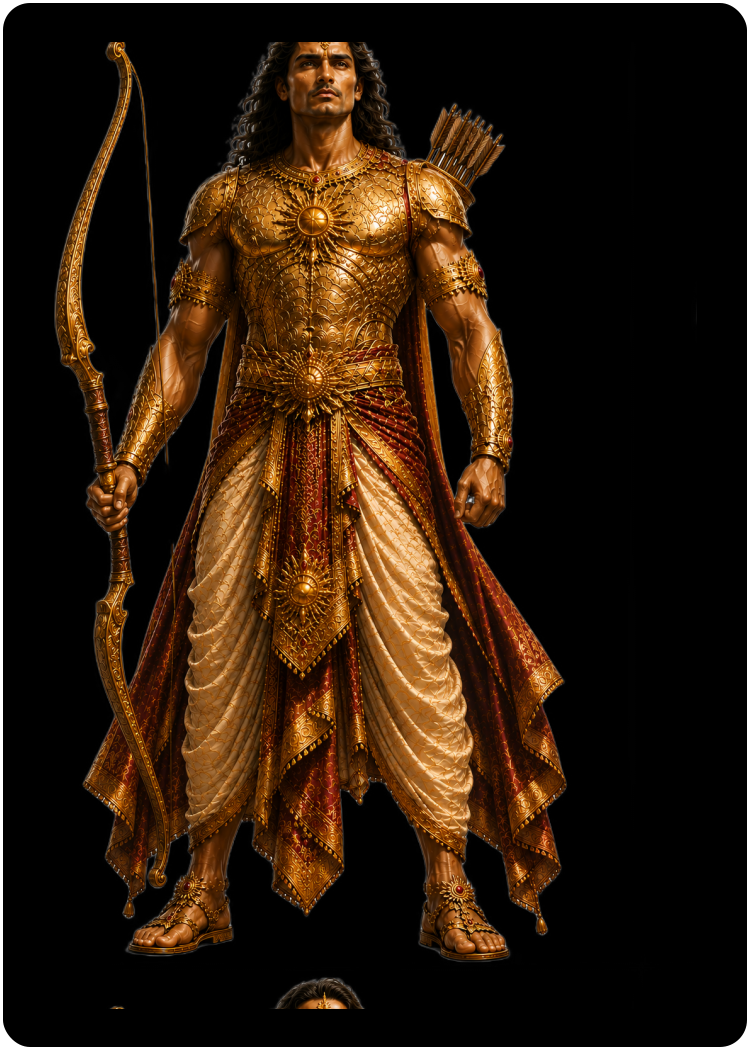
At the great tournament of Hastinapura, Karna walks into the arena and matches Arjuna shot for shot. The crowd is stunned. And then someone asks the question that follows him everywhere: who is your father?
A charioteer's son cannot duel a prince. The assembly moves to have him removed. And Duryodhana — the man the epic will spend the next fifteen books calling a villain — stands up and makes him King of Anga on the spot. A crown, a kingdom, and the right to stand in that circle, handed over in front of everyone who just tried to throw him out.
Barred from Dronacharya's school by his birth, Karna went to Parashurama and said he was a brahmin. He learned the Brahmastra — the ultimate weapon. Then Parashurama, sleeping on his lap, was woken by blood: an insect had bored into Karna's thigh, and Karna had not moved, because moving would have disturbed his teacher.
No brahmin, said Parashurama, endures pain like that. Only a kshatriya. And so came the curse: when you need the Brahmastra most, you will forget it.
A second curse, from a brahmin whose cow he killed by accident: the earth will swallow your chariot wheel when you are most afraid.
The Mahabharata sets both of these up hundreds of pages before it uses them. It uses them on the same afternoon.
Born with divine armour, abandoned to save his mother's reputation.
Raised by charioteers. Outshoots princes. Is told, repeatedly, that it doesn't count.
Learns the Brahmastra from Parashurama under a false identity — and is cursed to forget it.
Duryodhana gives him a kingdom so he can stand in the ring. Karna never forgets.
Indra, disguised, asks for his armour. Karna carves it from his body and hands it over.
Krishna tells him he is the eldest Pandava and offers him the throne. He says no.
Both curses land at once. He steps down unarmed, asks for a pause, and is killed.
Karna had a vow: at his morning prayer to the sun, he would refuse no one who asked him for anything. Indra — Arjuna's father — knew this. So Indra came to him as a poor brahmin, at dawn, and asked for the armour fused to his body.
Surya had warned him. Karna knew exactly who was standing in front of him. He cut the armour out of his own flesh anyway, because he had said he would, and handed it over dripping.
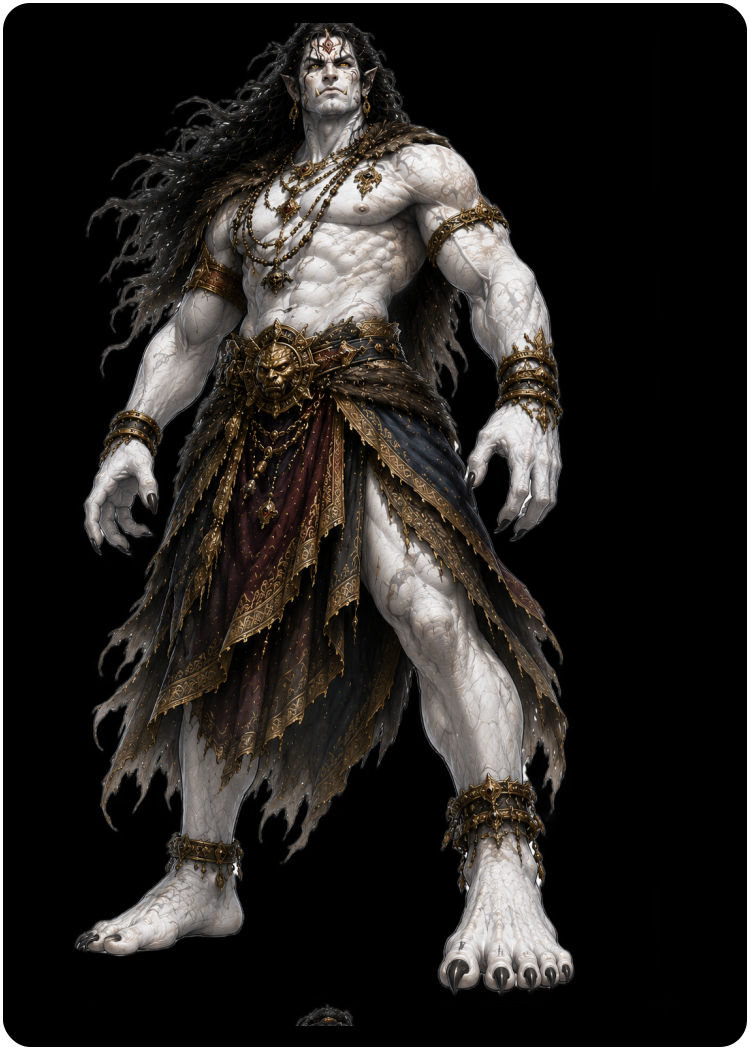
He saved it for Arjuna. He was forced to spend it on Ghatotkacha, Bhima's rakshasa son, who was tearing the Kaurava army apart in the dark. Duryodhana begged. Karna threw the spear. It killed Ghatotkacha instantly — and with it went Karna's one guaranteed answer to Arjuna.
Krishna, watching, is described as dancing with joy. He knew what that spear was for.
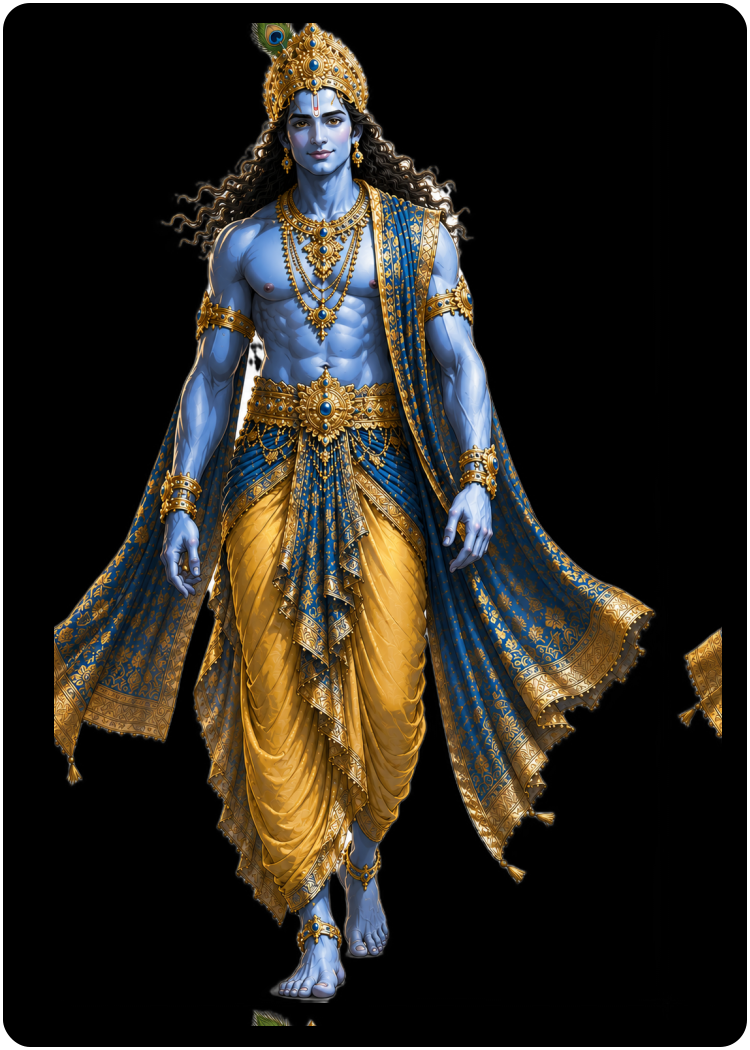
On the eve of the war, Krishna takes Karna aside and tells him the truth: you are Kunti's firstborn. You are the eldest Pandava. Come to our side and you will be crowned emperor — Yudhishthira will yield to you, Arjuna will hold your chariot, Draupadi will be yours.
It is the single greatest offer made to anyone in the epic. And Karna — who has wanted exactly one thing his entire life, which is to be told he belongs — says no.
Duryodhana gave me a crown when the world gave me nothing. I will not sell that for an empire.— Karna, to Krishna
Then Kunti comes to him herself. She asks him to spare her sons. He gives her his word: he will kill only Arjuna. Whatever happens, she will still have five sons at the end of the war. Five. He counts himself in — and then goes out to die.
Day seventeen. Karna against Arjuna at last, and Karna is winning. And then the ground takes his wheel, exactly as the brahmin promised. He reaches for the Brahmastra and finds nothing, exactly as Parashurama promised.
He steps down. He is unarmed, in the mud, lifting his own chariot with his hands. He invokes the code: you cannot strike an unarmed man.
And Krishna tells Arjuna to shoot.
The Mahabharata does not soften this. Krishna's answer is a list — the burning of the lac house, the humiliation of Draupadi, the killing of Abhimanyu, all the codes the Kauravas broke first — and it is a good list, and it is an answer, and it is still Arjuna shooting his own brother in the back while he stands in the mud with his hands full of chariot.
Karna is not a good man. He is in the room when Draupadi is dragged into it, and he says something unforgivable. The epic does not excuse him for it and neither should we.
But he is the only character in the Mahabharata who is punished, over and over, for things that were done to him. He is denied a teacher for his birth. Denied a duel for his birth. Denied a name for his birth. And when he finally builds a life out of the one hand that was ever extended to him, he is told that the hand belonged to the wrong side.
He is the eldest Pandava who was never a Pandava. The Sun's son who died in the dark. The greatest archer of his age, remembered as a charioteer's boy.
That is why he is a Legendary card. Not because he won. Because he never did — and he never stopped.

Foil treatments, black-core stock, spot-UV and collector packaging — manufactured end to end by Cards Loomia.
Get a custom card quoteTurn your characters and lore into premium physical trading cards, manufactured by Cards Loomia.
Loading comments…